

Introduction
Understanding the intricacies of Applied Behavior Analysis (ABA) therapy can truly be a transformative journey for parents of children with autism. By mastering fundamental concepts like reinforcement and prompting, caregivers can significantly enhance their child’s learning and development. But here’s the question: how can parents effectively implement two-step instructions to foster independence and social skills in their children?
This guide offers a step-by-step approach, empowering parents to navigate this essential aspect of ABA therapy. Together, we can support your child’s growth in a meaningful way. Let’s explore this journey together!
Understand the Basics of ABA Therapy
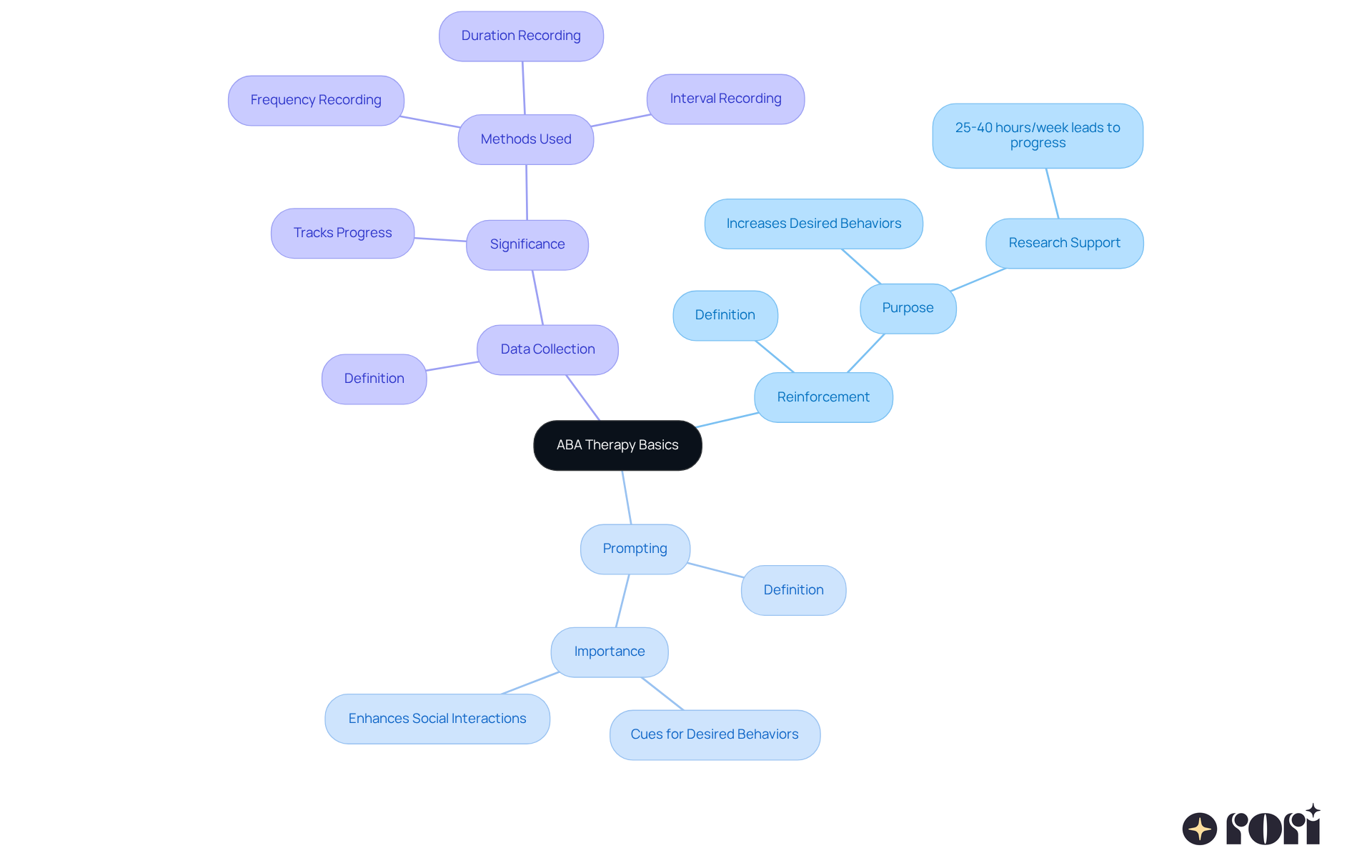
is a scientifically validated method designed to understand and enhance specific behaviors in individuals with autism. It uses techniques like reinforcement, prompting, and modeling to encourage and reduce undesired ones. As a parent, getting familiar with these key concepts can be incredibly helpful:
- Reinforcement: This technique is all about providing a reward after a desired behavior, which increases the chances of that behavior being repeated. Research shows that young individuals who engage in early, intensive therapy—typically around 25 to 40 hours a week—often experience .
- Prompting: Think of this method as giving show a desired behavior. a young person’s ability to follow instructions and engage in social interactions.
- : Tracking progress is essential in ABA therapy to assess how well interventions are working and to make necessary adjustments. Behavioral therapists emphasize that —like frequency, duration, and interval recording—help quantify behavioral changes over time. This ensures that therapy is tailored to meet each child’s unique needs. Our clinical team uses automatic data collection methods, so sessions are recorded seamlessly without interrupting the therapeutic process. Plus, this data is securely stored, anonymized, and deleted after analysis, giving you peace of mind.
By understanding these foundational concepts, you can better support your child’s learning and development through . This ultimately leads to a more . Remember, as you apply these techniques, staying in touch with your therapist is key for adjusting strategies and ensuring success. Let’s explore this journey together!
Recognize the Importance of Two-Step Instructions
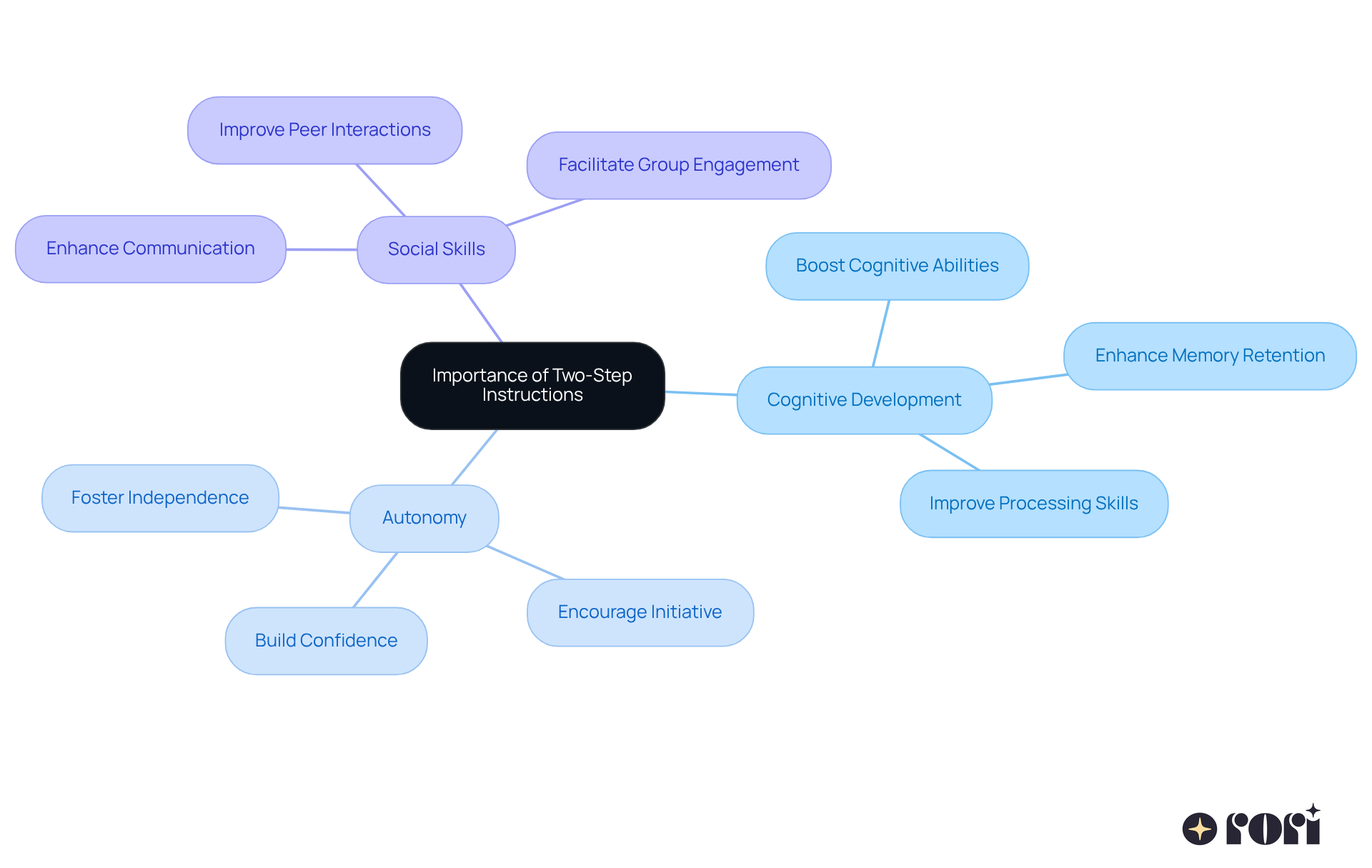
The concept of involves giving a young person two connected commands to follow in order, like ‘Get your shoes and put them on.’ Mastering this skill is super important for a few reasons:
- : When kids follow two-step instructions, they’re processing information and executing tasks in a logical order. This really helps boost their ! Research shows that young ones involved in organized teaching activities tend to have better cognitive processing and memory retention.
- Autonomy: As children learn to follow more complex guidelines, they become better at . This self-reliance is crucial for building their confidence and encouraging them to take initiative in their daily activities.
- : Understanding and can really enhance how a young person interacts with peers and adults. It fosters ! Development specialists highlight that being able to follow directions independently is linked to improved social interactions, as kids are better equipped to engage in group activities and conversations.
Recognizing the importance of this ability can inspire parents to into their daily routines. This simple practice can significantly and development. Let’s explore this together!
Implement a Step-by-Step Approach to Teaching Two-Step Instructions
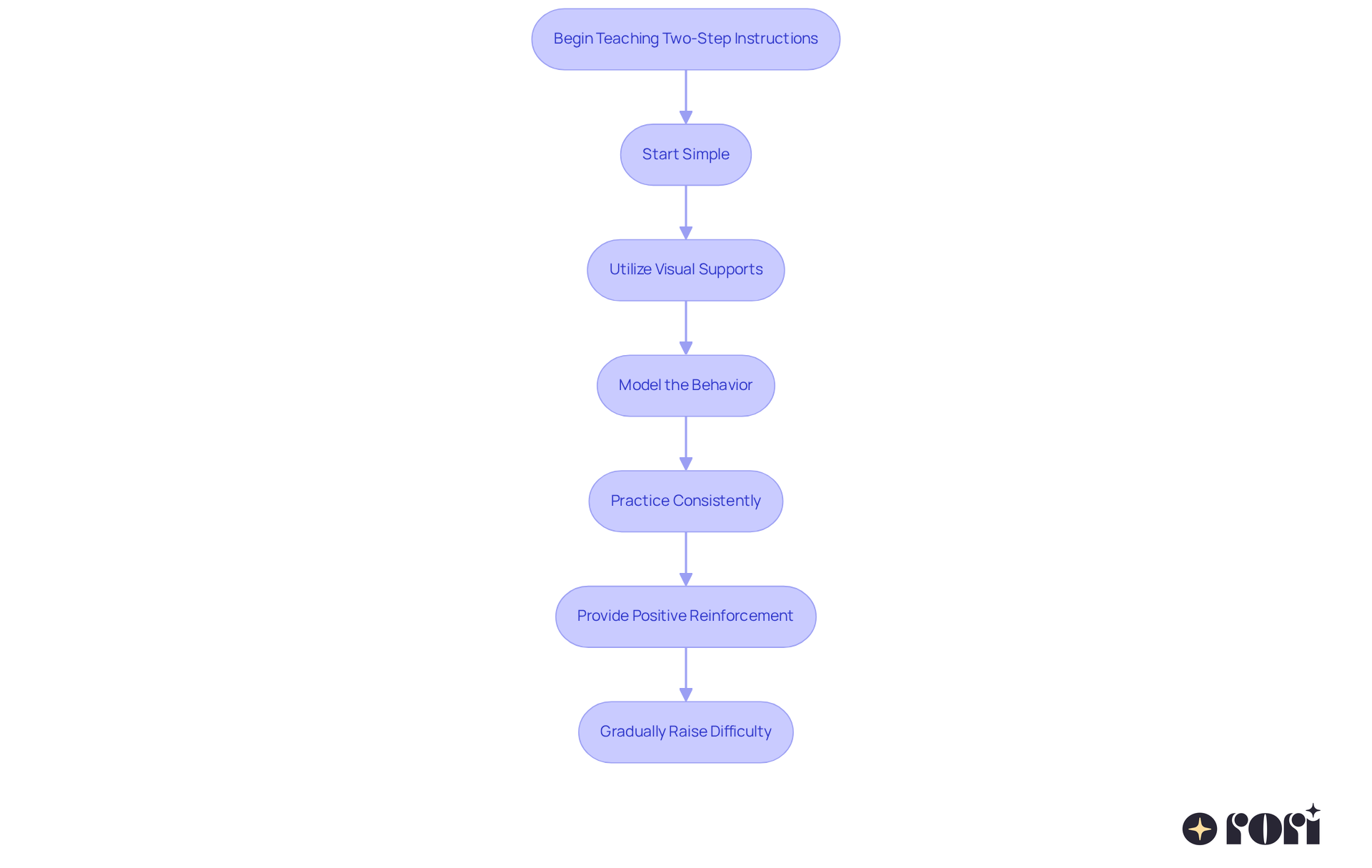
To effectively teach using techniques, let’s dive into some together:
- Start Simple: Begin with tasks your kid enjoys. For instance, try commands like ‘Pick up the toy and put it in the box.’ This approach builds confidence and encourages involvement, aligning perfectly with the personalized nature of ABA that adapts to your unique needs.
- Utilize Visual Supports: Incorporate , such as images or graphs, to illustrate the steps involved. Research shows that visual supports greatly enhance understanding, especially for individuals with autism, by clarifying expectations and reducing anxiety. In fact, studies indicate that kids using are 30% more likely to follow directives effectively. This empowers caregivers to make informed decisions that support their child’s learning journey.
- Model the Behavior: Show your child how to follow the two-step instruction. For example, demonstrate how to ‘Get the ball and throw it.’ Modeling provides a clear example for your child to imitate. As educator John Doe wisely points out, ” is essential for young individuals to comprehend and imitate tasks.” This practice not only benefits your child but also enhances your ability to support their development.
- Practice Consistently: Regularly incorporate into daily routines, like mealtime or playtime, to reinforce learning. Consistency is key in helping kids internalize these skills, which is vital for better behavioral outcomes.
- Provide : Celebrate successes, no matter how small, to encourage your child and motivate them to keep following instructions. Positive reinforcement creates a nurturing learning environment. Educator Jane Smith shares, “Acknowledging minor accomplishments can greatly enhance a young person’s confidence and readiness to participate.” This practice empowers you as a caregiver, too, by boosting your capability to support your child’s growth.
- Gradually Raise Difficulty: As your child becomes more comfortable with sequential directives, introduce more complex tasks, ensuring they remain achievable. This gradual increase helps develop independence and confidence, reinforcing the significance of for enhancing learning, verbal, and social skills in individuals with autism.
By following this organized approach, you can successfully guide your child to follow two-step instructions using ABA, with visual aids to enhance comprehension and memory. Remember to use clear, concise, and direct language when giving instructions to minimize confusion. This not only promotes informed decision-making but also encourages active participation in your child’s learning process. Together, we can support your child’s development and empower you with the knowledge and skills needed for effective intervention. Let’s explore this journey together!
Utilize Tools and Resources for Effective Teaching
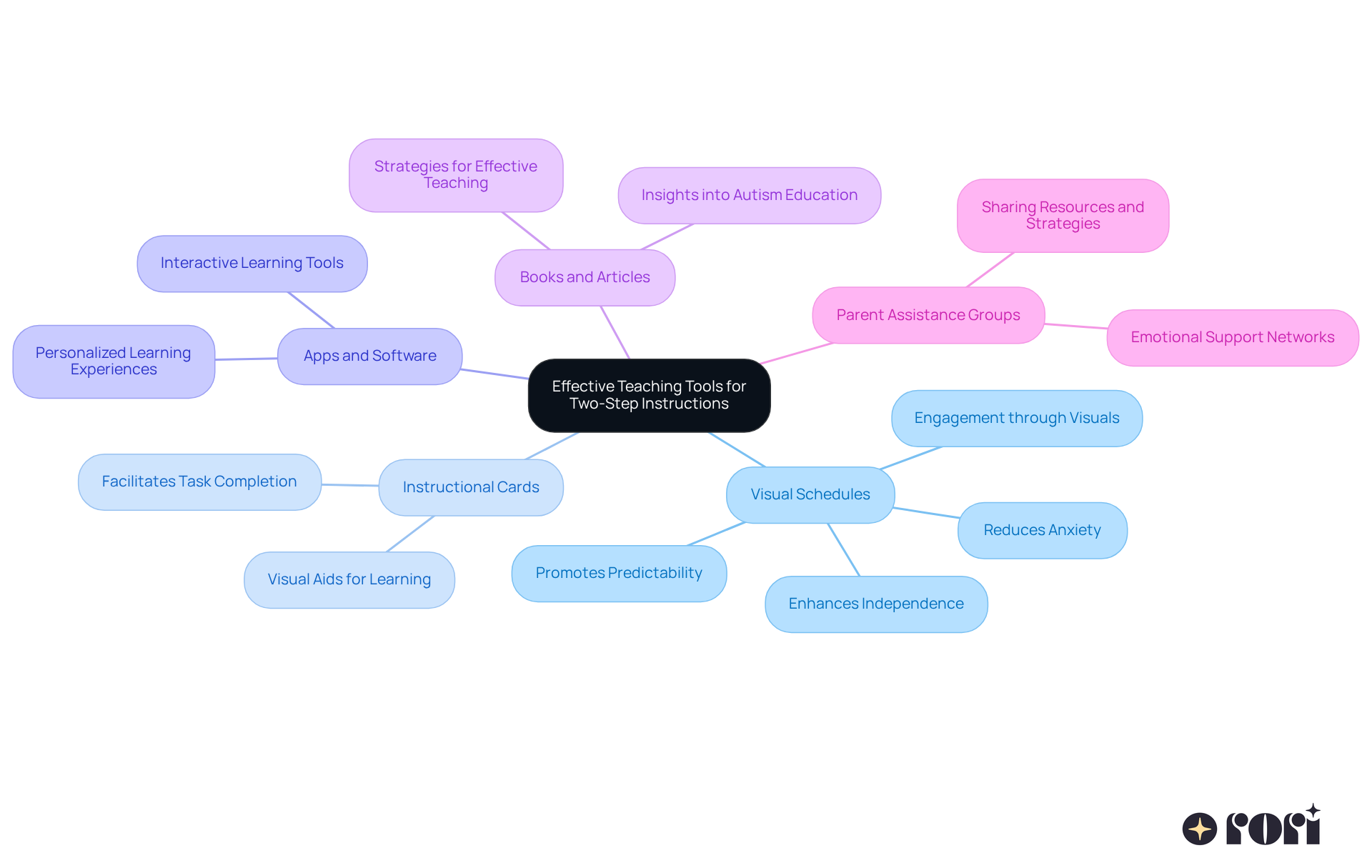
To effectively teach two-step instructions, let’s explore some helpful tools and resources together:
- : Imagine designing a visual schedule that outlines daily activities, seamlessly integrating two-step instructions into your routine. This approach helps young individuals anticipate upcoming tasks, easing anxiety and fostering independence. Research shows that using visual schedules regularly promotes predictability, boosting emotional health and enhancing their ability to follow instructions.
- How about creating instructional cards that showcase alongside relevant images? These cards can be a fantastic resource during play or educational activities, making it easier for young learners to grasp and complete tasks. Studies reveal that for youth who may struggle with verbal expression.
- Apps and Software: Have you explored ? Many of these interactive tools engage kids in their education, making the process both enjoyable and effective. Plus, digital resources offer !
- Books and Articles: Don’t forget to leverage . Resources from Rori Care provide valuable insights into , including the use of visual schedules and instructional cards.
- : Consider connecting with local or online networks where parents can share experiences, resources, and strategies for educating their kids. Sharing insights within a community can enrich learning and provide emotional support.
By using 2 step instructions aba and incorporating these tools and resources, you can create a more effective and enjoyable learning environment for your child. Together, we can help them two-step instructions!
Conclusion
Understanding and implementing two-step instructions through ABA therapy can truly enhance a child’s developmental journey! This structured approach not only helps build cognitive skills but also nurtures autonomy and social interaction, laying the groundwork for a more independent and confident future. Parents, you’re essential in this process, and having effective strategies can really make all the difference.
Throughout this article, we’ve highlighted the importance of foundational ABA concepts like reinforcement, prompting, and data collection. We’ve also outlined a step-by-step methodology for teaching two-step instructions, showing how simple tasks can evolve into complex directives that promote learning and self-reliance. Utilizing visual supports and consistent practice are key components that can transform the learning experience into something both enjoyable and effective.
As you embark on this journey, it’s crucial to stay engaged and proactive in applying these techniques. By weaving two-step instructions into your daily routines and using available resources, you can create a supportive environment that encourages growth and development. The impact of these practices goes beyond immediate learning; they shape your child’s ability to navigate social situations and foster a sense of accomplishment. Embracing this approach not only benefits children with autism but also enriches the family dynamic, creating a more harmonious and understanding atmosphere. Let’s explore this together!
Frequently Asked Questions
What is ABA therapy?
ABA therapy, or Applied Behavior Analysis therapy, is a scientifically validated method designed to understand and enhance specific behaviors in individuals with autism. It employs techniques such as reinforcement, prompting, and modeling to encourage positive behaviors and reduce undesired ones.
What is the role of reinforcement in ABA therapy?
Reinforcement involves providing a reward after a desired behavior, which increases the likelihood of that behavior being repeated. Research indicates that young individuals who engage in early, intensive therapy—typically around 25 to 40 hours a week—often experience significant developmental progress.
How does prompting work in ABA therapy?
Prompting is a technique that involves giving cues or hints to help a child exhibit a desired behavior. Effective prompting can enhance a young person’s ability to follow instructions and engage in social interactions.
Why is data collection important in ABA therapy?
Data collection is essential in ABA therapy to assess the effectiveness of interventions and make necessary adjustments. Systematic data collection methods, such as frequency, duration, and interval recording, help quantify behavioral changes over time, ensuring that therapy is tailored to meet each child’s unique needs.
How is data collected during ABA therapy sessions?
The clinical team uses automatic data collection methods, allowing sessions to be recorded seamlessly without interrupting the therapeutic process. The data is securely stored, anonymized, and deleted after analysis to ensure privacy.
How can parents support their child’s learning in ABA therapy?
By understanding foundational concepts like reinforcement, prompting, and data collection, parents can better support their child’s learning and development. Staying in touch with the therapist is also key for adjusting strategies and ensuring success throughout the therapeutic journey.