

Introduction
Discriminative stimuli (SDs) are important signals that guide behavior in Applied Behavior Analysis (ABA), especially for individuals with autism. By using these cues, therapists can create structured environments that not only enhance learning but also encourage positive behavior changes. As families look for effective strategies to support their loved ones, understanding how to implement SDs can truly make a difference in fostering independence and communication skills.
So, what practical applications can parents and caregivers adopt to make the most of these powerful tools in everyday life? Let’s explore this together! 🌟
Rori Care – ABA Therapy: Utilizing Discriminative Stimulus for Enhanced Learning Outcomes
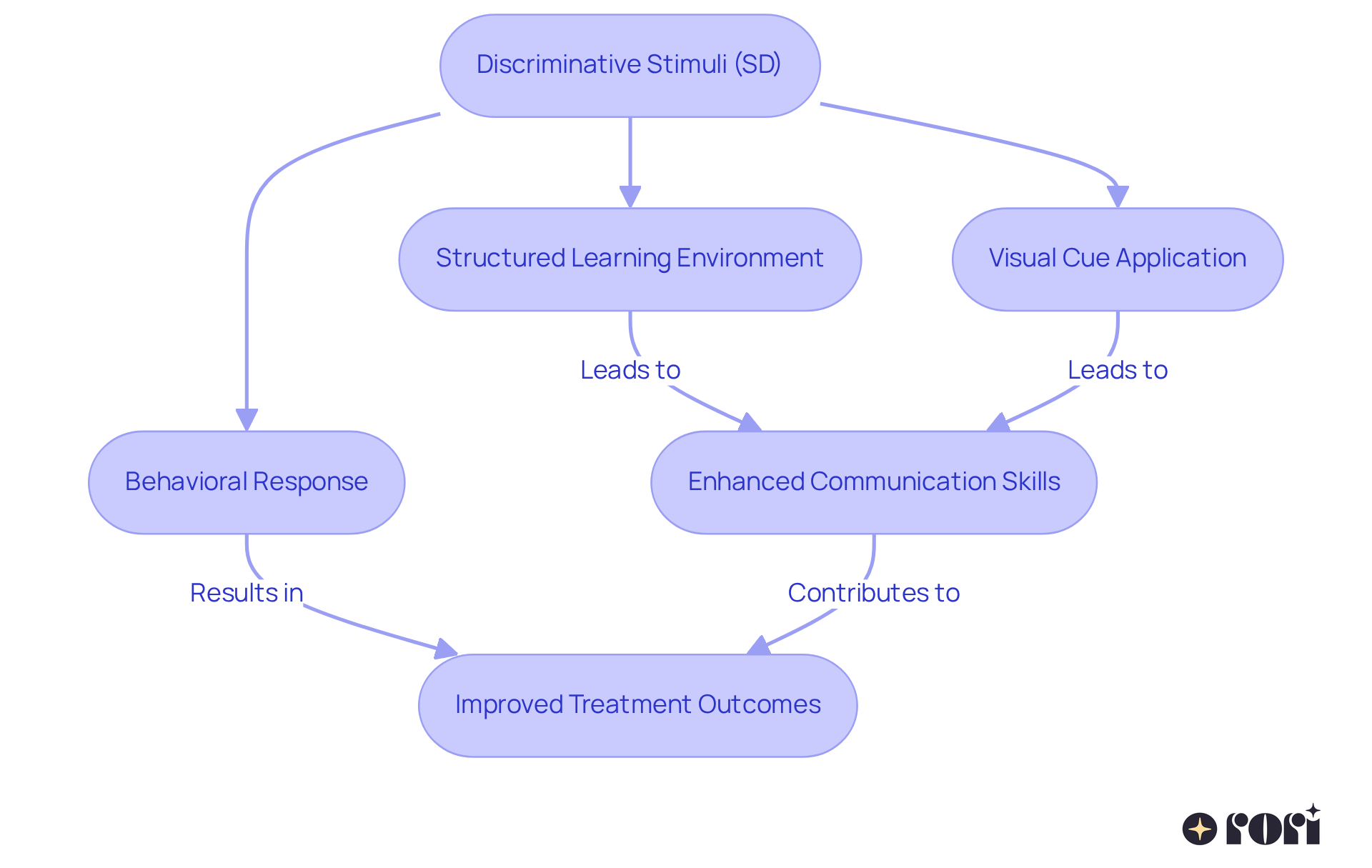
are essential cues that help young people know when a specific behavior might be rewarded. At Rori Care, our use thoughtfully to create that really boost a young person’s ability to learn and apply new skills. For example, a simple visual cue, like a picture of a toy, can motivate a young person to ask for it, enhancing their .
Research shows that the use of SD in ABA examples can lead to , with ABA therapy achieving over an 89% in individuals with autism spectrum disorder (ASD). By thoughtfully weaving SD in ABA examples into therapy, Rori Care tailors each learner’s experience to their unique needs, helping them engage more deeply and achieve better results during sessions.
This personalized approach not only supports skill development but also encourages . It’s a key part of Rori Care’s commitment to . Let’s explore this together and see how we can make a difference!
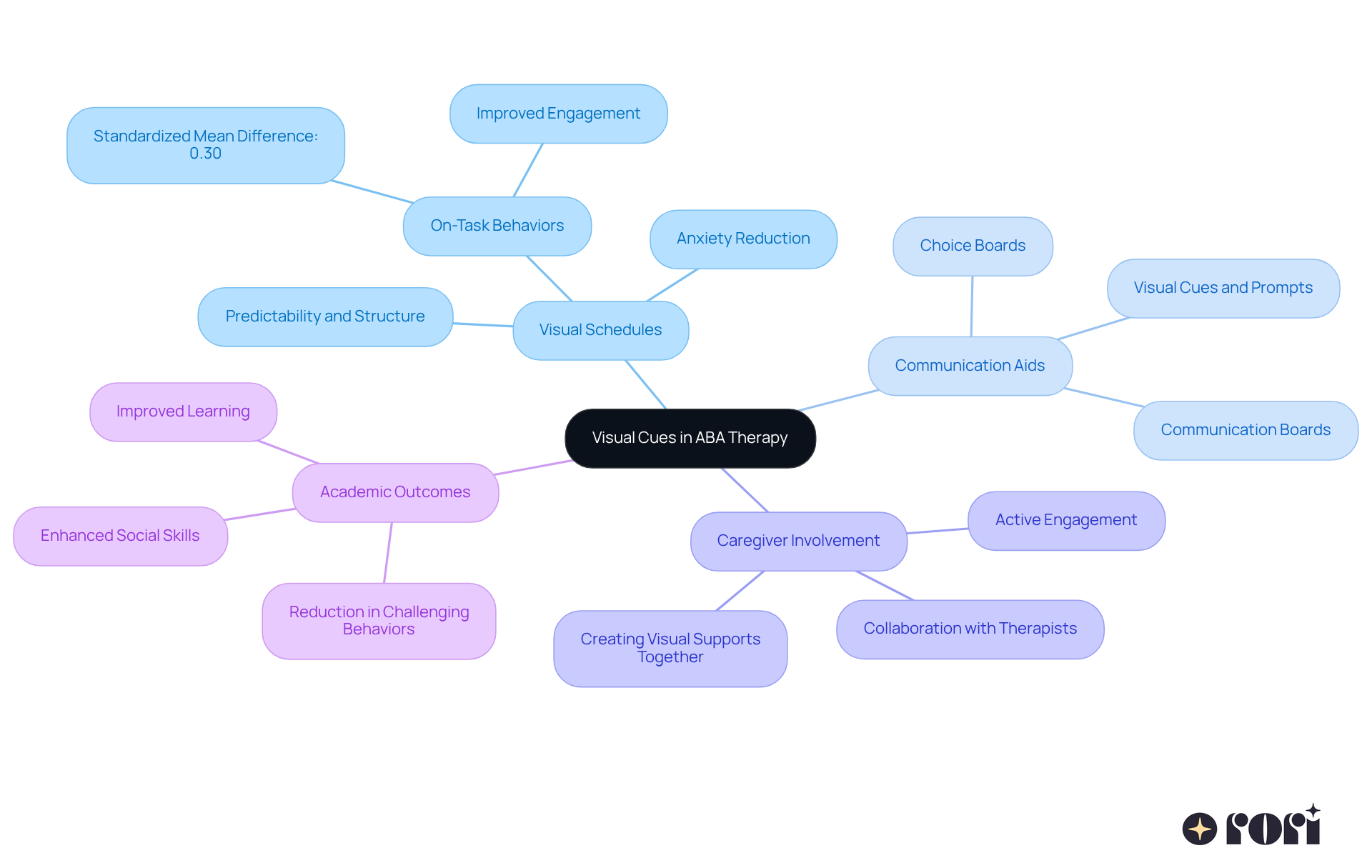
Visual Cues: Enhancing Learning Through Discriminative Stimulus in ABA Therapy
—like pictures, symbols, and written instructions—are such ! Think about ; they really help kids grasp the order of their daily tasks, which can ease anxiety and promote adherence. Research shows that these , making transitions a lot smoother for children with autism. For instance, a meta-analysis of 14 randomized controlled trials found that visual schedules significantly enhance academic-related on-task behaviors, with a standardized mean difference of 0.30 for communication outcomes and 0.11 for socialization outcomes. Plus, many studies have shown a decrease in challenging behaviors during academic activities.
ABA therapists emphasize that a but also empowers children by providing predictability, which is essential for reducing anxiety. By connecting specific visual signals with preferred actions, therapists can enhance learning and help young individuals navigate their environments more effectively. At Rori Care, we incorporate these visual strategies into , ensuring that each child’s unique needs are met through .
Visual aids, such as communication boards and choice boards, allow non-verbal children to express their needs, further enhancing their . However, it’s important to remember that visual schedules alone might not be enough to boost academic-related on-task behaviors without additional components, as recent studies have pointed out. The is vital for achieving meaningful progress, as evidenced by the success of early intensive behavioral intervention (EIBI) in improving learning, verbal, and social skills in children with autism.
Let’s explore this together! We’re here to help you every step of the way!
Auditory Signals: Leveraging Sound as a Discriminative Stimulus in Learning
, like verbal prompts and specific sounds, play a significant role in guiding young learners’ responses in educational settings. For example, a therapist might use a bell sound to signal the end of an activity, helping the child . This consistent use of paired with actions helps kids connect sounds with activities, enhancing their ability to respond appropriately in various situations. 😊
Recent studies highlight how can greatly improve by providing clear signals that reinforce expected behaviors. Prompt feedback when a young learner successfully demonstrates an action is crucial for boosting educational results. By weaving auditory signals into therapy sessions, Rori Care supports skill acquisition through crafted by certified analysts.
These plans include measurable goals and designed to encourage , with to meet each child’s unique needs. However, it’s essential to be aware of potential challenges, like resistance to certain stimuli, which can impact how effective auditory cues are in therapy. Let’s explore this together! If you have any thoughts or experiences to share, we’d love to hear from you!

Environmental Triggers: Using Contextual Cues as Discriminative Stimuli in ABA Therapy
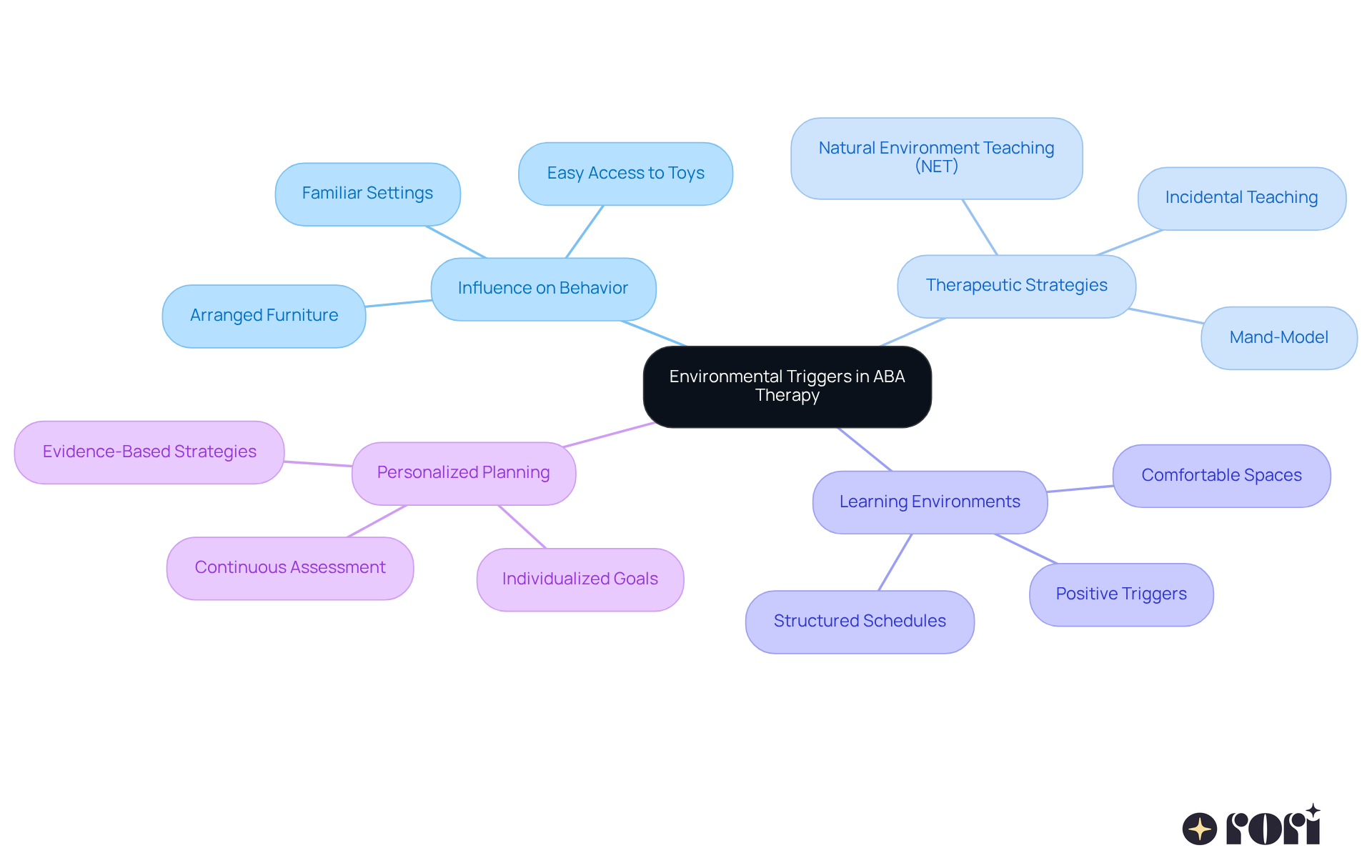
Did you know that , like how furniture is arranged or the presence of specific items, can greatly influence the actions of individuals with autism? For example, when toys are placed within easy reach, it can inspire a child to engage in play. This simple change can help enhance their and .
At Rori Care – ABA Therapy, therapists intentionally modify environments to include . This thoughtful setup not only encourages desired behaviors but also creates . It’s all about helping individuals with autism recognize how their actions connect with their surroundings, leading to better .
Recent studies back this up, showing that well-structured learning environments can boost engagement and communication among young individuals. Plus, familiar settings—like mealtimes or play areas—turn everyday moments into valuable learning opportunities. This allows children to practice social skills in contexts they know and love.
Methods like (NET) and Incidental Teaching really shine here. They show how a little thoughtfulness in environmental setups can make a big difference in learning and behavior. By integrating these strategies, caregivers can create spaces that not only support skill development but also cultivate comfort and motivation.
This approach is part of Rori Care’s commitment to , measurable goals, and continuous assessment. We ensure that each child’s unique needs are met through and ongoing adjustments to their behavioral plans. Let’s explore this together and see how we can make a positive impact!
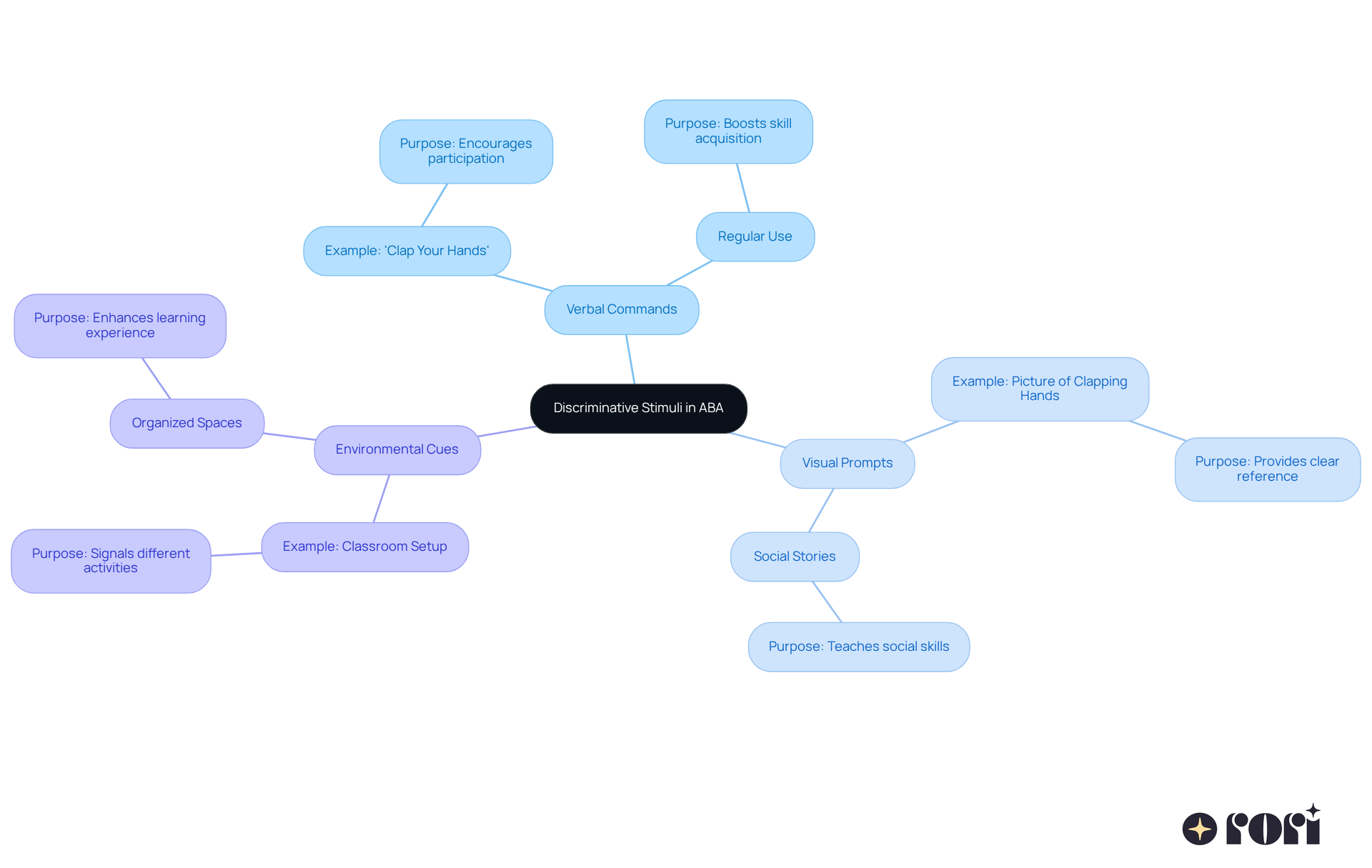
Types of Discriminative Stimuli: Key Examples for Teaching New Skills in ABA
are super important in , as illustrated by the , because they help guide in fun and effective ways. Think of a —that’s an SD that encourages little ones to join in the fun! , such as showing a picture of a hand clapping, also play a big role by giving a clear reference for the desired behavior. Recent studies show that using verbal directions regularly can really boost how quickly kids learn new skills, especially when they have these prompts to respond to.
At Rori Care, our therapists use a variety of to support skill building and help children generalize what they learn in different situations. For example, when teaching , a therapist might use a visual prompt like a social story, paired with verbal instructions, to show how to interact appropriately. This multi-faceted approach not only aids understanding but also encourages kids to become more independent as they learn to recognize and respond to these signals, such as sd in aba example, in everyday life.
Plus, incorporating —like setting up a classroom to signal different activities—really enhances the learning experience. By creating organized spaces where SDs are consistently used, our therapists can effectively motivate positive actions and enrich the overall learning journey for individuals with autism. Let’s explore this together and see how these strategies can make a difference!
Reducing Problem Behaviors: The Role of Discriminative Stimulus in ABA Therapy
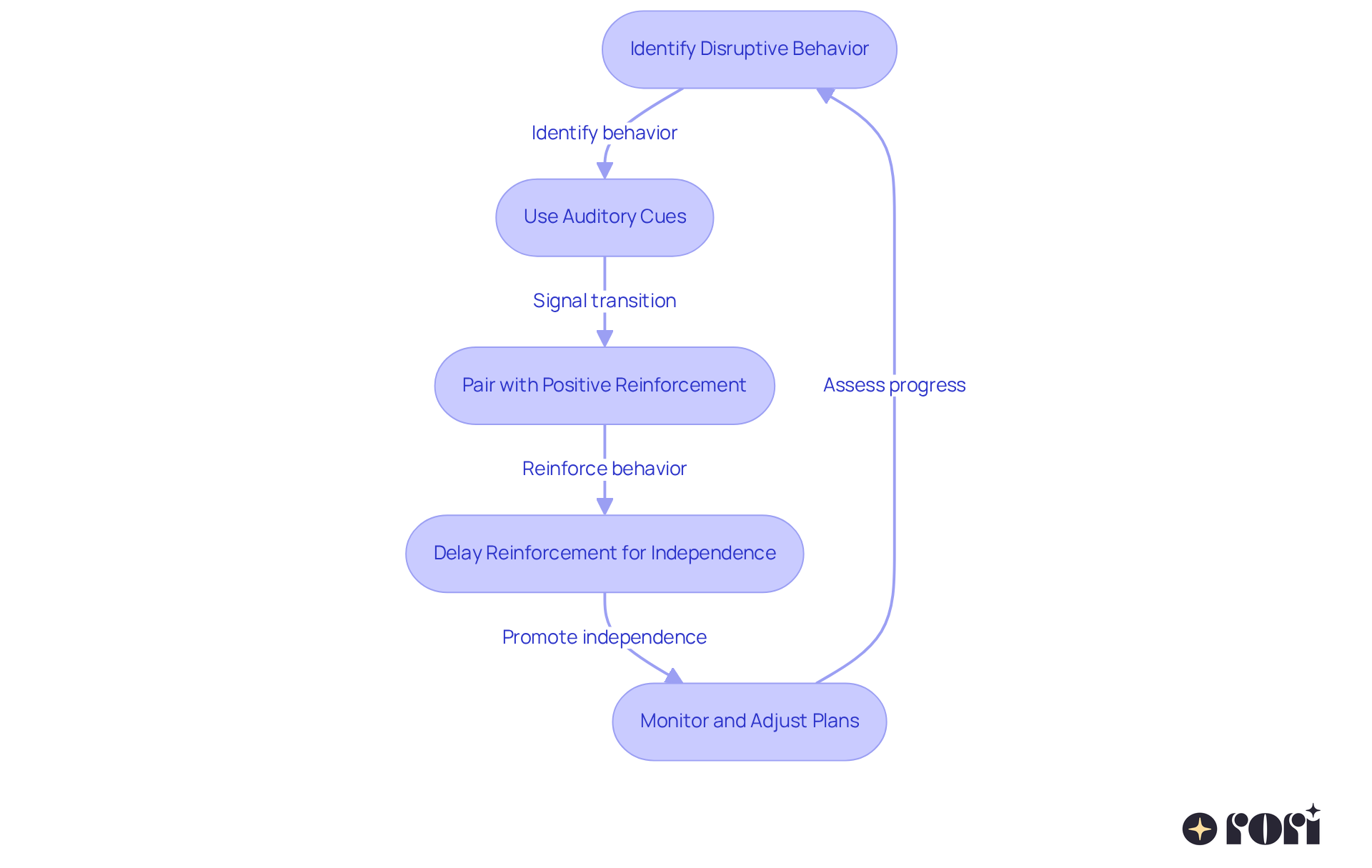
play a vital role in helping reduce challenging behaviors by providing clear expectations and signals for appropriate responses. For instance, when a little one exhibits disruptive behavior during transitions, therapists can use specific to indicate upcoming changes. Research shows that using these auditory cues can significantly improve during these key moments. By consistently pairing these signals with , we encourage our youngsters to respond more positively to transitions. And here’s a tip: slightly delaying reinforcement (like waiting two seconds) can promote independent responses, making these strategies even more effective.
At Rori Care, our dedicated analysts craft personalized plans that incorporate these strategies, ensuring that each child’s unique needs are met. By creating a , we’ve seen a remarkable decrease in problem behaviors. Promptly reinforcing appropriate reactions helps children connect the cues with positive outcomes, enhancing their ability to navigate transitions smoothly. Plus, our approach includes ongoing assessment and adjustments to these treatment plans to reflect each individual’s progress. As Rori Care emphasizes, understanding the role of discriminative stimuli, as illustrated in the , is crucial for caregivers aiming to foster positive behaviors and learning in children with autism. For parents, a practical tip is to consistently use the same auditory signal for specific transitions, gradually fading the cue as your child grows more independent in managing these changes. Let’s explore this together!
Benefits of Discriminative Stimulus: Transforming Learning and Behavior in ABA Therapy
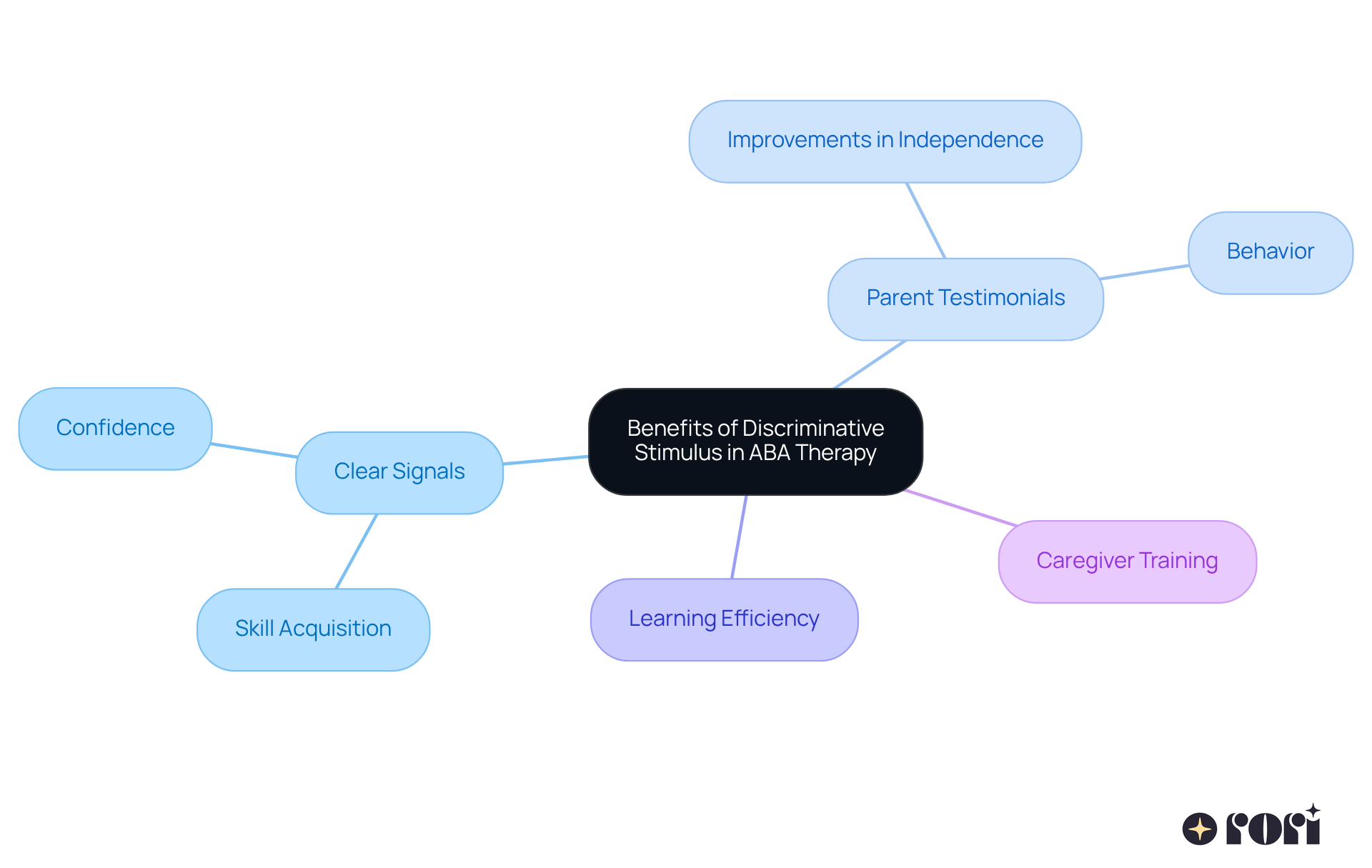
The use of SD in is essential in therapy, offering numerous benefits that significantly enhance learning, behavior, and independence for individuals with autism. They provide and expectations, helping young individuals understand what is needed in various situations. This clarity leads to better and boosts their confidence and independence.
At Rori Care – ABA Therapy, we’ve seen incredible results from integrating SDs into therapy sessions. Parents share heartwarming testimonials about their children’s progress, highlighting . By clarifying expectations, SDs not only guide actions but also reinforce through prompt feedback—something that can be particularly beneficial for individuals with autism who may struggle with social cues.
Recent studies have shown just how powerful clear signals can be for young learners. By setting specific , the concept of [sd in aba example](https://goldstarrehab.com/parent-resources/discriminative-stimulus-in-aba-therapy) empowers kids to make informed choices and engage in desired behaviors. This approach not only enhances learning efficiency but also helps in generalizing skills across different settings, paving the way for lifelong success and independence.
Additionally, plays a vital role in helping parents implement at home. This reinforcement of skills learned during therapy supports their children’s development. When caregivers and strategies, they gain the tools to make informed decisions that positively impact their child’s progress, fostering improved behavioral outcomes and a more empowered family dynamic.
Let’s explore this together! We’re here to help you every step of the way!
Strategies for Implementing Discriminative Stimulus in ABA Therapy
To effectively implement (SDs) in ABA therapy, therapists can adopt some friendly strategies:
- Identify : Start by clearly defining the SDs that align with the learner’s learning objectives. It’s important that these cues are relevant and easily recognizable—this makes a big difference!
- This is an . Consistently associating [SD in ABA example](https://rori.care/post/understanding-sd-in-aba-therapy-a-comprehensive-tutorial-for-practitioners) with helps strengthen the connection between the cue and the desired behavior. Research shows that effective pairing can significantly improve . Isn’t that wonderful?
- This is an SD in ABA example. In the SD in ABA example, as the young learner becomes more proficient, it’s a good idea to gradually reduce the intensity or frequency of prompts. This fosters independence and self-reliance, which is so important for their growth.
The concept of SD in ABA example is essential for understanding . : Keep an eye on the individual’s responses to the SD in ABA example and make necessary adjustments to optimize their effectiveness. This adaptive method ensures that therapy remains responsive to their evolving needs.
By utilizing these strategies, therapists at Rori Care – ABA Therapy can enhance their interventions. This ultimately aids the learning journeys of young individuals and fosters positive behavior changes. Let’s explore this together!

Involving Parents and Caregivers: Maximizing the Impact of Discriminative Stimulus in ABA
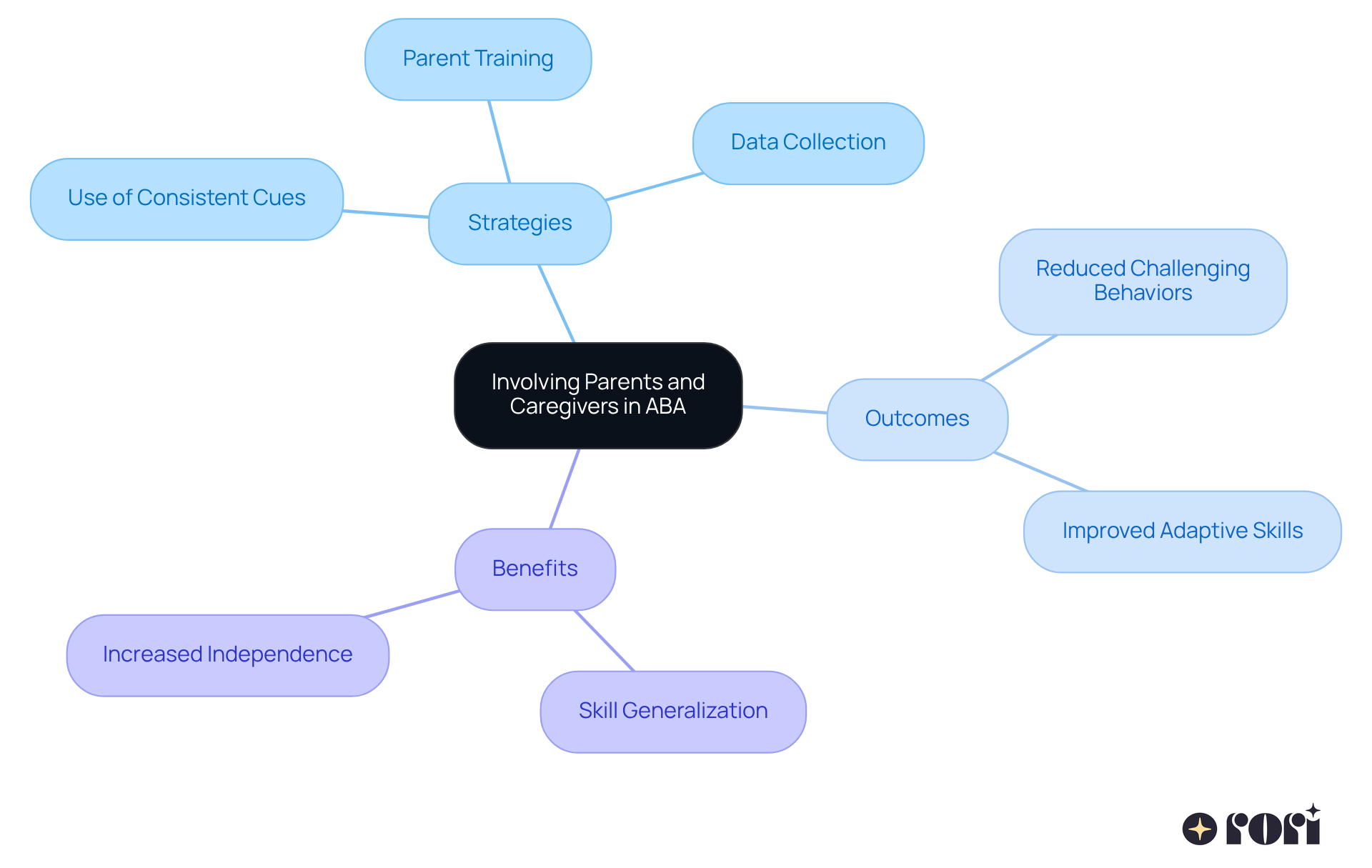
Engaging parents and caregivers in using is crucial for maximizing the effectiveness of . At Rori Care, we’re here to support your family’s journey by sharing to reinforce SD in ABA examples at home. By consistently using the same from therapy sessions, parents can really boost their child’s learning. For example, if a little one learns to ask for a snack with a specific visual cue, parents should use that same cue during mealtime to encourage communication.
Our data shows that when suggested hours are actively applied with caregiver participation, about 90% of young individuals make . Isn’t that encouraging? Recent studies also highlight how can greatly enhance the ability to reinforce SD in ABA examples, leading to . This includes fewer challenging behaviors and improved adaptive skills.
By equipping families with knowledge, aligning strategies, and collecting data, Rori Care empowers you to support your loved one’s beyond therapy. Together, we can create a collaborative environment that . Let’s explore this journey together!
Practical Applications of Discriminative Stimulus: Everyday Examples in ABA Therapy
Practical uses of are evident in our daily lives, helping individuals with autism learn and engage more effectively. For example, when a little one learns to say ‘please’ while asking for a toy, that word acts as an SD, to get what they want. are another fantastic tool! They help kids understand when it’s time for specific activities, like playing, eating, or moving on to a new task.
By weaving these familiar scenarios into therapy, Rori Care – empowers young individuals to apply their skills in various situations, promoting independence and boosting their confidence. The of ABA therapy means that treatment plans are to each child’s unique needs. Plus, is key to making real progress—research shows that 90% of individuals see significant improvements when they follow the recommended hours.
Did you know ABA therapy is the only scientifically backed treatment for autism that insurance covers? This makes it more accessible for families. Current research backs up that using SD in ABA examples consistently in everyday situations can lead to meaningful improvements in behavior. This is why it’s so important for caregivers to weave these strategies into their daily interactions. By empowering caregivers with ABA principles and data collection, we can enhance the effectiveness of behavioral support, ensuring that children get the they need to thrive. Let’s explore this together!

Conclusion
Discriminative stimuli (SDs) play a crucial role in making learning and behavior more effective through Applied Behavior Analysis (ABA) therapy. By offering clear cues that indicate when specific behaviors will be rewarded, SDs help individuals—especially those with autism—engage more actively in their learning journeys. Integrating visual, auditory, and environmental cues into therapy not only clarifies expectations but also significantly boosts skill acquisition and behavioral growth.
Throughout this article, we’ve shared various examples of how SDs can be put into practice. Think about visual schedules that help with organization and ease anxiety, or auditory signals that make transitions smoother. These strategies emphasize the importance of customizing approaches to fit individual needs. Plus, when parents and caregivers get involved in using these strategies at home, the impact of therapy can be maximized, leading to meaningful progress in behavior and independence.
Ultimately, the successful use of discriminative stimuli in ABA therapy highlights the amazing potential of structured learning environments. By encouraging collaboration between therapists, caregivers, and learners, we can create a supportive network that enhances skill generalization and independence. Embracing these strategies not only enriches the lives of individuals with autism but also empowers families to play a positive role in their loved ones’ developmental journeys. Let’s explore this together and continue to support each other every step of the way!
Frequently Asked Questions
What are discriminative stimuli (SDs) and how are they used in ABA therapy at Rori Care?
Discriminative stimuli (SDs) are cues that help individuals recognize when a specific behavior may be rewarded. At Rori Care, ABA therapy clinicians use SDs thoughtfully to create structured learning environments, enhancing a young person’s ability to learn and apply new skills.
What impact do visual cues have on learning in ABA therapy?
Visual cues, such as pictures and symbols, are powerful tools in ABA therapy. They help children understand daily tasks, reduce anxiety, and promote adherence. Research shows that visual supports can significantly enhance communication and understanding, making transitions smoother for children with autism.
How effective are visual schedules in improving behavior and communication outcomes?
A meta-analysis of 14 randomized controlled trials found that visual schedules significantly enhance academic-related on-task behaviors, with a standardized mean difference of 0.30 for communication outcomes and 0.11 for socialization outcomes. They also contribute to a decrease in challenging behaviors during academic activities.
What role do auditory signals play in learning for children with autism?
Auditory signals, such as verbal prompts and specific sounds, help guide children’s responses in educational settings. They provide clear signals that reinforce expected behaviors and can significantly improve learning outcomes when used consistently during therapy sessions.
How does Rori Care personalize therapy plans for each child?
Rori Care tailors therapy plans based on each child’s unique needs, incorporating evidence-based methods and measurable goals. These personalized plans include visual and auditory strategies to support skill acquisition and positive behavior changes.
Why is the involvement of caregivers important in the implementation of visual strategies?
The active involvement of caregivers is vital for achieving meaningful progress with visual strategies. Their participation enhances the effectiveness of these methods, as seen in the success of early intensive behavioral intervention (EIBI) in improving learning, verbal, and social skills in children with autism.
What challenges might arise when using auditory cues in therapy?
Some children may show resistance to certain auditory stimuli, which can affect the effectiveness of auditory cues in therapy. It’s important for therapists to be aware of these potential challenges and adjust their strategies accordingly.
List of Sources
- Rori Care – ABA Therapy: Utilizing Discriminative Stimulus for Enhanced Learning Outcomes
- Inspirational ABA and Autism Quotes – Mrs. Moe’s Modifications (https://mrsmoesmodifications.com/inspirational-aba-and-autism-quotes)
- rori.care (https://rori.care/post/what-is-a-discriminative-stimulus-in-aba-a-comprehensive-overview)
- Updated Recommendations for Reinforcement Schedule Thinning following Functional Communication Training – PMC (https://pmc.ncbi.nlm.nih.gov/articles/PMC10891008)
- The Numbers Don’t Lie: Revealing Autism Therapy Statistics | Above and Beyond Therapy (https://abtaba.com/blog/autism-therapy-statistics)
- supportivecareaba.com (https://supportivecareaba.com/statistics/the-impact-of-aba-therapy-on-academic-success-for-children-with-autism)
- Visual Cues: Enhancing Learning Through Discriminative Stimulus in ABA Therapy
- totalcareaba.com (https://totalcareaba.com/autism/aba-therapy-and-visual-schedules)
- heartwisesupport.org (https://heartwisesupport.org/post/using-visual-supports-in-aba-therapy-programs)
- The use of visual schedules to increase academic-related on-task behaviors of individuals with autism: a literature review (https://tandfonline.com/doi/full/10.1080/20473869.2024.2402124)
- Inspirational ABA and Autism Quotes – Mrs. Moe’s Modifications (https://mrsmoesmodifications.com/inspirational-aba-and-autism-quotes)
- Auditory Signals: Leveraging Sound as a Discriminative Stimulus in Learning
- goldstarrehab.com (https://goldstarrehab.com/parent-resources/discriminative-stimulus-in-aba-therapy)
- goldenstepsaba.com (https://goldenstepsaba.com/resources/discriminative-stimulus)
- The Numbers Don’t Lie: Revealing Autism Therapy Statistics | Above and Beyond Therapy (https://abtaba.com/blog/autism-therapy-statistics)
- brighterstridesaba.com (https://brighterstridesaba.com/blog/discriminative-stimulus-in-aba-therapy)
- Environmental Triggers: Using Contextual Cues as Discriminative Stimuli in ABA Therapy
- Inspirational ABA and Autism Quotes – Mrs. Moe’s Modifications (https://mrsmoesmodifications.com/inspirational-aba-and-autism-quotes)
- yellowbusaba.com (https://yellowbusaba.com/post/how-to-introduce-new-environments-in-aba-therapy)
- Best Autism Quotes to Raise Awareness and Understanding (https://yellowbusaba.com/post/autism-quotes)
- Types of Discriminative Stimuli: Key Examples for Teaching New Skills in ABA
- How Discriminative Stimulus is used in ABA Therapy | Motivity (https://motivity.net/blog/discriminative-stimulus-in-aba-therapy)
- Inspirational ABA and Autism Quotes – Mrs. Moe’s Modifications (https://mrsmoesmodifications.com/inspirational-aba-and-autism-quotes)
- rori.care (https://rori.care/post/what-is-a-discriminative-stimulus-in-aba-a-comprehensive-overview)
- Reducing Problem Behaviors: The Role of Discriminative Stimulus in ABA Therapy
- discoveryaba.com (https://discoveryaba.com/aba-therapy/discriminative-stimulus-in-aba)
- goldenstepsaba.com (https://goldenstepsaba.com/resources/discriminative-stimulus)
- rori.care (https://rori.care/post/what-is-an-sd-in-aba-therapy-a-complete-tutorial-on-discriminative-stimuli)
- Benefits of Discriminative Stimulus: Transforming Learning and Behavior in ABA Therapy
- goldstarrehab.com (https://goldstarrehab.com/parent-resources/discriminative-stimulus-in-aba-therapy)
- goldenstepsaba.com (https://goldenstepsaba.com/resources/discriminative-stimulus)
- What Is a Discriminative Stimulus (SD) in ABA Therapy? (https://chicagoabatherapy.com/resources/articles/what-is-a-discriminative-stimulus-in-aba-therapy)
- Strategies for Implementing Discriminative Stimulus in ABA Therapy
- What Is a Discriminative Stimulus (SD) in ABA Therapy? (https://chicagoabatherapy.com/resources/articles/what-is-a-discriminative-stimulus-in-aba-therapy)
- Incorporating Discriminative Stimuli into Functional Communication Training with Augmentative and Alternative Communication Devices: A Tutorial – PMC (https://pmc.ncbi.nlm.nih.gov/articles/PMC7702717)
- circlecareservices.com (https://circlecareservices.com/discriminative-stimulus-in-aba)
- rori.care (https://rori.care/post/discriminative-stimulus-sd-understanding-and-implementing-in-aba-therapy)
- Involving Parents and Caregivers: Maximizing the Impact of Discriminative Stimulus in ABA
- mastermindbehavior.com (https://mastermindbehavior.com/post/discriminative-stimulus-aba-therapy)
- mastermindbehavior.com (https://mastermindbehavior.com/post/the-impact-of-parent-training-in-aba-therapy)
- yellowbusaba.com (https://yellowbusaba.com/post/discriminative-stimulus-in-aba-therapy)
- achievingstarstherapy.com (https://achievingstarstherapy.com/blog/the-role-of-parent-education-in-aba-therapy)
- Patient Outcomes After Applied Behavior Analysis for Autism Spectrum Disorder – PMC (https://pmc.ncbi.nlm.nih.gov/articles/PMC8702444)
- Practical Applications of Discriminative Stimulus: Everyday Examples in ABA Therapy
- rori.care (https://rori.care/post/what-is-a-discriminative-stimulus-in-aba-a-comprehensive-overview)
- How Discriminative Stimulus is used in ABA Therapy | Motivity (https://motivity.net/blog/discriminative-stimulus-in-aba-therapy)
- bluegemsaba.com (https://bluegemsaba.com/practical-examples-of-discriminative-stimuli)