

Introduction
The journey to effective communication for children, especially those on the autism spectrum, often begins with a fundamental skill: echoic responses. This essential aspect of Applied Behavior Analysis (ABA) not only lays the groundwork for verbal expression but also fosters social interaction and emotional connection. By exploring nine key echoic examples, caregivers and educators can uncover practical strategies that enhance children’s ability to communicate their needs and feelings.
But what challenges might arise in implementing these techniques? And how can they be overcome to ensure every child thrives in their communication journey? Let’s explore this together! We’re here to help you every step of the way!
Rori Care – ABA Therapy: Comprehensive Echoic Training Techniques
At Rori Care, we’re all about providing thorough and caring Applied Behavior Analysis Treatment! 🌟 We use a variety of to meet each individual’s unique needs. Our key strategies include:
- Modeling
- Prompting
- Reinforcement
These strategies help to imitate sounds and words.
During our , our passionate clinicians teach , which lays the foundation for more advanced . We absolutely love empowering parents through , sharing that support their children’s behavioral goals. are a must for and fine-tuning our techniques, ensuring every learner has the best chance for success.
As a practical tip, parents can reinforce verbal responses at home by consistently modeling language during daily activities. Let’s explore this together! We’re here to help you every step of the way! 😊

Echoic Example 1: Imitating Sounds for Communication Skills
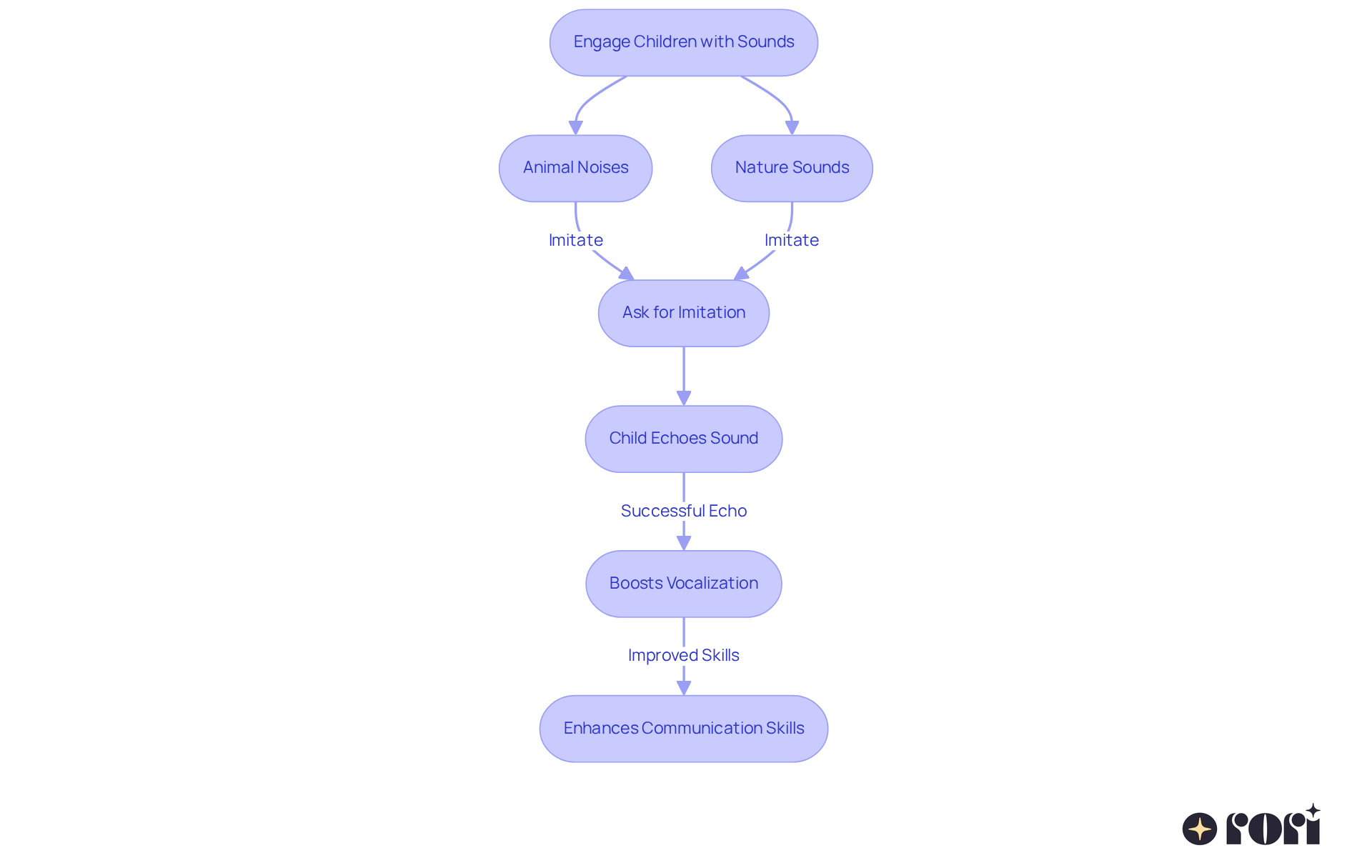
One effective way to engage young ones is by encouraging them to imitate fun sounds, like animal noises or sounds from nature. For example, when a clinician asks, ‘Can you say ‘meow’?’ and the child echoes back, it’s a wonderful moment that boosts their ability to vocalize. This practice not only sharpens their listening skills but also provides aba that lay the groundwork for . It beautifully illustrates how tailors its approach to meet each child’s .
By employing techniques, we see significant . It’s all about creating those connections and helping our kids thrive! Let’s explore this together and see how we can !
Echoic Example 2: Transitioning from Echoic to Manding in Therapy
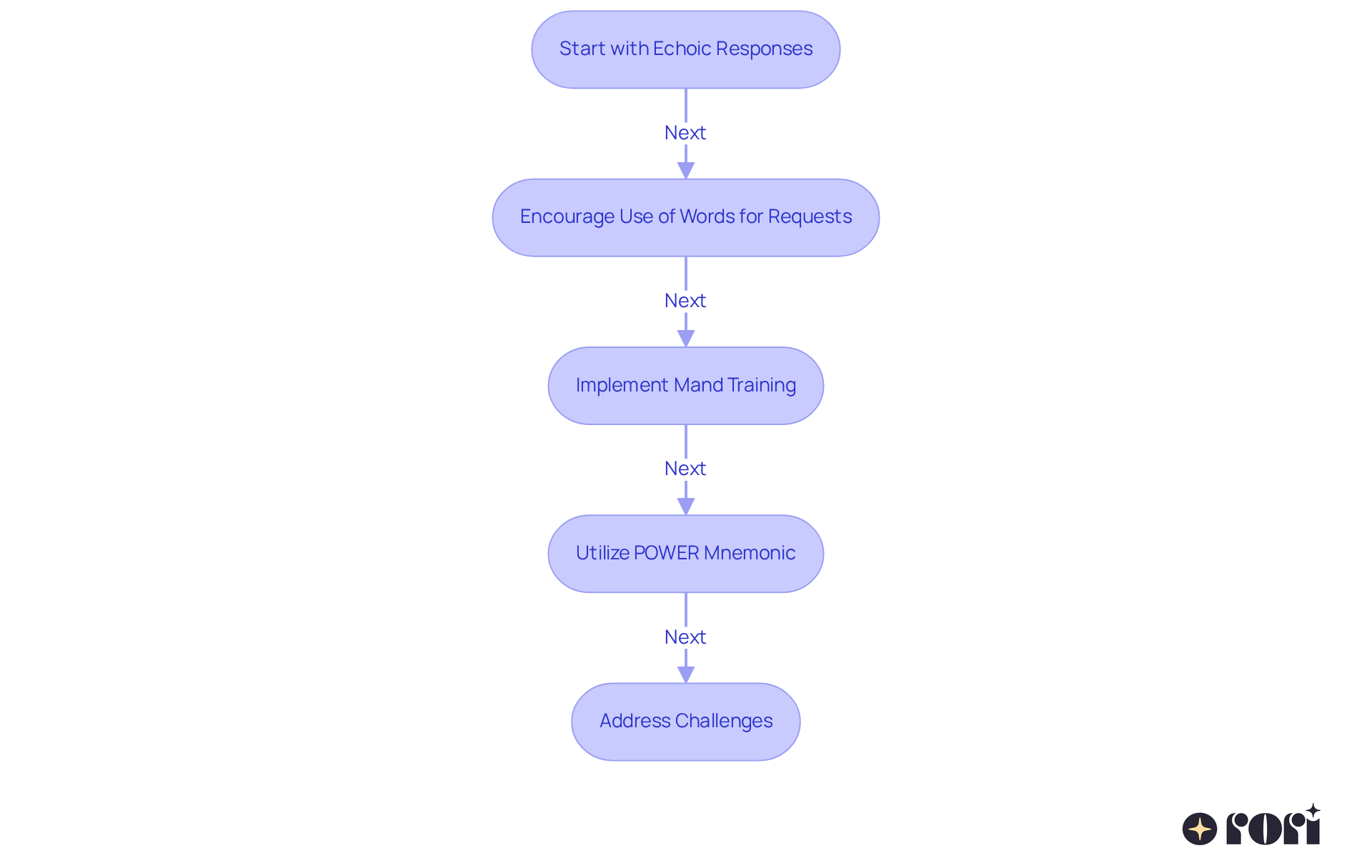
Shifting from verbal reactions to requests is a vital step in helping our little ones communicate their needs effectively. For example, when a child successfully repeats a word like ‘juice,’ we can encourage them to use that word to ask for juice. This approach not only strengthens their echoic skills but also through , enhancing their independence and confidence in social interactions.
Research shows that effective can significantly . It helps them articulate their wants and needs, which can . is crucial in this journey, equipping caregivers with the knowledge and skills needed to support their child’s growth. This, in turn, leads to better behavioral outcomes and less stress for everyone involved.
Using techniques like can further assist caregivers in teaching these . The POWER mnemonic (Play, Offer, Wait, Encourage, Reinforce) serves as a handy guide during mand training. By focusing on echoic examples aba, caregivers can create a nurturing environment that encourages children to engage in meaningful exchanges, ultimately leading to improved social interactions and emotional well-being.
Did you know that about 1 in 54 children in the U.S. are diagnosed with autism spectrum disorder? This highlights the importance of like mand training. However, caregivers may face challenges during this process, such as managing difficult behaviors that can disrupt training. Addressing these hurdles is key to achieving successful outcomes.
As specialists point out, ‘ can help bridge service-need gaps in autism treatment.’ This empowers caregivers to make informed decisions that positively impact their child’s development. Let’s explore this together! We’re here to help you every step of the way!
Echoic Example 3: Using Echoics to Enhance Tacting Responses
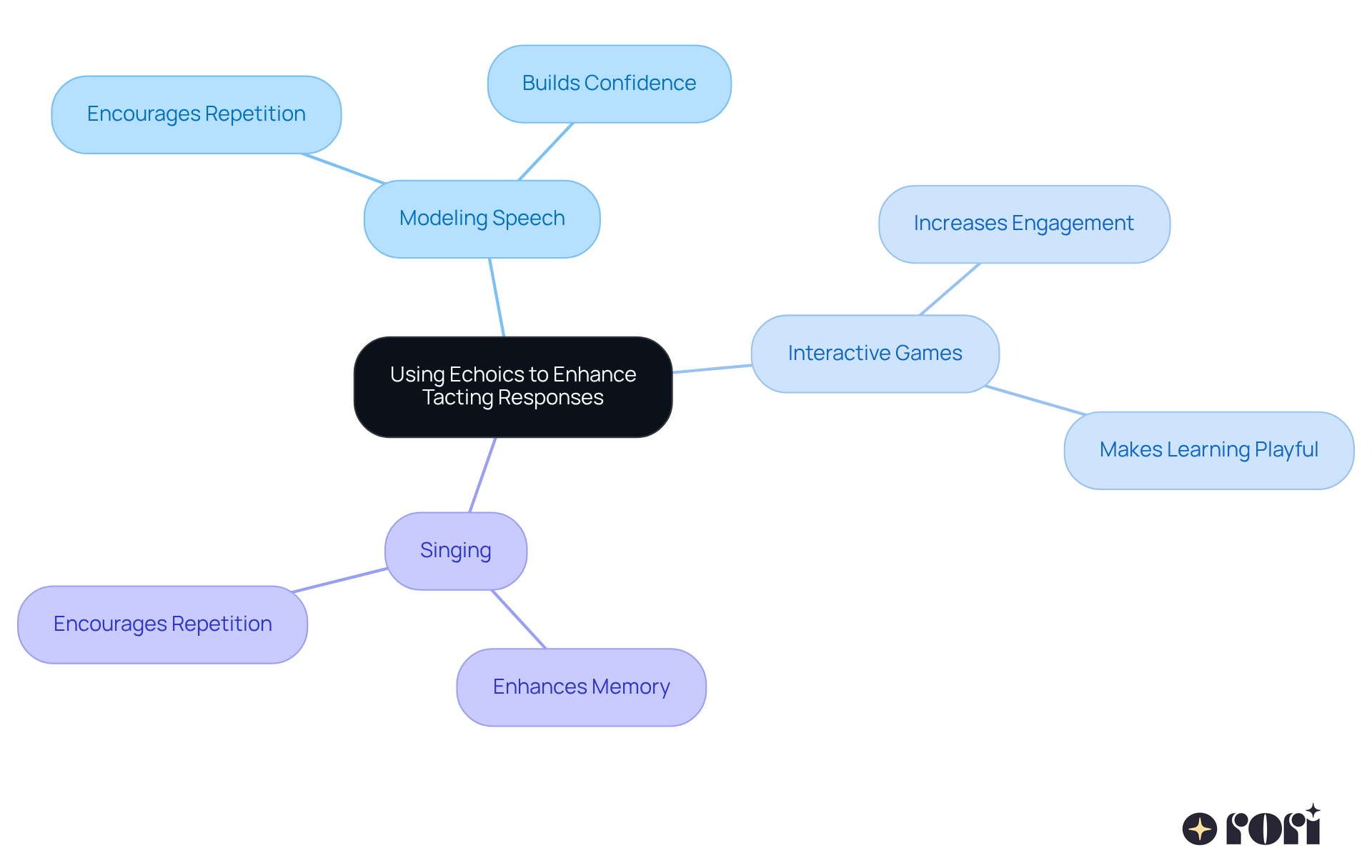
Improving tacting responses through involves encouraging our little ones to label the objects or actions they see around them. Imagine a clinician pointing at a dog and asking, ‘What is this?’ When the child responds with ‘dog,’ they are giving echoic examples aba, as they’re not just repeating; they’re also and learning to tact. This approach does wonders for vocabulary, helping kids connect words with their meanings, which is so important for .
Did you know that studies show imitative behavior is crucial for ? It really gets kids involved in verbal exchanges, boosting their . By —like during playtime or daily routines—children can really solidify their understanding of language and improve how they express their needs and feelings.
To make this learning process enjoyable and effective, try techniques like:
- Modeling speech
- Using fun interactive games
- Singing familiar songs together
Let’s explore this together! These activities not only but also create a that you and your child can share.
Echoic Example 4: Building Intraverbal Skills Through Echoic Practice
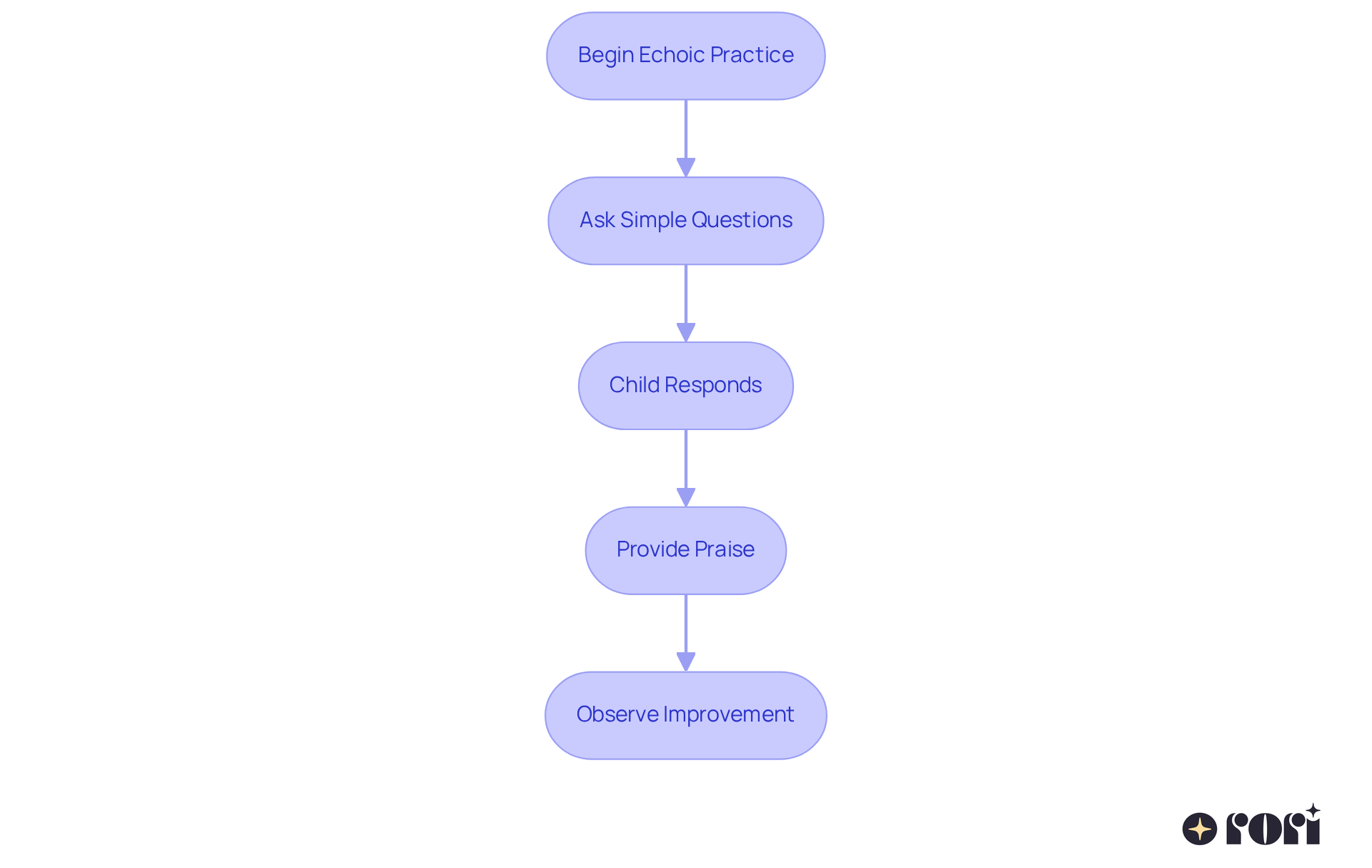
Getting kids involved in simple question-and-answer formats can be a fantastic way to help them develop their . For example, when a little one echoes the question ‘What is your name?’, they can be encouraged to share their name in return. This approach not only enhances their but also utilizes to engage them in conversations, which can significantly boost their overall interaction abilities.
Research shows that these can lead to noticeable improvements in . They motivate young learners to practice responding in real-life situations, which is so important! By incorporating echoic examples aba in therapy, clinicians can create a lively learning environment that encourages and social interaction.
At home, parents can easily start by asking their children during daily activities and giving praise for their responses. This active involvement not only supports the child’s progress but also empowers caregivers with the knowledge and skills they need to make informed decisions. Ultimately, this can lead to and less stress for everyone involved. Let’s explore this together and see how small changes can make a big difference!
Echoic Example 5: Enhancing Listener Responding with Echoic Training
Improving through verbal repetition training is all about helping young individuals repeat directions before acting on them. For example, when a clinician uses by saying, ‘Touch your nose,’ the child first echoes the command and then performs the action. This method not only reinforces their understanding of verbal instructions but also significantly boosts their ability to follow them.
Research shows that is crucial for developing essential interaction skills. It lays the groundwork for understanding and responding to verbal cues. Effective ways to teach this skill include:
- Using
- Using
- Using
Together, these strategies help build a young person’s confidence in and enhance their overall .
By mastering echoic examples aba, children enhance their skills in and expressing their needs. This ultimately and strengthens social connections. Let’s explore this journey together and see how we can support our young ones every step of the way!

Echoic Example 6: Everyday Situations for Practicing Echoics at Home
Daily scenarios present wonderful opportunities for practicing at home! This not only reinforces the principles of —the science of learning and —but also makes learning fun. during playtime, mealtime, or even while reading books.
For instance, when diving into a story, a parent might say, ‘Can you say ‘big bear’?’ This simple prompt provides echoic examples aba, encouraging the little one to repeat and creating a . Regular practice like this naturally strengthens and highlights the value of . It’s all about enhancing in individuals with autism, . Let’s explore this together!

Echoic Example 7: Reinforcement Strategies for Successful Echoic Learning
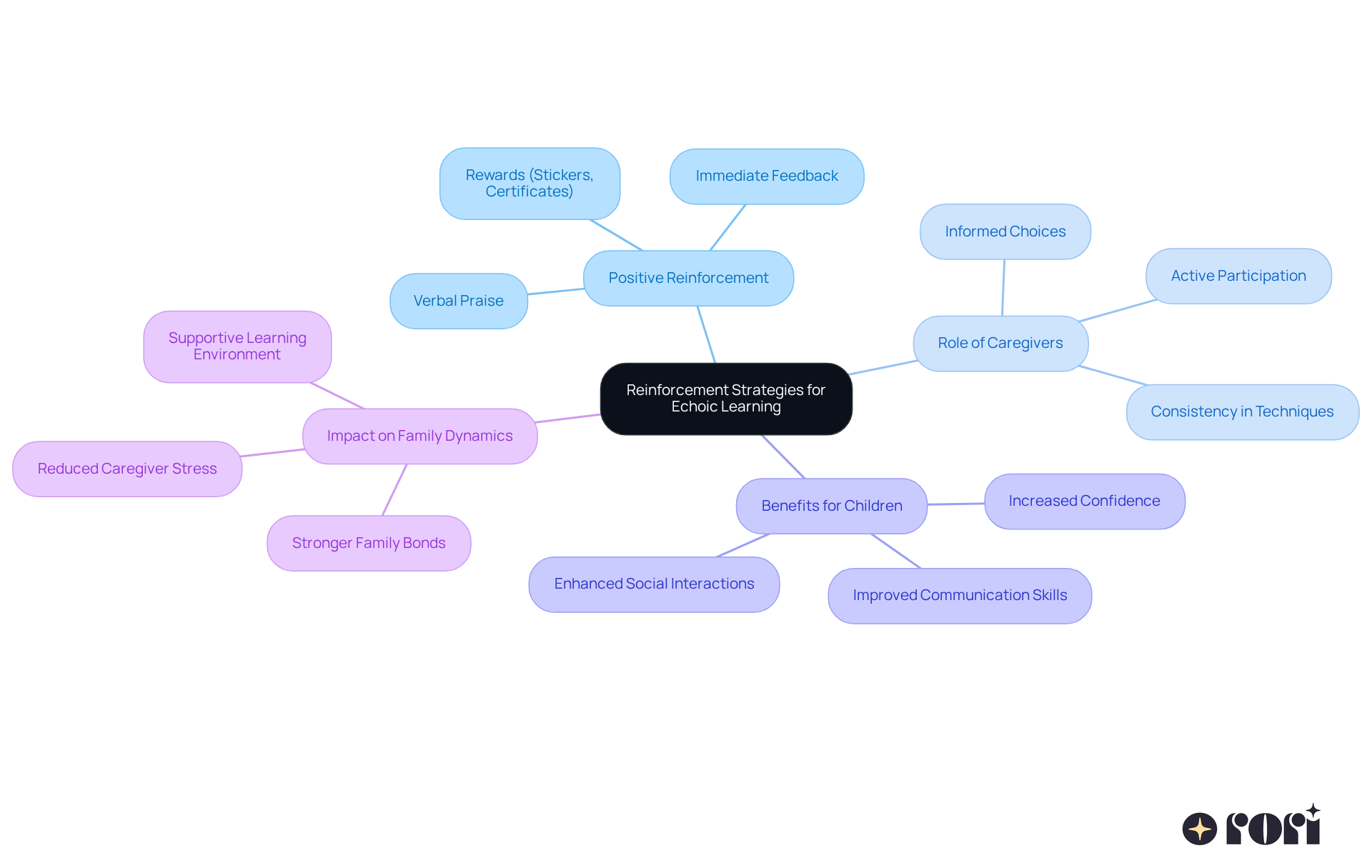
Reinforcement strategies are so important for effective learning of ! , such as or enjoyable rewards like stickers or certificates, really encourages young ones to produce [echoic examples ABA](https://rori.care/post/10-powerful-differential-reinforcement-aba-examples-you-need-to-know) successfully. For example, when a child demonstrates echoic examples ABA by accurately echoing a word, immediate and specific praise like Great job on saying that word clearly! should be given. This not only motivates them to keep practicing but also boosts their confidence in using their . This approach makes the learning experience even better, creating a where kids feel valued and empowered to improve their communication skills.
Plus, when caregivers understand more deeply, they can make informed choices that positively impact their children’s progress. By getting involved in their kids’ learning and consistently using , caregivers can significantly influence their verbal development and encourage ongoing engagement in their educational journey. This active participation not only leads to better behavioral outcomes but also empowers caregivers, reducing stress and enhancing family dynamics. Let’s explore this together!
Echoic Example 8: Parent-Led Activities to Support Echoic Development
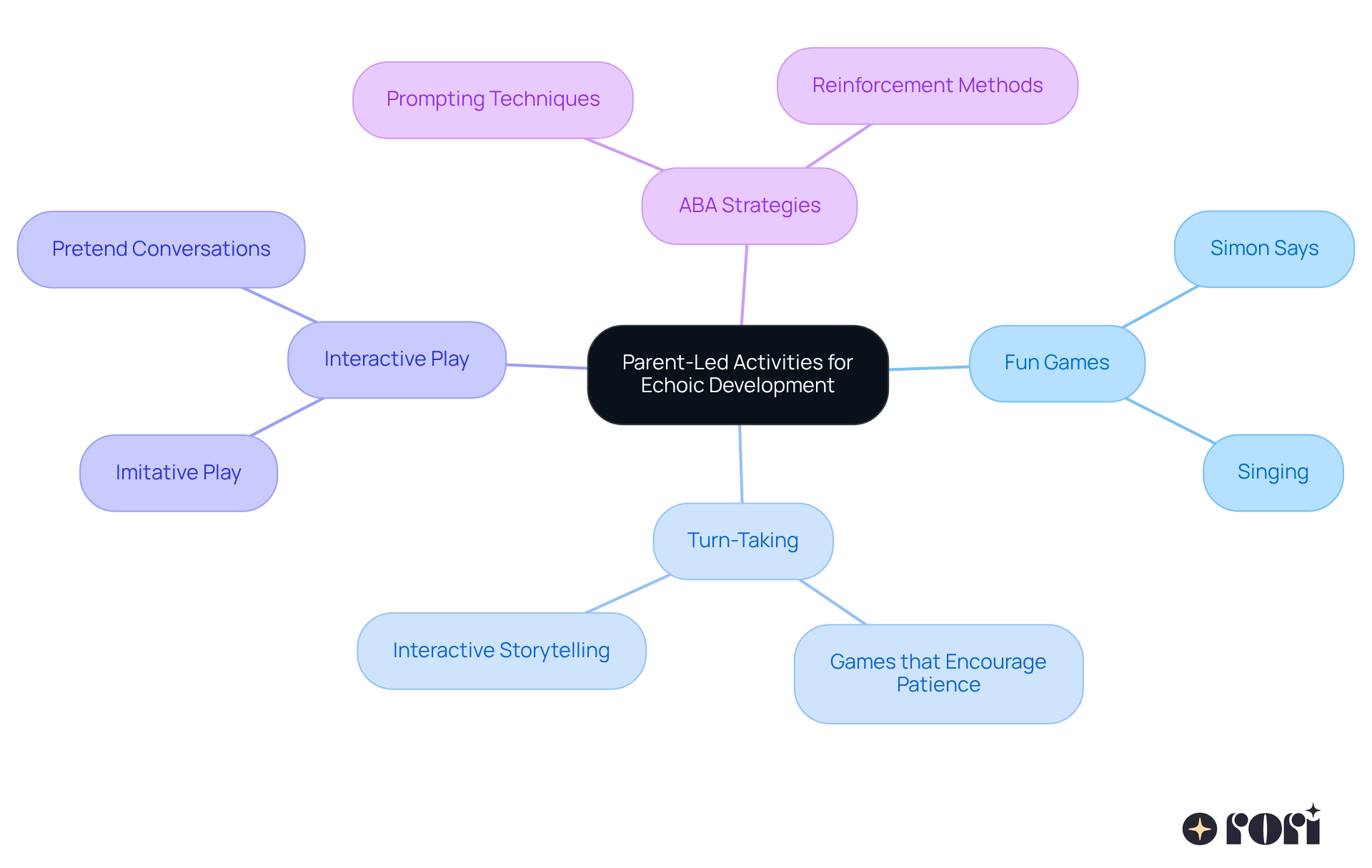
are truly vital for boosting in our kids! Think about fun games like ‘Simon Says’ or singing catchy tunes—these can really help enhance those important skills. For instance, while singing a song, you can encourage your little one to echo specific phrases or sounds. This creates a playful learning atmosphere that’s both enjoyable and effective!
Not only do these fun activities strengthen echoic skills, but they also deepen the bond between you and your child, turning learning into a delightful experience. Incorporating and interactive play can further enrich this linguistic environment, which is especially important for young ones facing language challenges, particularly those on the autism spectrum.
To make the most of these activities, caregivers can use like prompting and reinforcement. These techniques help guide your child’s responses and promote positive interactions. Research shows that can lead to significant improvements in , with effect sizes around 0.55—pretty impressive, right?
Thorough is key, as it equips you with the tools and understanding of ABA principles needed to effectively engage in your child’s development using . This knowledge empowers you to make informed decisions that can positively impact your child’s progress. As specialists emphasize, is essential for fostering sustainable growth in your child’s expressive skills. Let’s explore this together and see how we can make a difference!
Echoic Example 9: The Impact of Echoics on Overall Communication Skills
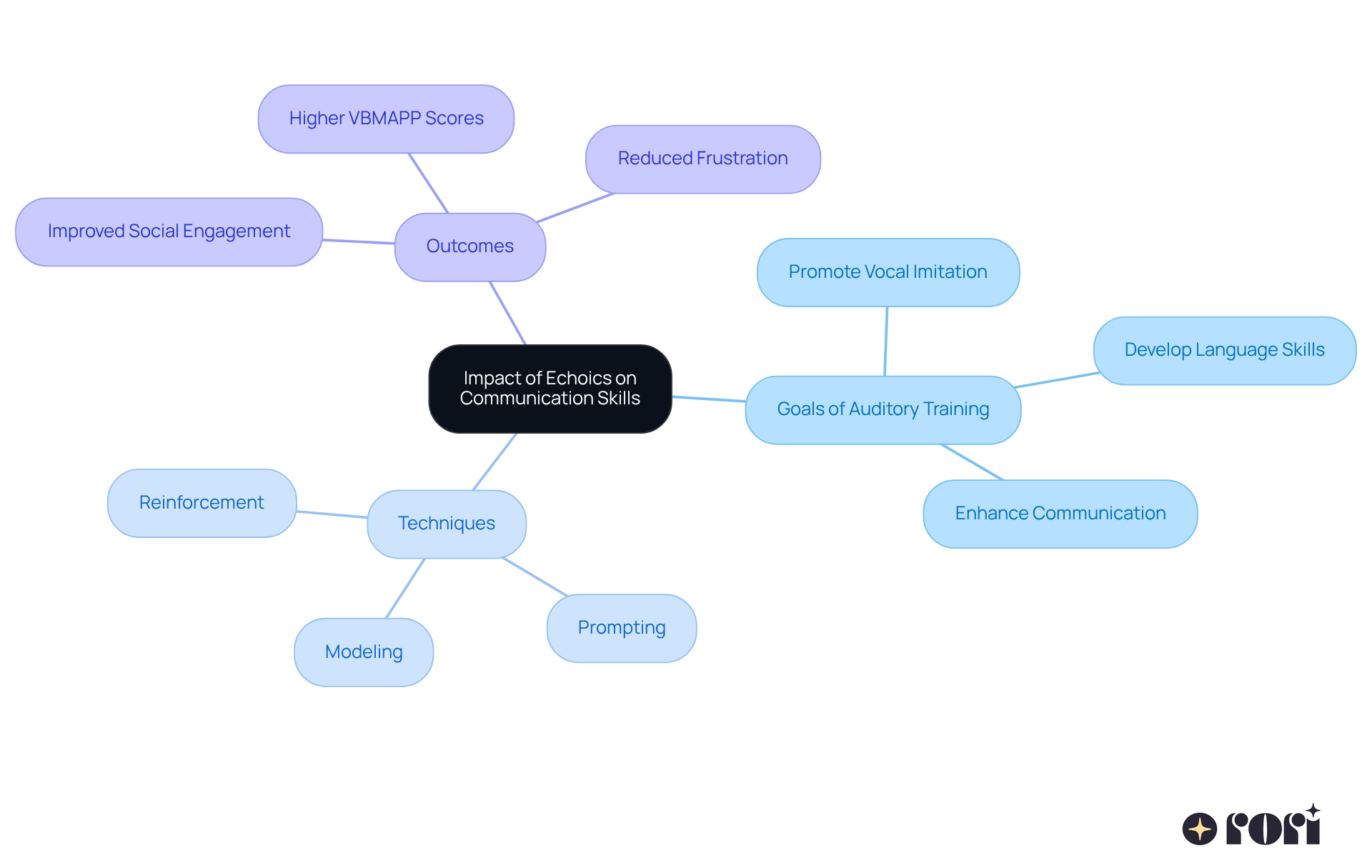
The influence of echoics on interpersonal abilities is truly significant, and at Rori Care, our dedicated clinical leadership team is all about promoting this growth! Mastering doesn’t just enhance ; it also helps young people engage in conversations, express their needs, and interact socially. Isn’t that amazing? Studies show that youngsters who develop strong auditory skills often find greater success in various interactions, leading to better and an overall improved quality of life. For instance, one study found that the pretest average for VBMAPP milestones was 26.9, while the posttest average soared to 74.95! This highlights the remarkable improvement in verbal abilities after training. It really emphasizes how crucial it is to include for children with autism, as it lays the groundwork for and meaningful social relationships.
The main goals of auditory training are to promote vocal imitation, develop language skills, and enhance communication. Techniques like modeling, prompting, and reinforcement play a vital role in this process. Consistency and repetition are key for skill development, so it’s important to stay committed! While challenges, like , may pop up, addressing these can lead to even better outcomes. Experts point out that ABA are , which highlights the need to weave echoic training into therapeutic practices. At Rori Care, we empower caregivers with , helping them support their children’s behavioral goals through active involvement and data collection. Let’s explore this journey together—we’re here to help you every step of the way!
Conclusion
Mastering echoic examples in Applied Behavior Analysis (ABA) is so important for nurturing effective communication skills in children. In this article, we’ve explored a variety of techniques and strategies that not only enhance verbal imitation but also lay a solid foundation for broader language development. By focusing on echoic training, caregivers and clinicians can really boost children’s ability to communicate their needs and engage socially.
We’ve discussed some key insights, like the importance of modeling, prompting, and reinforcement in fostering echoic skills. Activities such as:
- Imitating sounds
- Transitioning from echoic to manding
- Enhancing listener responding through structured practice
are vital for cultivating a child’s verbal abilities. Plus, parent-led initiatives and reinforcement strategies play a crucial role in creating a supportive learning environment, ensuring that children feel empowered to express themselves effectively.
Ultimately, the impact of echoics goes beyond mere imitation; it significantly enhances overall communication abilities and social interactions. By committing to consistent practice and integrating these techniques into everyday life, caregivers can facilitate meaningful growth in their children’s communication skills. Embracing these strategies not only supports individual development but also enriches family dynamics, highlighting the transformative power of effective communication through ABA therapy.
Let’s explore this together! Remember, every small step you take can lead to significant changes in your child’s communication journey. We’re here to help you every step of the way!
Frequently Asked Questions
What is Rori Care’s approach to ABA therapy?
Rori Care utilizes customized vocal training methods, including modeling, prompting, and reinforcement, to provide comprehensive Applied Behavior Analysis (ABA) therapy tailored to each individual’s needs.
How does echoic training benefit children?
Echoic training helps motivate children to imitate sounds and words, laying the foundation for more advanced verbal behaviors and enhancing their communication skills.
What techniques do clinicians use during echoic training sessions?
Clinicians use echoic examples, where they model sounds and words for children to imitate, which supports listening skills and future language development.
How can parents reinforce verbal responses at home?
Parents can reinforce verbal responses by consistently modeling language during daily activities, creating opportunities for their children to practice communication.
What is the significance of transitioning from echoic to manding in therapy?
Transitioning from echoic responses to manding (making requests) helps children communicate their needs effectively, enhancing their independence and confidence in social interactions.
What role does caregiver training play in ABA therapy?
Caregiver training equips parents with the knowledge and skills needed to support their child’s growth, leading to better behavioral outcomes and reduced stress for families.
What is the POWER mnemonic, and how is it used in mand training?
The POWER mnemonic stands for Play, Offer, Wait, Encourage, Reinforce. It serves as a guide for caregivers during mand training to create a nurturing environment that encourages meaningful exchanges.
Why is effective communication training important for children with autism?
Effective communication strategies, like mand training, are crucial as they help children articulate their wants and needs, reducing challenging behaviors and improving overall social interactions.
What challenges might caregivers face during the training process?
Caregivers may encounter difficult behaviors that disrupt training, making it essential to address these challenges to achieve successful outcomes.
What is the prevalence of autism spectrum disorder in children?
Approximately 1 in 54 children in the U.S. are diagnosed with autism spectrum disorder, highlighting the importance of effective communication strategies in therapy.
List of Sources
- Rori Care – ABA Therapy: Comprehensive Echoic Training Techniques
- longdom.org (https://longdom.org/open-access/early-echoic-imitation-predicts-reduction-in-autism-spectrum-disorder-asd-symptoms-a-retrospective-study-of-toddlers-108675.html)
- pmc.ncbi.nlm.nih.gov (https://pmc.ncbi.nlm.nih.gov/articles/PMC12283487)
- abetterwayaba.com (https://abetterwayaba.com/echoic-training-in-aba-therapy)
- 81 ABA Therapy Statistics You Need to Know – apricott ABA (https://apricott.com/resources/aba-therapy-statistics)
- Echoic Example 1: Imitating Sounds for Communication Skills
- mdpi.com (https://mdpi.com/2075-4418/15/1/60)
- longdom.org (https://longdom.org/open-access/early-echoic-imitation-predicts-reduction-in-autism-spectrum-disorder-asd-symptoms-a-retrospective-study-of-toddlers-108675.html)
- pmc.ncbi.nlm.nih.gov (https://pmc.ncbi.nlm.nih.gov/articles/PMC2706567)
- abetterwayaba.com (https://abetterwayaba.com/echoic-training-in-aba-therapy)
- sciencedirect.com (https://sciencedirect.com/science/article/pii/S1750946721000581)
- Echoic Example 2: Transitioning from Echoic to Manding in Therapy
- 10 Quotes to Inspire Early Childhood Professionals (https://zerotothree.org/quotes-to-inspire-early-childhood-professionals)
- pmc.ncbi.nlm.nih.gov (https://pmc.ncbi.nlm.nih.gov/articles/PMC9582187)
- pmc.ncbi.nlm.nih.gov (https://pmc.ncbi.nlm.nih.gov/articles/PMC2774605)
- supportivecareaba.com (https://supportivecareaba.com/aba-therapy/understanding-autism-quotes)
- Echoic Example 3: Using Echoics to Enhance Tacting Responses
- skycareaba.com (https://skycareaba.com/importance-of-echoic-in-autism-treatment-plans)
- risingaboveaba.com (https://risingaboveaba.com/autism-blog/echoic-mand-and-tact-in-therapy)
- rori.care (https://rori.care/post/10-powerful-echoic-aba-examples-to-enhance-communication-skills)
- actifyaba.com (https://actifyaba.com/echoic-behavior-examples)
- Echoic Example 4: Building Intraverbal Skills Through Echoic Practice
- 50 Quotes About Communication | Chanty (https://chanty.com/blog/communication-quotes)
- researchgate.net (https://researchgate.net/publication/277966345_A_Comparison_of_Prompting_Tactics_for_Teaching_Intraverbals_to_Young_Adults_with_Autism)
- pmc.ncbi.nlm.nih.gov (https://pmc.ncbi.nlm.nih.gov/articles/PMC6387752)
- pmc.ncbi.nlm.nih.gov (https://pmc.ncbi.nlm.nih.gov/articles/PMC10890992)
- bds.com (https://bds.com/comparing-the-effects-of-echoic-prompts-and-echoic-plus-picture-prompts-on-establishing-intraverbal-behavior-for-children-with-autism-journal-club-series)
- Echoic Example 5: Enhancing Listener Responding with Echoic Training
- link.springer.com (https://link.springer.com/article/10.1007/s40616-024-00213-7)
- researchgate.net (https://researchgate.net/publication/267048521_Evaluating_the_efficiency_of_listener_and_tact_instruction_for_children_with_autism)
- abetterwayaba.com (https://abetterwayaba.com/echoic-training-in-aba-therapy)
- pmc.ncbi.nlm.nih.gov (https://pmc.ncbi.nlm.nih.gov/articles/PMC10890992)
- pmc.ncbi.nlm.nih.gov (https://pmc.ncbi.nlm.nih.gov/articles/PMC6387752)
- Echoic Example 6: Everyday Situations for Practicing Echoics at Home
- cornerstoneautismcenter.com (https://cornerstoneautismcenter.com/establishing-increasing-and-expanding-vocal-abilities)
- skycareaba.com (https://skycareaba.com/importance-of-echoic-in-autism-treatment-plans)
- pmc.ncbi.nlm.nih.gov (https://pmc.ncbi.nlm.nih.gov/articles/PMC12283487)
- marybarbera.com (https://marybarbera.com/vocal-imitation-echoic-control-autism)
- abetterwayaba.com (https://abetterwayaba.com/echoic-training-in-aba-therapy)
- Echoic Example 7: Reinforcement Strategies for Successful Echoic Learning
- EWU Online M.Ed. Teaches the Benefits of Positive Reinforcement (https://online.ewu.edu/degrees/education/med/early-childhood-education/positive-reinforcement-in-learning)
- Effective Positive Reinforcement in Schools – Veracross (https://veracross.com/resources/positive-reinforcement-classroom)
- abetterwayaba.com (https://abetterwayaba.com/echoic-training-in-aba-therapy)
- The Impact Positive Reinforcement Has on A Child’s Behavior – Early Advantage Child Care (https://earlyadvantagedcc.com/early-advantage-parent-resources/the-impact-positive-reinforcement-has-on-a-childs-behavior)
- incredibleyears.com (https://incredibleyears.com/blog/positive-reinforcement)
- Echoic Example 8: Parent-Led Activities to Support Echoic Development
- How Parent-Implemented Strategies Can Improve ABA Therapy Outcomes (https://mastermindbehavior.com/post/how-parent-implemented-strategies-can-improve-aba-therapy-outcomes)
- autismspectrumnews.org (https://autismspectrumnews.org/parent-led-strategies-to-support-communication-in-children-with-autism-spectrum-disorder)
- intellistarsaba.com (https://intellistarsaba.com/blog/the-role-of-parent-led-practice-in-strengthening-aba-therapy-outcomes)
- ambitionsaba.com (https://ambitionsaba.com/resources/how-parent-training-supports-language-development-in-children-with-autism)
- Effects of Parent-Implemented Interventions on Outcomes of Children with Autism: A Meta-Analysis – PMC (https://pmc.ncbi.nlm.nih.gov/articles/PMC10539413)
- Echoic Example 9: The Impact of Echoics on Overall Communication Skills
- longdom.org (https://longdom.org/open-access/early-echoic-imitation-predicts-reduction-in-autism-spectrum-disorder-asd-symptoms-a-retrospective-study-of-toddlers-108675.html)
- abetterwayaba.com (https://abetterwayaba.com/echoic-training-in-aba-therapy)
- skycareaba.com (https://skycareaba.com/importance-of-echoic-in-autism-treatment-plans)
- rori.care (https://rori.care/post/10-powerful-echoic-aba-examples-to-enhance-communication-skills)