
Introduction
Understanding emotional development in children with autism is so important! These young individuals often navigate a complex landscape of feelings that can be tough to express and manage. In this article, we’ll dive into the unique hurdles faced by children on the spectrum and share how parents can foster emotional growth through targeted strategies and interventions.
What happens when traditional methods fall short? 🤔 By exploring innovative approaches, like technology and visual aids, parents can empower their children to enhance their emotional awareness and regulation. This not only helps them but also paves the way for more meaningful social connections. Let’s explore this together!
Define Emotional Development in Autism
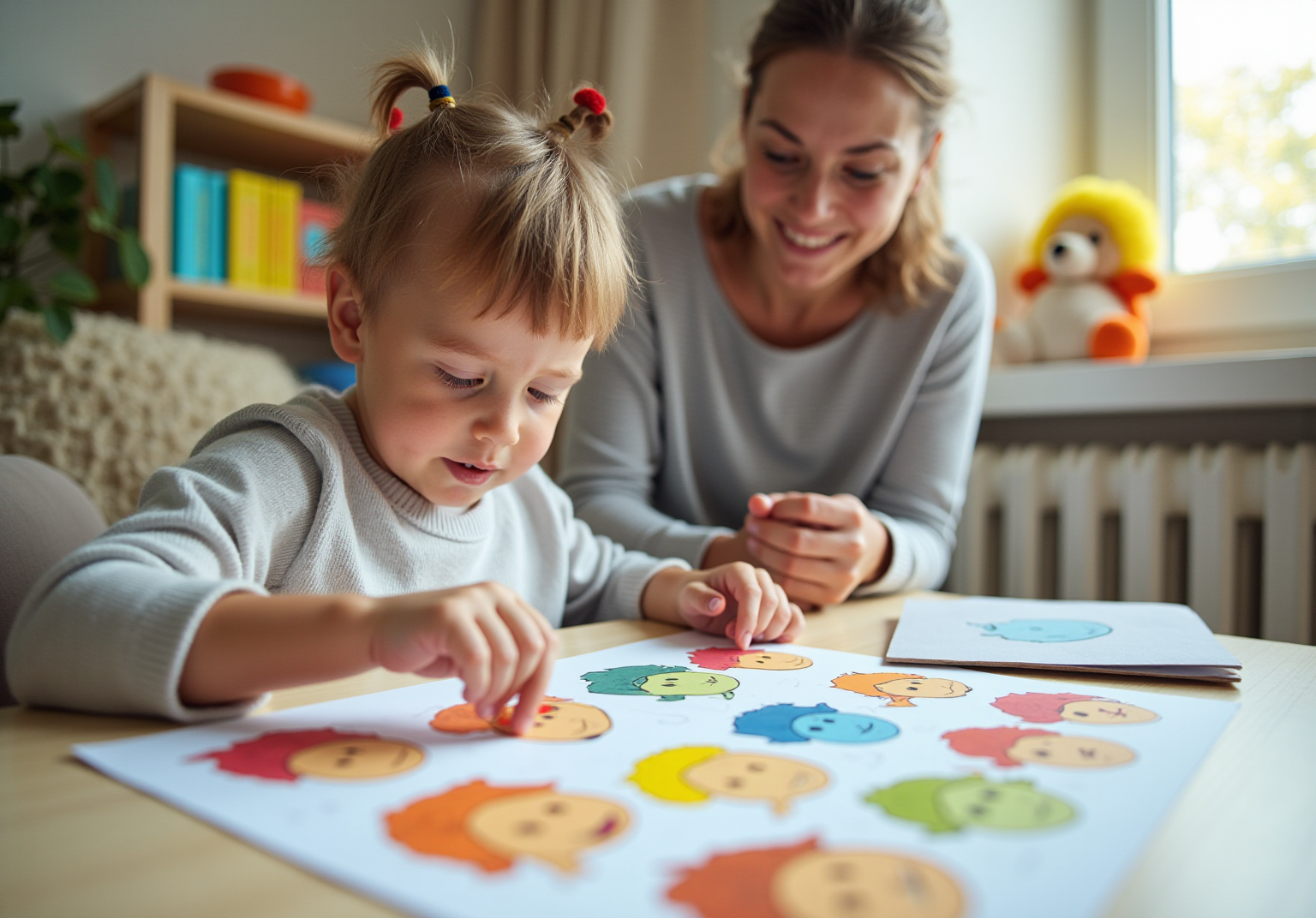
The process of emotional development in children with autism focuses on recognizing, expressing, and managing feelings. The unique challenges faced by kids on the spectrum in processing emotions highlight the importance of emotional development in children with autism, as these difficulties can hinder their ability to read facial expressions, tone of voice, and social cues, which are key ingredients for effective communication of feelings.
Let’s break down some important aspects of emotional development:
- Emotion Recognition: This is all about spotting emotions in ourselves and others. Research shows that kids with developmental disorders, particularly those with autism, often struggle with this skill, highlighting the challenges in emotional development in children with autism as they sometimes find it harder than their neurotypical peers to identify different emotional expressions. For instance, studies reveal that by age 10, many children with developmental disorders, including autism, face difficulties in recognizing basic feelings, which impacts their emotional development in children with autism, especially in identifying emotions like ‘angry’ and ‘afraid’.
- Emotion Expression: This refers to how kids show their feelings, which can be a bit different for those with autism. Many children on the spectrum might express emotions in ways that don’t quite match societal expectations, which can affect their emotional development in children with autism and lead to misunderstandings in social situations.
- [Emotion Regulation](https://pmc.ncbi.nlm.nih.gov/articles/PMC3719386): This involves the strategies we use to manage our feelings. Kids on the spectrum often find the emotional development in children with autism particularly challenging due to their heightened sensitivity to sensory inputs and social situations. In fact, around 40-50% of youngsters with autism experience significant issues related to emotional development in children with autism, which can make it hard for them to handle their feelings effectively.
Understanding these elements can really help parents in children with autism. It allows them to pinpoint specific areas where support is needed. Joining social skills group therapy, led by trained therapists, can really boost young people’s social interactions and communication skills in a group setting, helping them build better relationships. Plus, educating caregivers on ABA principles and strategies empowers parents to make informed decisions and provide effective behavioral support at home. This kind of education can lead to better behavioral outcomes and improve family dynamics.
As experts often say, nurturing emotional development in children with autism requires tailored approaches that promote awareness of their internal states and adaptive coping strategies. So, let’s explore this together! We’re here to help you every step of the way!

Identify Challenges in Emotional Expression and Regulation
Children with autism often face tough challenges that impact their emotional development, especially when it comes to expressing and managing their emotions. Let’s take a closer look at a few of these hurdles:
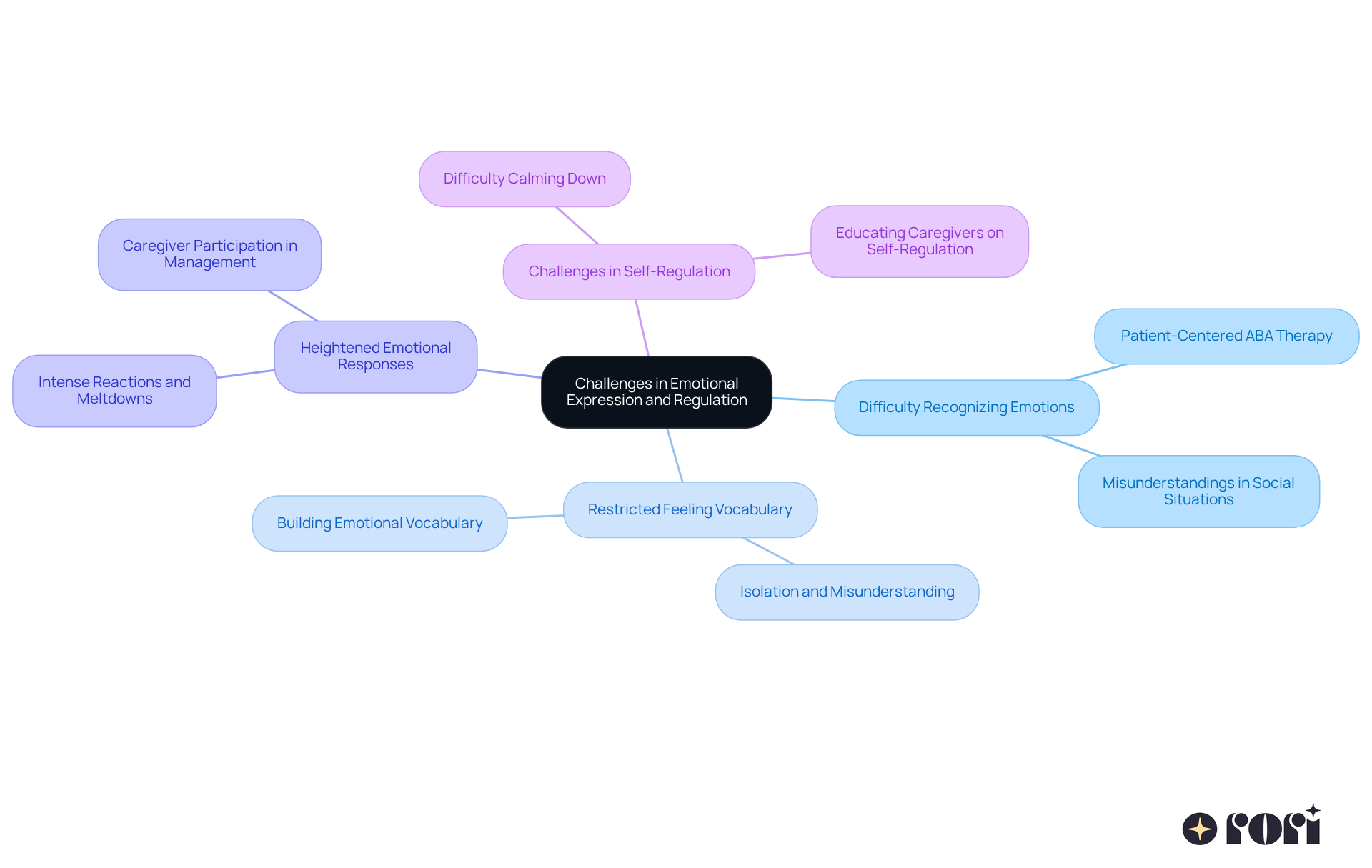
- Difficulty Recognizing Emotions: Many autistic kids find it tricky to pick up on emotional cues from others, like facial expressions or body language. This can lead to misunderstandings in social situations, making it hard for them to connect with friends and adults. At Rori Care, we use a patient-centered approach through Applied Behavior Analysis (ABA) therapy, tailoring our methods to each child’s unique needs. This helps them get better at recognizing and responding to emotions.
- Restricted Feeling Vocabulary: A limited vocabulary for feelings can really hold kids back from expressing what they’re going through. This often leaves them feeling isolated and misunderstood. By sharing ABA principles and strategies with caregivers, Rori Care helps families support their children in building a richer emotional vocabulary. This can lead to better decision-making and improved behavioral outcomes.
- Heightened Emotional Responses: It’s not uncommon for autistic individuals to have intense emotional reactions that seem out of proportion to the situation. These heightened responses can sometimes lead to meltdowns or shutdowns, which can be tough for both the child and their caregivers. By encouraging active participation from caregivers, Rori Care helps improve behavioral outcomes and teaches kids how to manage these emotional responses more effectively.
- Challenges in Self-Regulation: When upset, many children with autism struggle to calm themselves down, which can lead to prolonged distress. This difficulty with can heighten feelings of frustration and anxiety, complicating their emotional landscape even further. At Rori Care, we focus on educating caregivers, providing them with the tools to help their children develop self-regulation skills, which can improve support and reduce stress.
It is essential for parents to understand these challenges to foster emotional development in children with autism. It helps them recognize when their child is struggling and apply effective interventions. By creating an environment that encourages understanding and expression of feelings, parents can help their kids navigate their experiences more smoothly. Plus, addressing these regulation challenges might even reduce the need for psychiatric services, as children with ASD often have higher rates of psychiatric hospital days compared to their non-ASD peers.
Let’s explore this together! We’re here to help you every step of the way!
Implement Strategies for Supporting Emotional Development
Fostering emotional development in children with autism can feel like a big task for parents, but there are some effective strategies that can make a real difference:
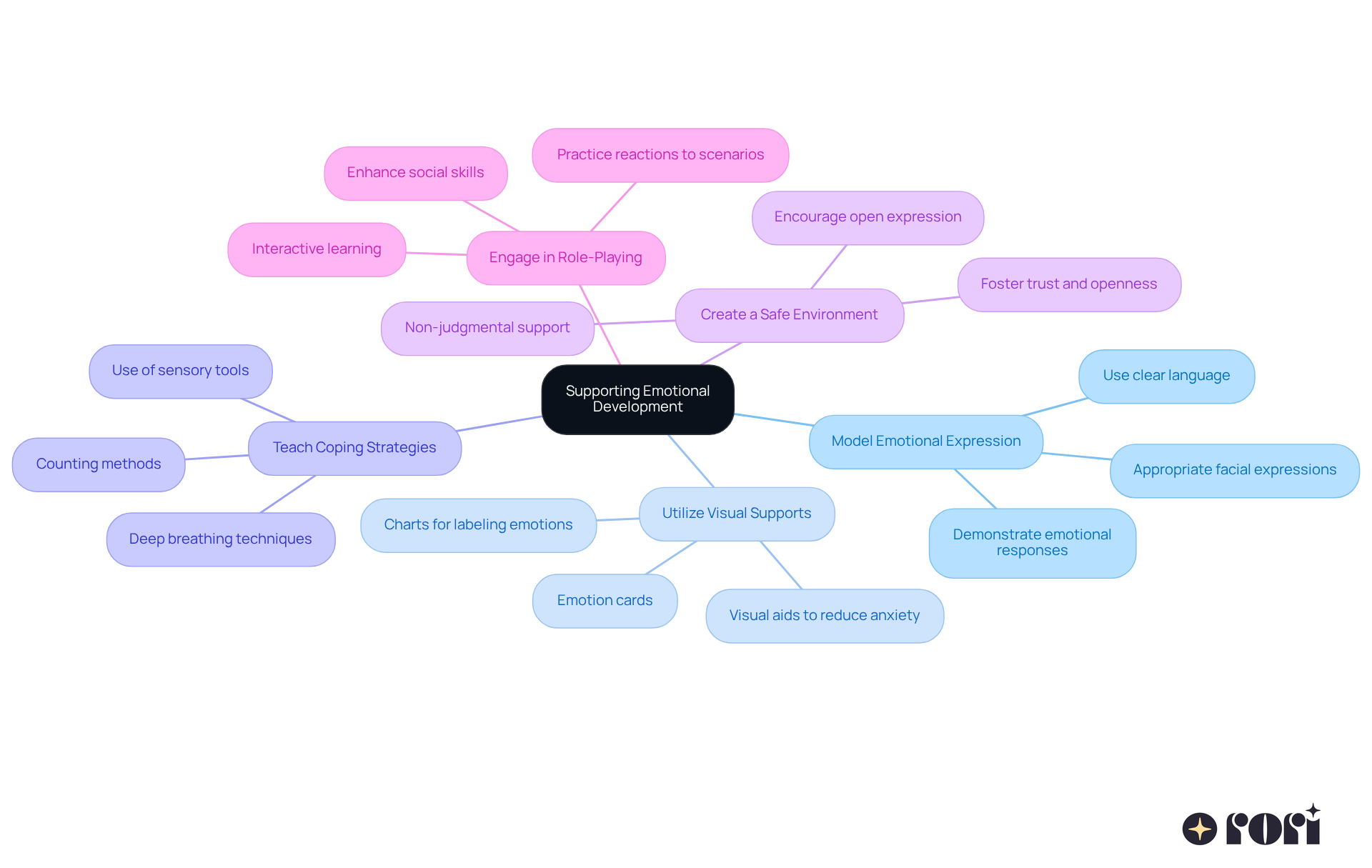
- Model Emotional Expression: It’s so important for parents to express their emotions openly. Using and appropriate facial expressions helps kids recognize and express their own feelings. When they see how emotions are conveyed in real life, it becomes easier for them to understand their own.
- Utilize Visual Supports: Tools like emotion cards or charts can be super helpful! These visual aids make it easier for kids to recognize and label their emotions. Research shows that using visuals can really boost social development by providing clarity and reducing anxiety.
- Teach Coping Strategies: Introducing techniques like deep breathing, counting, or using sensory tools (like fidget toys) can help kids manage overwhelming emotions. These strategies empower them to regain control when they’re feeling distressed.
- Create a Safe Environment for Emotions: It’s crucial to encourage kids to express their feelings without fear of judgment. A supportive environment fosters trust and openness, allowing them to share their emotions freely.
- Engage in Role-Playing: Role-playing different scenarios can be a fun way to practice reactions in various situations. This interactive method helps kids discover suitable ways to respond to different stimuli, enhancing their social skills.
Ongoing parent training in Applied Behavior Analysis (ABA) therapy is key here. It equips parents with the skills they need to implement these strategies effectively. ABA is tailored to each child’s unique needs, focusing on the science of learning and behavior. Rori Care offers thorough and empathetic ABA treatment, supporting families on this journey. By applying these strategies, parents can actively contribute to the emotional development in children with autism, significantly enhancing their ability to navigate social situations and form meaningful connections.
Let’s explore this together! We’re here to help you every step of the way!
Utilize Technology and Visual Supports for Emotional Learning
Technology plays a vital role in enhancing social learning for youth with autism, especially since about 1 in 36 young people in the U.S. are diagnosed with autism. Let’s explore some effective strategies to leverage these tools, while also highlighting how important it is for caregivers to be educated in supporting their child’s development:
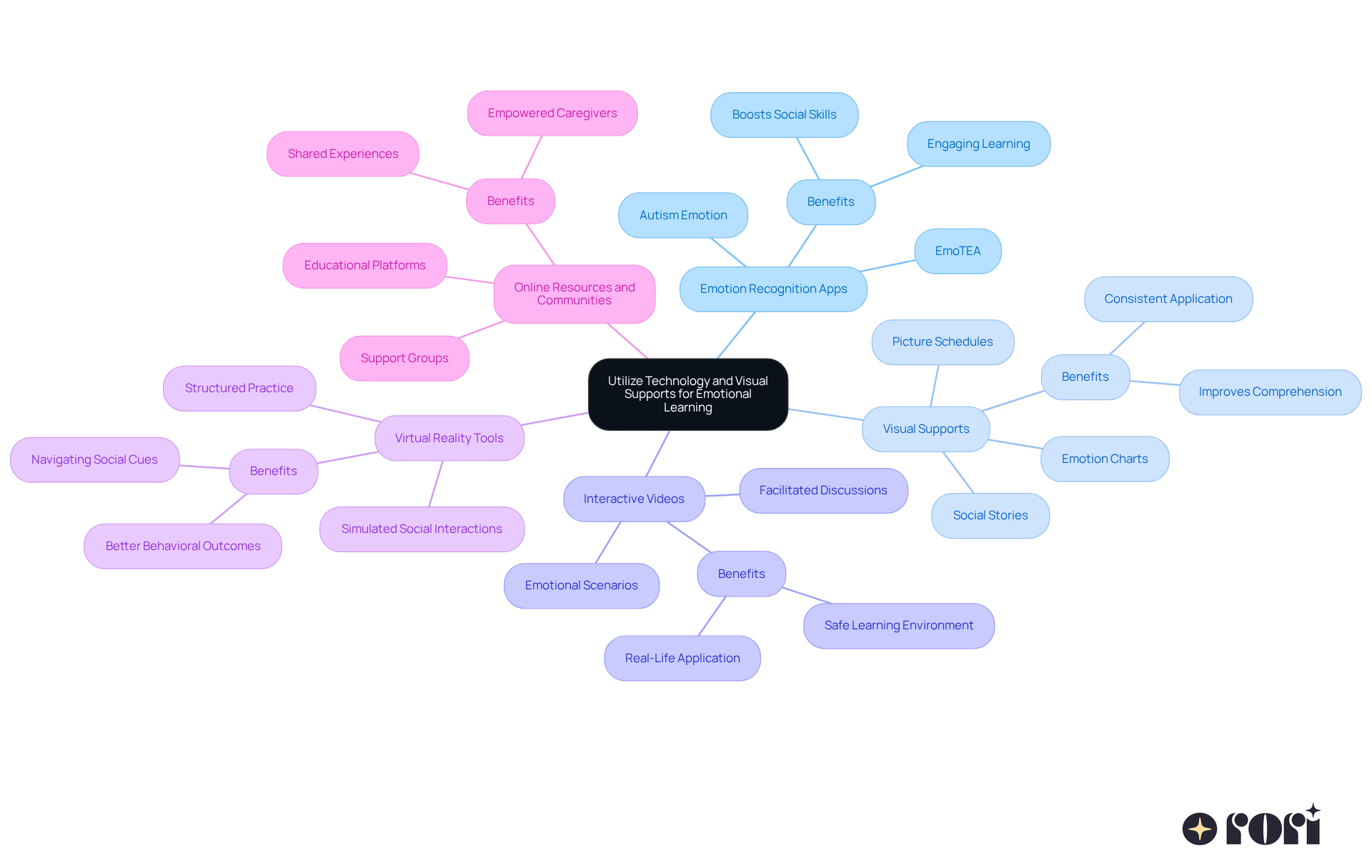
- Emotion Recognition Apps: Have you heard of apps like ‘EmoTEA’ and ‘Autism Emotion’? They help kids identify and understand emotions through fun games and activities. These apps use visual and auditory cues, making learning engaging and effective. When caregivers are informed about these tools, they can guide their children in using them, boosting their social skills.
- Visual Supports: Think about incorporating visual aids like emotion charts, social stories, and picture schedules. These tools help kids grasp feelings and appropriate reactions, leading to a better understanding of their own emotions and those of others. When caregivers know how to use these supports, they can , which really helps with comprehension.
- Interactive Videos: Using videos that show different emotional scenarios can be a game changer. It allows young individuals to watch and discuss feelings and reactions in a safe space, improving their ability to recognize emotions in real life. Caregivers who understand these strategies can facilitate discussions that reinforce these lessons, further supporting their child’s emotional growth.
- Virtual Reality (VR) Tools: Have you considered exploring VR platforms that simulate social interactions? These tools provide a structured environment for kids to practice identifying emotions, helping them navigate social cues more effectively. When caregivers get involved in these activities, it can lead to better behavioral outcomes as they reinforce the skills learned in therapy.
- Online Resources and Communities: Engaging with online platforms that offer resources, forums, and support groups for parents and children can be incredibly beneficial. These communities provide additional strategies and shared experiences, enriching the learning journey. Caregiver education programs can empower parents to make informed choices about which resources to use.
As educator Dr. Dena notes, “Research has shown that some individuals with autism process and retain information better when it’s presented visually.” By blending technology and visual supports into emotional learning, along with caregiver education, parents can create a dynamic and supportive environment that significantly boosts the emotional development in children with autism. Let’s take this journey together!
Conclusion
Understanding emotional development in children with autism is so important! It shapes how they recognize, express, and manage their feelings. These kids face unique challenges when it comes to processing emotions, which is why tailored strategies are essential for their emotional growth. By focusing on emotion recognition, expression, and regulation, parents can truly make a difference in their child’s emotional journey.
Let’s talk about some key insights. Children with autism often struggle to recognize emotions, and a limited emotional vocabulary can make things even tougher. Plus, heightened emotional responses can add to the mix. But don’t worry! Implementing effective strategies like:
- Modeling emotional expression
- Using visual supports
- Teaching coping mechanisms
can really help kids navigate their emotional landscape. And guess what? Technology and parent education can provide even more support, giving families the tools they need to create a nurturing environment.
Ultimately, fostering emotional development in children with autism isn’t just about tackling challenges; it’s about empowering them to connect with their emotions and the world around them. By embracing these strategies and recognizing the importance of emotional learning, parents can help their children build meaningful relationships and enhance their overall quality of life. This journey takes patience, dedication, and a commitment to ongoing learning, but the joy of watching a child thrive emotionally is truly priceless. Let’s explore this together!
Frequently Asked Questions
What is emotional development in children with autism?
Emotional development in children with autism involves recognizing, expressing, and managing feelings. It highlights the unique challenges faced by these children in processing emotions, which can affect their ability to communicate feelings effectively.
What are the key aspects of emotional development in children with autism?
The key aspects include emotion recognition, emotion expression, and emotion regulation. Each of these areas presents specific challenges for children with autism compared to their neurotypical peers.
What is emotion recognition, and why is it challenging for children with autism?
Emotion recognition is the ability to identify emotions in oneself and others. Children with autism often struggle with this skill, making it difficult for them to recognize basic feelings such as ‘angry’ and ‘afraid’, which impacts their emotional development.
How do children with autism express their emotions?
Children with autism may express their emotions in ways that do not align with societal expectations, leading to misunderstandings in social situations and affecting their emotional development.
What is emotion regulation, and what challenges do children with autism face in this area?
Emotion regulation involves managing feelings through various strategies. Children on the spectrum often find this particularly challenging due to heightened sensitivity to sensory inputs and social situations, with 40-50% experiencing significant issues in this area.
How can parents support the emotional development of children with autism?
Parents can support emotional development by identifying specific areas where their child needs help, joining social skills group therapy, and educating themselves on ABA principles and strategies to provide effective behavioral support at home.
What role does social skills group therapy play in emotional development?
Social skills group therapy, led by trained therapists, can enhance social interactions and communication skills in children with autism, helping them build better relationships and navigate emotional development more effectively.
Why is tailored support important for nurturing emotional development in children with autism?
Tailored support is crucial as it promotes awareness of children’s internal states and adaptive coping strategies, which are essential for their emotional development and overall well-being.