

Introduction
Enhancing social skills is a big deal for kids with Autism Spectrum Disorder (ASD). These skills are the building blocks for forming meaningful relationships and supporting emotional well-being. Group therapy can be a fantastic way to help, providing a structured space where children can practice and improve their interpersonal skills with peers.
But let’s be honest – choosing the right program and figuring out how to support your child through this process can feel overwhelming. What can you do as a caregiver to make sure your child not only participates but truly thrives in these therapeutic settings?
Let’s explore this together! By understanding the challenges and finding the right resources, you can help your child shine in their social interactions.
Understand the Importance of Social Skills for Children with ASD
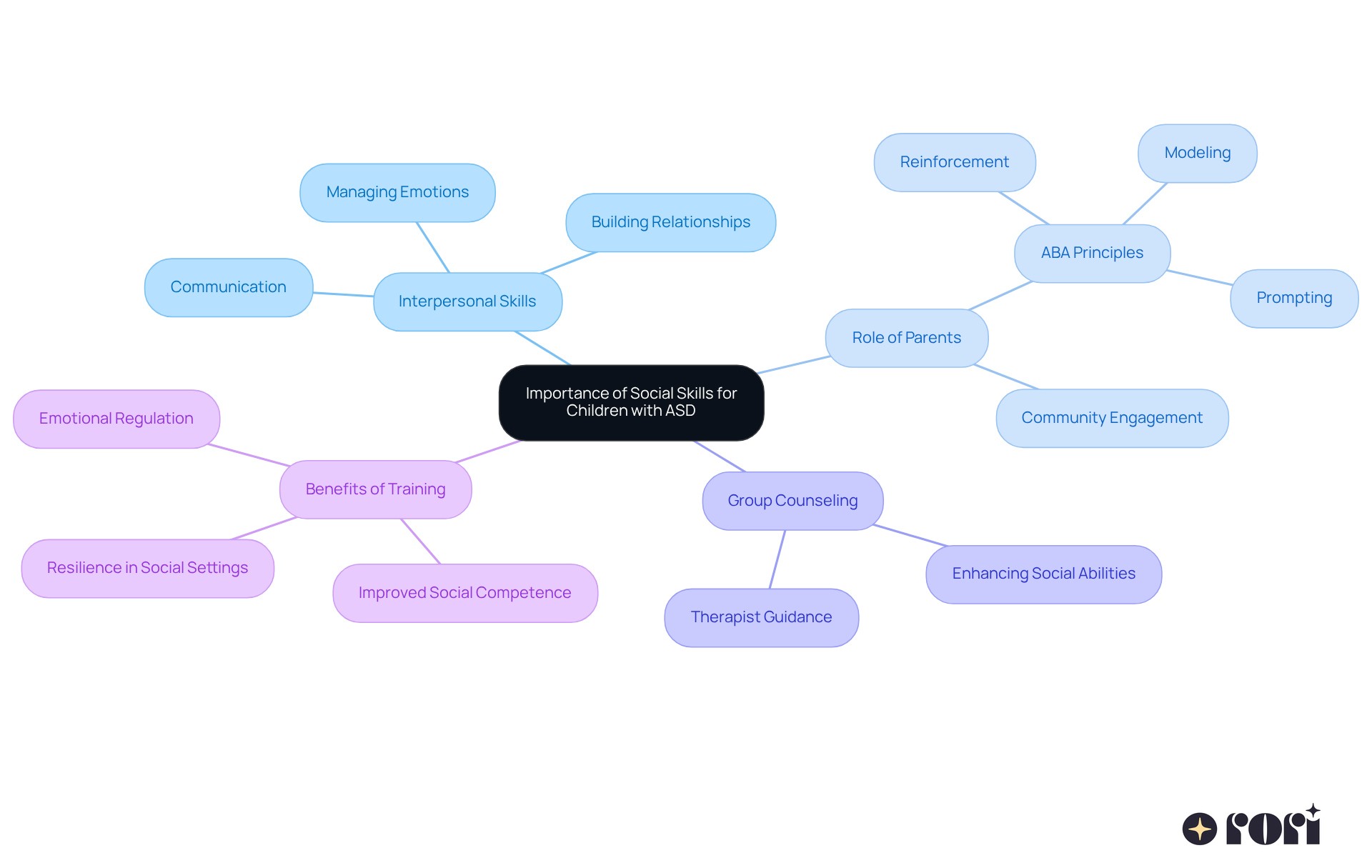
are so important for kids with Autism Spectrum Disorder (ASD). They help with communication, , and managing emotions. But let’s be real – children with ASD often struggle to read social cues, which can make it tough to form friendships or join in group activities. Research shows that when we work on these skills, it can really boost a young person’s ability to connect with peers, express feelings, and more easily. For instance, studies have found that can lead to big improvements in social competence, helping kids better regulate their emotions and bounce back in social settings.
At Rori Care, we truly believe that parents are key players in this journey. By equipping caregivers with the right knowledge and tools – like , modeling, and prompting – we emphasize how important it is to align strategies and keep track of progress. This hands-on involvement creates a supportive environment that really maximizes the impact of interventions. Plus, parents can and encouraging .
focus specifically on these vital skills, which involve enhancing , thereby improving communication and interactions. With the guidance of skilled counselors, our group support sessions . By investing in enhancing , parents can help their children build meaningful relationships and thrive in various community settings. Let’s explore this together!
Explore the Benefits of Group Therapy for Social Skills Enhancement
Group sessions can effectively contribute to enhancing social abilities through in kids, especially when it comes to building those all-important . At Rori Care, we’re all about providing a wide range of mental health support services. From group sessions to , , supervision, and one-on-one counseling, we ensure a holistic approach to child development that really makes a difference.
Let’s dive into some of the key benefits of group therapy:
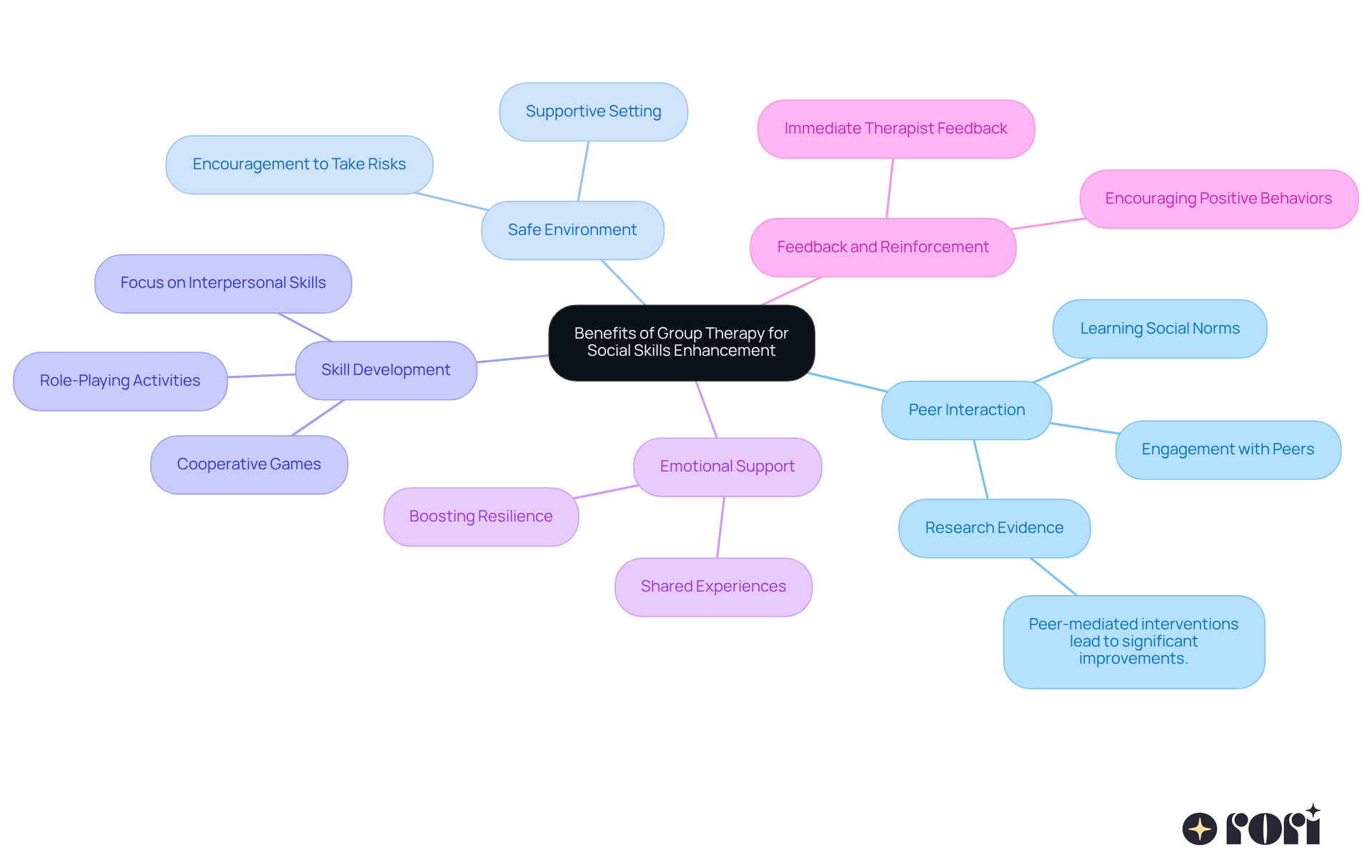
- Peer Interaction: Kids get to learn so much by watching and engaging with their peers. It’s amazing how this interaction helps them grasp social norms and behaviors. Research shows that can lead to significant improvements in how they interact and respond, creating a more natural learning environment.
- : The group setting is like a cozy blanket of support where children can practice their interaction skills without worrying about being judged. This sense of safety encourages them to take those , which is vital for their growth.
- : Group therapy often includes fun activities like role-playing, cooperative games, and discussions that really promote communication and teamwork. These engaging activities focus on specific interpersonal skills, and studies suggest that organized peer interactions can lead to impressive improvements in how kids relate to others.
- : Sharing experiences with peers can make young individuals feel less alone and more understood. These emotional connections are so important for their overall well-being. The support they gain from these interactions can boost their resilience and self-acceptance.
- Feedback and Reinforcement: Therapists provide immediate feedback on how kids interact, helping them improve their skills in real-time. This quick reinforcement is key to solidifying their learning and encouraging positive behaviors.
There are so many success stories out there! Many kids have shown remarkable progress in their interpersonal skills by . For instance, research has found that young individuals involved in enhancing social abilities through experience significant advancements in social communication and a reduction in autistic traits. This really highlights how effective these programs can be. Experts emphasize that , along with peer engagement and structured support in group counseling, as well as additional services like caregiver training and , can lead to transformative outcomes for youth.
So, if you’re considering group sessions for your child, know that you’re not alone in this journey. Let’s explore this together! We’re here to help you every step of the way!
Identify and Enroll in Effective Group Therapy Programs
Choosing the right for your child with (ASD) can feel overwhelming, but you’re not alone! Let’s explore this together with some simple steps to guide you:
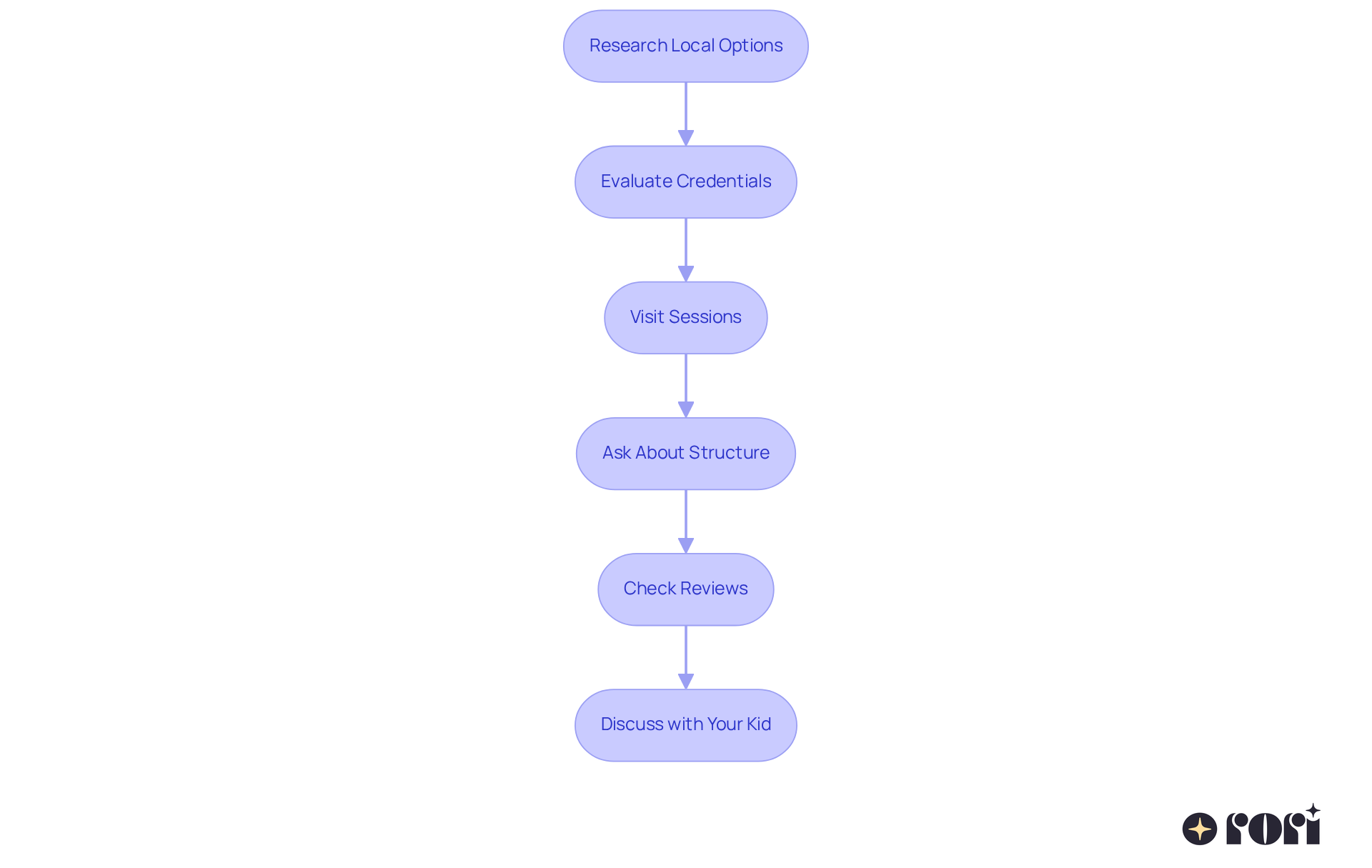
- Research Local Options: Start by looking for programs specifically designed for kids with ASD. and online directories can be great resources to find specialized offerings that suit your child’s needs.
- Evaluate Credentials: It’s important to check that the have the right qualifications and experience. Look for certifications like BCBA-D, which show they have advanced expertise in behavior analysis.
- Visit Sessions: If you can, attend a session to see how the group interacts. Observing firsthand can give you valuable insights into whether the environment will support your child’s growth.
- Ask About Structure: Don’t hesitate to ask about the program’s framework! Understanding the types of activities and the therapist-to-child ratio can help you gauge how will be-something that’s crucial for .
- Check Reviews: Hearing from other parents can be incredibly helpful. Look for testimonials or reviews to see how effective the program has been for others. can really reassure you about the quality of care your child will receive.
- Discuss with Your Kid: Involve your child in the decision-making process! It’s important that they feel comfortable and excited about participating. Their input can make a big difference in their willingness to engage in treatment.
By following these steps, you can make an informed decision that aligns with your child’s unique needs. Together, we can work on enhancing social abilities through group therapy for ASD and improve their . Remember, you’re not alone in this journey!
Support Your Child During Group Therapy Sessions
Supporting your child during group therapy for can feel like a big task, but you’re not alone! Here are some friendly strategies to help you navigate this journey together:
- : Talk with your child about what to expect in group therapy. Address any fears or concerns they might have. An open dialogue is essential for , as it fosters trust and prepares them for the experience ahead.
- : Let your child know how important it is to engage with their peers and join in on activities. Highlight the fun aspects of group interactions to spark their interest and excitement.
- : ! Recognizing improvements in social skills can really boost your child’s confidence and motivate them to keep progressing, particularly by enhancing social abilities through .
- : Keep in touch with the therapist to stay updated on your child’s progress. This collaboration can help identify areas that might need a little extra focus, ultimately [enhancing social abilities through group therapy for asd](https://rori.care/post/10-essential-aba-therapy-resources-for-parents-of-children-with-autism) and making the treatment more effective. Plus, can adjust intervention plans based on progress reports, which is super helpful!
- : Reinforce what your child learns in therapy by practicing those interpersonal skills in everyday situations, like playdates or family gatherings. This real-world application not only solidifies their learning but also supports enhancing social abilities through group therapy for asd, thereby .
Let’s explore this together! Remember, you’re doing a great job supporting your child, and every step counts!

Conclusion
Enhancing social abilities through group therapy for children with Autism Spectrum Disorder (ASD) is such an important journey! It can really boost their interpersonal skills and overall emotional well-being. By focusing on structured interactions and peer engagement, parents can play a key role in nurturing their child’s social development. This ultimately leads to deeper connections and a more fulfilling life.
Let’s talk about some key points that highlight the importance of group therapy. First off, peer interaction is a huge benefit. It creates a safe environment where kids can practice their social skills. Plus, engaging activities provide fantastic opportunities for skill development. Each of these elements helps children navigate social situations more effectively, while also offering emotional support and real-time feedback from therapists. And let’s not forget about parental involvement! It really reinforces how working together can enhance the therapeutic experience for children with ASD.
In conclusion, investing in group therapy not only empowers children but also gives parents the tools they need to support their growth. By taking proactive steps to find the right program and getting involved in their child’s therapy, families can create a nurturing environment that promotes social competence and emotional resilience. Embracing this journey together can lead to amazing outcomes, making a lasting difference in the lives of children with ASD. Let’s explore this together!
Frequently Asked Questions
Why are social skills important for children with Autism Spectrum Disorder (ASD)?
Social skills are crucial for children with ASD as they aid in communication, building relationships, and managing emotions. These skills help children connect with peers and navigate social situations.
What challenges do children with ASD face in developing social skills?
Children with ASD often struggle to read social cues, making it difficult for them to form friendships or participate in group activities.
How can training in interpersonal skills benefit children with ASD?
Structured training in interpersonal skills can significantly improve social competence, helping children better regulate their emotions and adapt in social settings.
What role do parents play in developing social skills for children with ASD?
Parents are essential in this process by equipping themselves with knowledge and tools, such as ABA principles like reinforcement, modeling, and prompting, to support their child’s development.
How can parents practice social skills with their children at home?
Parents can practice various scenarios at home and encourage community engagement to help their children develop interpersonal skills.
What is the purpose of group counseling sessions for children with ASD?
Group counseling sessions focus on enhancing social abilities through group therapy, improving communication and interactions among children with ASD.
How do skilled counselors contribute to the development of social skills in children with ASD?
Skilled counselors guide group support sessions, empowering both children and their parents to work on enhancing interpersonal skills effectively.
What is the overall goal of investing in social skills for children with ASD?
The goal is to help children build meaningful relationships and thrive in various community settings.
List of Sources
- Understand the Importance of Social Skills for Children with ASD
- strivehighaba.com (https://strivehighaba.com/blog/social-skills-training-asd)
- pmc.ncbi.nlm.nih.gov (https://pmc.ncbi.nlm.nih.gov/articles/PMC5325134)
- How Social Skills Training Benefits Children with Autism (https://mastermindbehavior.com/post/how-social-skills-training-benefits-children-with-autism)
- Social Skills Training for Autism Spectrum Disorder: a Meta-analysis of In-person and Technological Interventions – PMC (https://pmc.ncbi.nlm.nih.gov/articles/PMC7670840)
- behavioral-innovations.com (https://behavioral-innovations.com/blog/the-benefits-of-social-skills-programs-for-children-with-autism)
- Explore the Benefits of Group Therapy for Social Skills Enhancement
- A systematic review of peer-mediated interventions for children with autism spectrum disorder – PMC (https://pmc.ncbi.nlm.nih.gov/articles/PMC5087797)
- pmc.ncbi.nlm.nih.gov (https://pmc.ncbi.nlm.nih.gov/articles/PMC5996019)
- 10 Inspiring Autism Awareness Quotes to Foster Understanding – Rori Blog (https://rori.care/post/10-inspiring-autism-awareness-quotes-to-foster-understanding)
- Efficacy of group social skills interventions for youth with autism spectrum disorder: A systematic review and meta-analysis – PMC (https://pmc.ncbi.nlm.nih.gov/articles/PMC5358101)
- 10 inspiring quotes from people with autism | Autism Speaks (https://autismspeaks.org/life-spectrum/autism-quotes)
- Identify and Enroll in Effective Group Therapy Programs
- Success Rates of ABA Therapy | Advanced Autism Services (https://advancedautism.com/post/success-rates-of-aba-therapy)
- The Numbers Don’t Lie: Revealing Autism Therapy Statistics | Above and Beyond Therapy (https://abtaba.com/blog/autism-therapy-statistics)
- Autism Therapy Statistics (https://goldenstepsaba.com/resources/autism-therapy-statistics)
- Support Your Child During Group Therapy Sessions
- The Numbers Don’t Lie: Revealing Autism Therapy Statistics | Above and Beyond Therapy (https://abtaba.com/blog/autism-therapy-statistics)
- Autism Therapy: Key Statistics (https://ambitionsaba.com/resources/autism-therapy-statistics)
- Inspiring and Insightful Autism Quotes | Advanced Autism Services (https://advancedautism.com/post/autism-quotes)
- 20 Inspiring Quotes About Autism Every Parent Must Read Today (https://circlecareservices.com/20-quotes-about-autism-and-parenting)