
Introduction
Art therapy has become a wonderful way to support children with autism, offering a unique path for emotional expression and social connection. Through creative activities, kids can explore their feelings, boost their communication skills, and improve their sensory processing – all while having a blast! But here’s the big question: how can parents bring these techniques into their homes to help their child thrive?
Let’s dive into some practical steps and helpful resources that can harness the magic of art therapy, paving the way for a nurturing and enriching experience. We’re here to help you every step of the way!
Understand Art Therapy and Its Benefits for Autism
Art-based treatment is a creative way to help kids express and process their emotions through art. For children with autism, this therapy offers some fantastic benefits:
- Emotional Expression: Art acts as a non-verbal outlet, allowing kids to share feelings that might be tough to put into words. This can lead to better emotional regulation and a deeper understanding of their feelings. In fact, studies show how art therapy can help children with autism by reducing symptoms of anxiety, depression, and stress by up to 73% in young people with Autism Spectrum Disorder (ASD).
- Social Skills Development: When kids engage in art activities, they often work together on projects or share their creations. This encourages turn-taking and cooperative play, which are key parts of social skills. Group art sessions can really boost communication and emotional connections among peers, creating a supportive environment for healing.
- Sensory Processing: Art therapy lets kids explore different materials and textures, which can enhance their sensory integration abilities. Activities like sensory-rich art projects help children gradually get used to various textures, easing sensory overload and improving their overall functioning.
- Motor Skills Improvement: Activities such as painting, drawing, and sculpting are great for developing fine motor skills, which are essential for daily tasks. Research suggests that art therapy can lead to significant improvements in motor skills and physical functioning.
Recent reviews have highlighted how art therapy can help children with autism, showing real progress in emotional expression and social communication. These programs not only encourage emotional release but also allow kids to , paving the way for personal growth and better well-being.
Let’s explore this together! If you’re considering art therapy for your child, know that you’re not alone. We’re here to help you every step of the way!

Implement Art Therapy Techniques at Home
To effectively implement art therapy techniques at home, let’s explore some simple steps together:
-
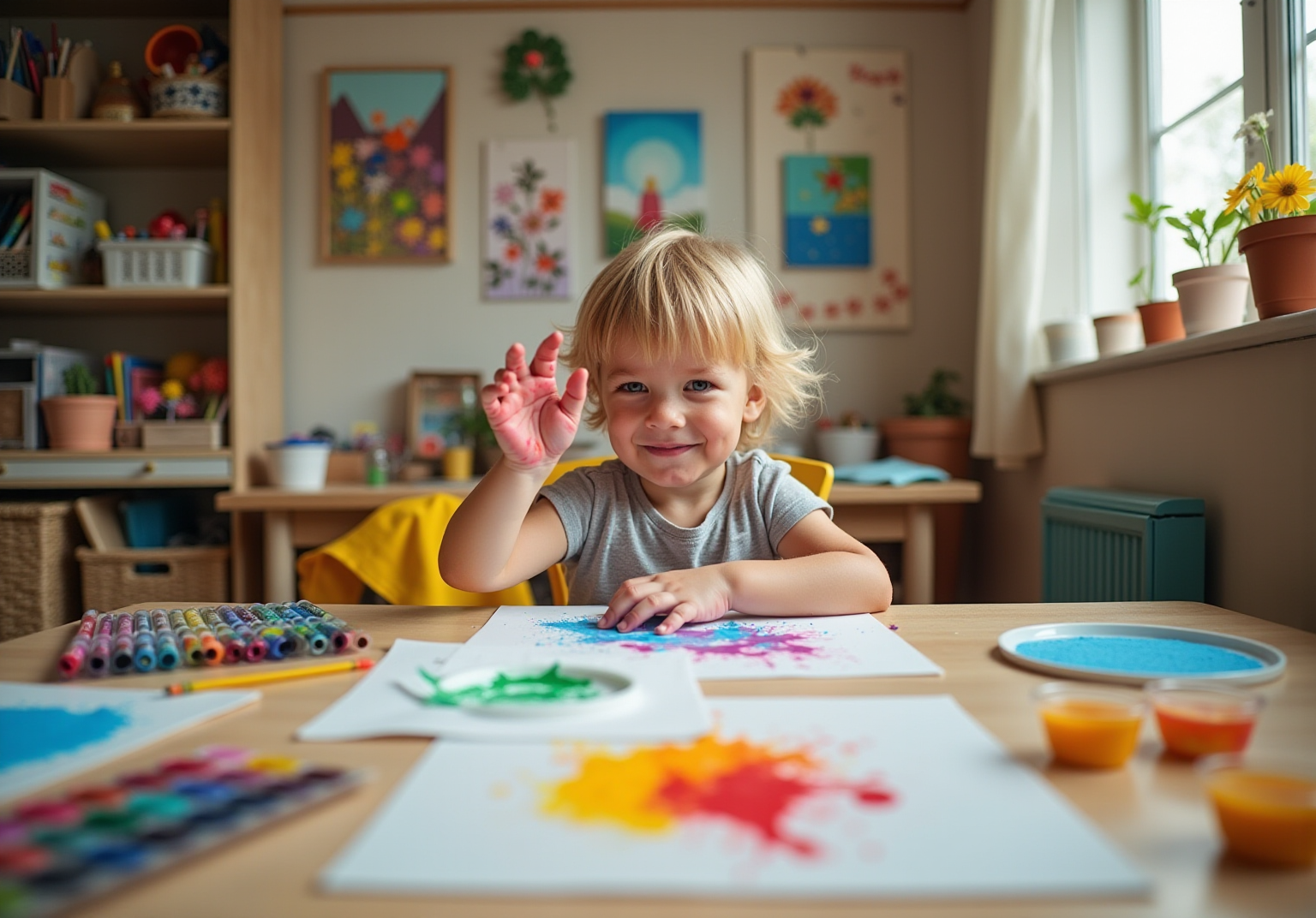
Create a Dedicated Art Space: Start by setting up a cozy and inviting area where your little ones can express themselves freely through art. Fill this space with a variety of supplies – think crayons, markers, paints, and clay – to spark their creativity.
-
Select Engaging Pursuits: Choose activities that resonate with your child’s interests. For example, if they adore animals, encourage them to create animal-themed art. Here are a few fun ideas:
- Finger Painting: This hands-on experience is perfect for sensory exploration and unleashing creativity.
- Emotion Collage: Have your child cut out images from magazines that represent different feelings and assemble a collage.
- Nature Art: Collect leaves, flowers, or stones to incorporate into art projects, helping them connect with nature.
-
Encourage Expression: It’s important to let your child express themselves without any judgment. Focus on the creative journey rather than the final piece, reminding them that there are no right or wrong ways to create art.
-
Incorporate Routine: Try to weave art activities into your weekly schedule. Setting aside specific times for these creative sessions can help your child look forward to these moments of expression.
-
Reflect Together: After finishing an art project, take some time to . Ask open-ended questions about their artwork to encourage them to express their thoughts and feelings.
Did you know that kids with autism who engage in artistic activities are 45% more likely to develop better emotional regulation strategies, illustrating how art therapy can help children with autism compared to traditional behavioral interventions? Plus, group art sessions can illustrate how art therapy can help children with autism by leading to a 52% increase in positive peer interactions, showcasing the social benefits of these creative activities.
Let’s embrace this journey of creativity together!

Evaluate and Adapt Art Therapy Approaches
To effectively evaluate and adapt art therapy approaches for children with autism, let’s consider a few friendly steps:
- Set Clear Goals: Start by defining specific, measurable objectives for your art therapy sessions. Think about goals like enhancing emotional expression, improving social skills, or developing fine motor abilities. These all play a part in helping your child gain independence.
- Monitor Progress: Keep a detailed journal of your child’s art activities. Document any changes in behavior or emotional expression. Notice the improvements or challenges they face during the creative process – these insights can really guide future sessions. Research shows how art therapy can help children with autism by significantly boosting their social communication and motor skills, making this monitoring super important! At Rori Care, we believe that active caregiver involvement is key to tracking progress and ensuring effective skill acquisition.
- Solicit Feedback: Chat with your child about their art experiences. Ask them what they enjoyed, what was tough, and how they felt during the activities. This feedback is crucial for understanding their perspective and tailoring the treatment to fit their needs. As LiuYuYi Zhou points out, art-based intervention is a promising way to enhance emotional processing and communication, illustrating how art therapy can help children with autism and aligns perfectly with our commitment to personalized treatment plans.
- Adapt Activities: Stay flexible! Modify activities based on your observations and your child’s feedback. If a certain medium or technique isn’t capturing their interest, try introducing new materials or themes that might resonate better. Explore techniques like painting, sculpting, or collage-making to keep things fresh and engaging. The beauty of how art therapy can help children with autism lies in its versatility, which can really help keep your little one motivated.
- Consult Professionals: Whenever you can, reach out to a qualified art therapist or autism care specialist. Their expertise can provide tailored suggestions and approaches to enhance your home-based art support, ensuring it meets your child’s unique needs. At Rori Care, our clinical leadership team is dedicated to promoting neurodiversity and empowering caregivers to make informed choices that positively impact their child’s development.
By following these steps, you can create a nurturing and adaptable art environment that encourages your child’s growth and development. Let’s explore this together!

Explore Resources and Tools for Enhanced Art Therapy
To enhance your child’s art therapy experience, let’s explore some helpful resources and tools together:
- Books and Guides: Look for titles that dive into art methods tailored for children with autism. For instance, ‘Art as an Early Intervention Tool for Children with Autism‘ offers practical advice and fun exercises that demonstrate how art therapy can help children with autism by sparking creativity and self-expression.
- Online Platforms: Check out websites like Autism Speaks and the American Art Association. They’re packed with information on , featuring articles, research studies, and creative activity ideas to support your child’s therapeutic journey. Did you know how art therapy can help children with autism by reducing symptoms of anxiety, depression, and stress by 73%? That’s pretty significant!
- Art Supplies: Invest in quality art materials that cater to your child’s sensory preferences. Think textured papers, non-toxic paints, and adaptive tools that make creating art more accessible and enjoyable.
- Workshops and Courses: Look for local art workshops or courses specifically designed for kids with autism. These structured environments can encourage peer interaction and skill development, enriching your child’s art therapy experience. Research shows how art therapy can help children with autism, as kids in structured art programs often see big improvements in emotional identification, impulse control, and patience.
- Community Support: Connect with online forums or local support groups for parents of children with autism. Sharing experiences and resources can provide valuable insights and encouragement, making your art therapy journey even more rewarding. As the Creative City Network of Canada highlights, arts and culture are vital for community well-being, so engaging with others can be a key part of the therapeutic process.
Let’s take this journey together! Your child’s art therapy experience can be a wonderful adventure filled with creativity and connection.

Conclusion
Art therapy really shines as a wonderful way to support children with autism. It gives them a special outlet to express their feelings and build social skills. Through creative activities, kids can share emotions that might otherwise stay hidden, helping them understand themselves better and manage their feelings more effectively. This approach not only nurtures personal growth but also fosters a sense of community among peers, creating a warm environment for healing and connection.
Let’s talk about some of the fantastic benefits of art therapy! It promotes:
- Emotional expression
- Boosts social skills
- Enhances sensory processing
- Helps develop fine motor abilities
If you’re thinking about bringing art therapy into your home, consider:
- Setting up a dedicated art space
- Choosing fun activities
- Encouraging your child to express themselves freely
These steps are key to making the most of this approach. Plus, regularly checking in on your child’s progress and adjusting the activities can keep the therapy relevant and impactful.
Ultimately, embracing art therapy can truly change the lives of children with autism. It opens up a world of creativity, self-discovery, and emotional resilience. By exploring art therapy resources and implementing supportive practices at home, you can play a crucial role in your child’s journey. Engaging in this creative process not only benefits your child but also strengthens the bond between you two, making art therapy a rewarding experience for everyone involved. Let’s explore this together!
Frequently Asked Questions
What is art therapy?
Art therapy is a creative treatment method that helps children express and process their emotions through art.
What are the benefits of art therapy for children with autism?
Art therapy offers several benefits for children with autism, including improved emotional expression, social skills development, enhanced sensory processing, and motor skills improvement.
How does art therapy help with emotional expression?
Art serves as a non-verbal outlet for children, allowing them to share feelings that may be difficult to articulate, leading to better emotional regulation and understanding.
Can art therapy reduce symptoms of anxiety and depression in children with autism?
Yes, studies indicate that art therapy can reduce symptoms of anxiety, depression, and stress by up to 73% in young people with Autism Spectrum Disorder (ASD).
In what way does art therapy promote social skills development?
Engaging in art activities often involves collaboration, which encourages turn-taking and cooperative play, enhancing communication and emotional connections among peers.
How does art therapy assist with sensory processing?
Art therapy allows children to explore various materials and textures, improving their sensory integration abilities and helping to ease sensory overload.
What impact does art therapy have on motor skills?
Activities like painting, drawing, and sculpting are beneficial for developing fine motor skills, which are essential for daily tasks, and can lead to significant improvements in motor skills and physical functioning.
What do recent reviews say about the effectiveness of art therapy for children with autism?
Recent reviews highlight that art therapy can lead to real progress in emotional expression and social communication, encouraging emotional release and creative expression.