

Introduction
Have you ever felt lost trying to create a routine that works for your child? Creating a structured environment can really help children undergoing ABA therapy, especially those with autism. By setting clear expectations and predictable routines, you can foster a sense of security that helps your child thrive in their therapy journey.
But how can we make sure these routines really fit your child’s needs? Together, we’ll explore some practical strategies to help your child thrive in therapy! With a little structure, you can make a big difference in your child’s experience.
Establish Clear Structures to Enhance Behavioral Outcomes
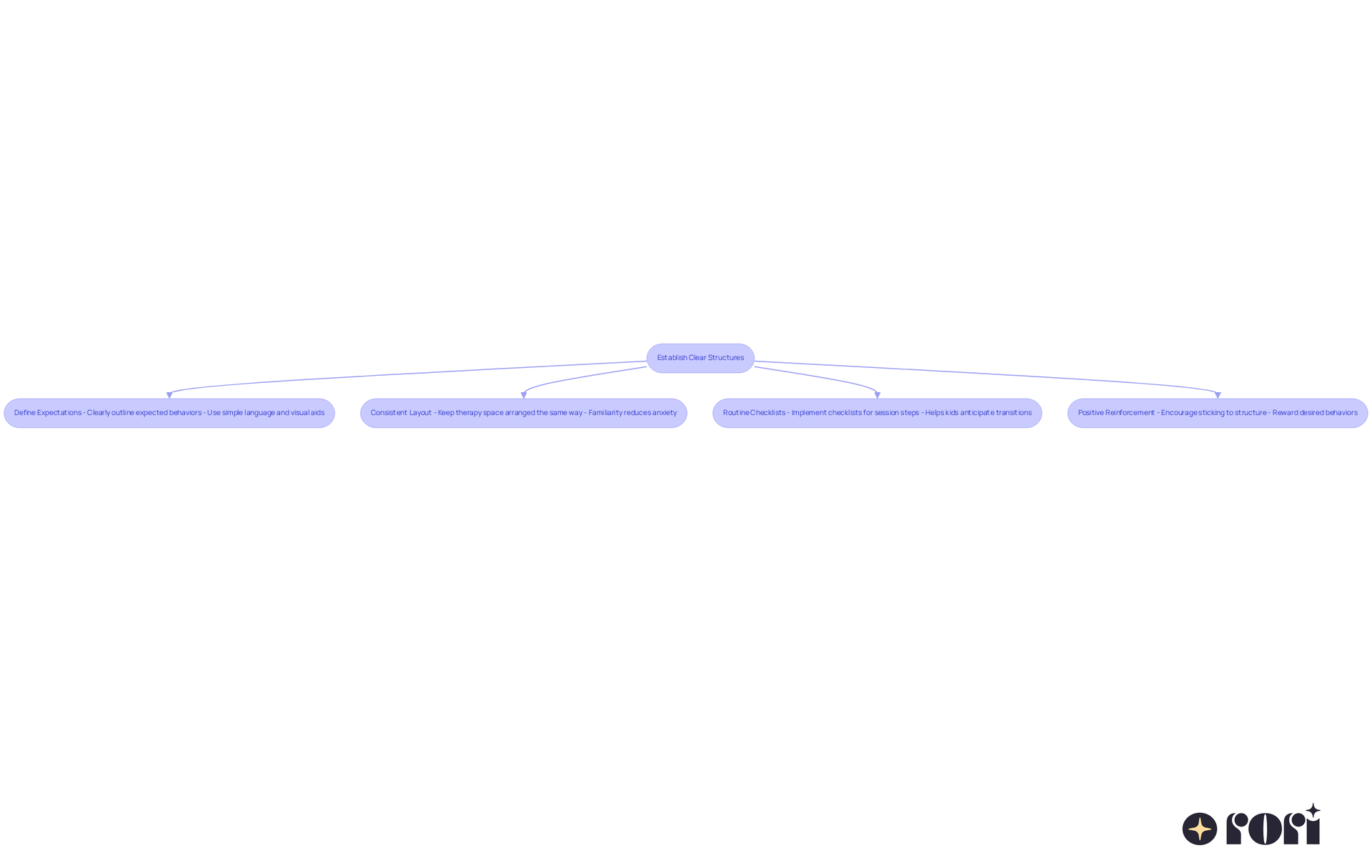
Have you ever noticed how a little predictability can make a big difference for kids with autism? Creating a structured environment is essential for using structure to improve behavior in ABA therapy, as it fosters stability and helps them feel secure. Here are some friendly tips to establish clear structures:
- Define Expectations: Clearly outline what behaviors you expect during counseling sessions. Using simple language and visual aids can really help reinforce these expectations.
- Consistent Layout: Keep the therapy space arranged the same way each time. Familiarity with the environment helps kids feel more at ease and reduces anxiety.
- Routine Checklists: Implement checklists that outline the steps of each session. This way, kids can anticipate what’s next, making transitions smoother.
- Positive Reinforcement: Use positive reinforcement to encourage sticking to the established structure. Rewarding desired behaviors can motivate kids to engage more fully in the therapy process.
When we create a supportive space, we’re not just helping them learn; we’re helping them thrive.
Implement Predictable Routines for Consistent Progress
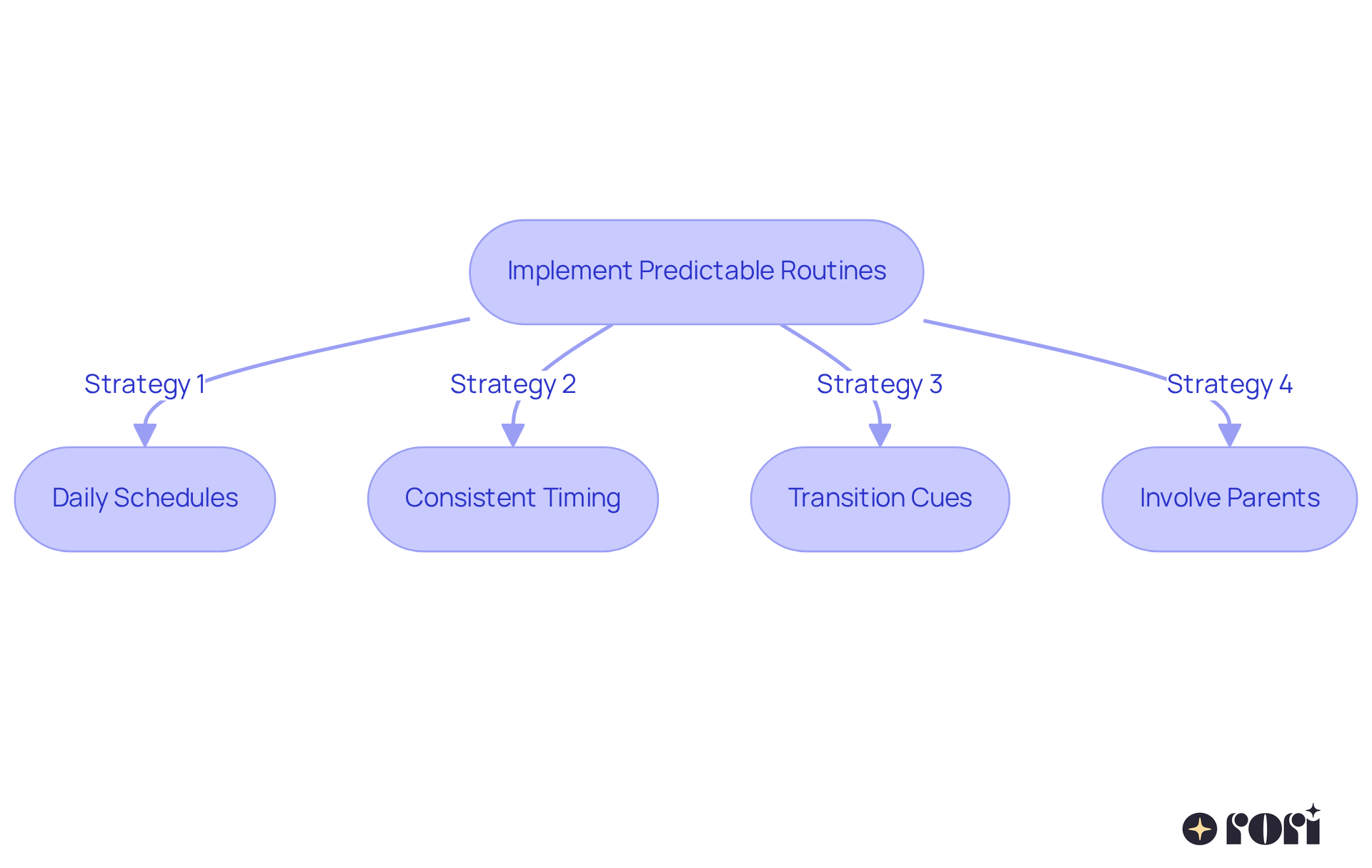
Have you ever noticed how a little predictability can make a big difference for your child with autism? Predictable routines are vital for youngsters, and using structure to improve behavior in ABA therapy fosters a sense of security and helps them manage expectations. Here are some effective strategies for implementing these routines:
- Daily Schedules: You might find that using a visual daily schedule can really help ease anxiety and make tasks feel more manageable for your child. It outlines activities and transitions, so they know what to expect next.
- Consistent Timing: Establishing regular times for therapy sessions and activities can work wonders. When your child knows what to expect, it assists in using structure to improve behavior in ABA therapy, helping them internalize routines and making transitions smoother and less stressful.
- Transition Cues: Using visual or auditory cues to signal transitions can be a game-changer. These cues prepare your child for changes, minimizing disruptions and helping them adapt more easily.
- Involve Parents: It’s super helpful when parents replicate these routines at home. Consistency across different environments is crucial for using structure to improve behavior in ABA therapy, as it strengthens learning and helps your child generalize skills, which is so important for their development.
When we create reliable routines together, we can make sessions smoother and more engaging for your child. Plus, studies show that structured schedules can reduce autism symptoms by 17% over six years! By embracing these routines, you’re not just helping your child; you’re creating a nurturing space where they can truly flourish. Let’s explore this together!
Utilize Visual Supports and Technology for Effective Structure
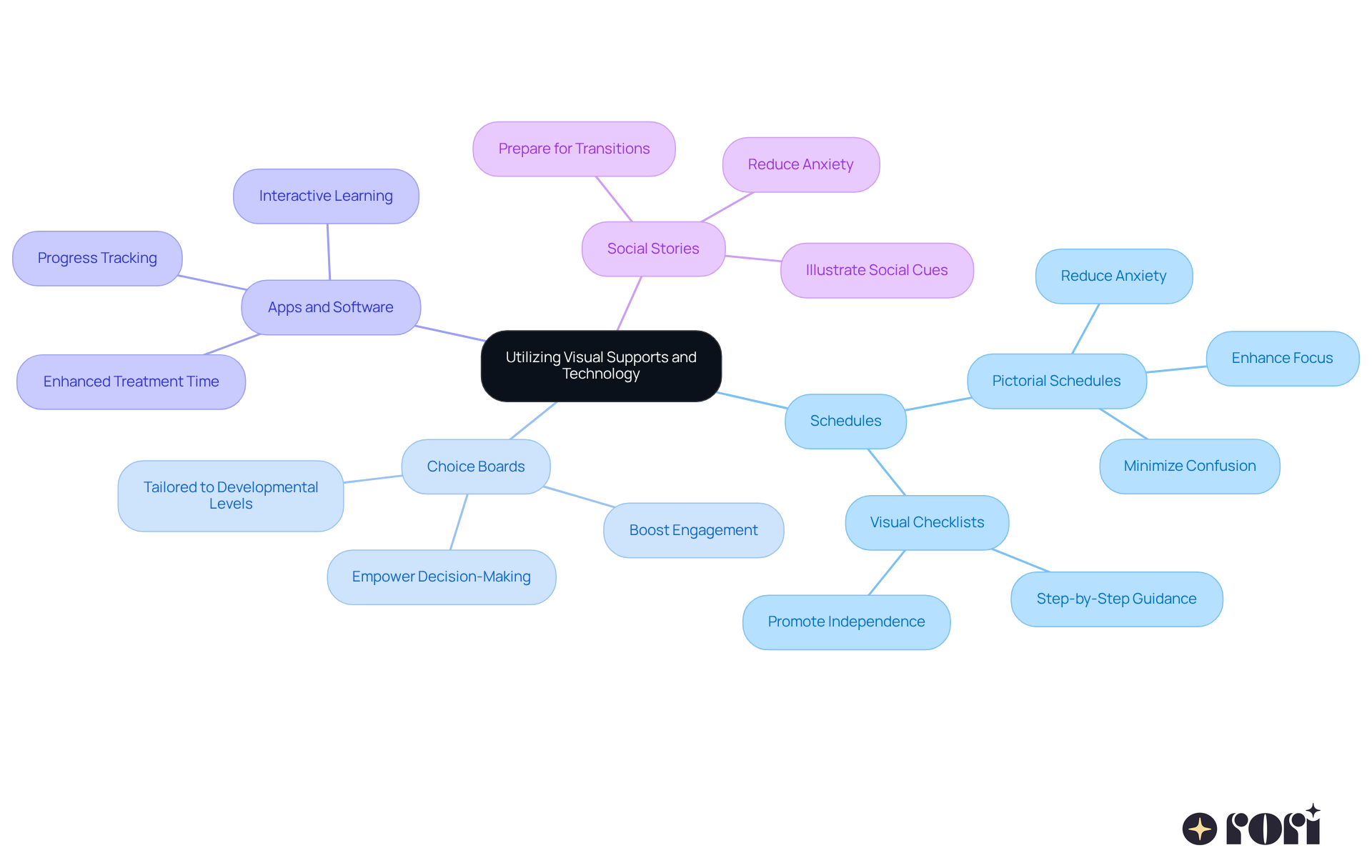
Navigating the world of ABA therapy can feel overwhelming, especially when trying to find the right tools for your child. Visual supports and technology can really make a difference for kids with Autism Spectrum Disorders, ADHD, behavioral challenges, and learning disabilities. Here are some best practices to consider:
- Schedules: Think about using pictorial schedules that outline daily activities with pictures or icons. This helps kids know what to expect, which can reduce anxiety and keep them focused. Studies show that these visual aids can lead to fewer meltdowns by providing predictability and minimizing confusion – especially helpful for children with autism.
- Choice Boards: Choice boards are a fantastic way to give kids options during activities. This not only empowers them to make decisions but also boosts their engagement. Plus, these visual supports can be tailored to fit individual developmental levels, making them effective for a wide range of children, including those with Autism Spectrum Disorders, ADHD, and learning disabilities.
- Apps and Software: Don’t forget about technology! Specialized apps designed for ABA therapy can track progress and offer interactive learning experiences, making treatment more fun for kids. By combining personalized therapy with advanced AI to monitor and create progress reports, Rori Care can provide 50% more time for treatment, enhancing the overall effectiveness of therapy.
- Social Stories: Creating social stories can be a game-changer. These narratives illustrate specific situations or behaviors, helping kids understand social cues and expectations. Research by Rao & Gagie shows that students with autism benefit from imagery to prepare for transitions and better understand different situations.
By embracing these visual tools, you’re not just helping your child; you’re creating a more supportive environment for their growth and happiness. But remember, too many visual cues can be confusing for kids, so it’s all about finding that perfect balance!
Tailor Strategies to Individual Needs for Optimal Support
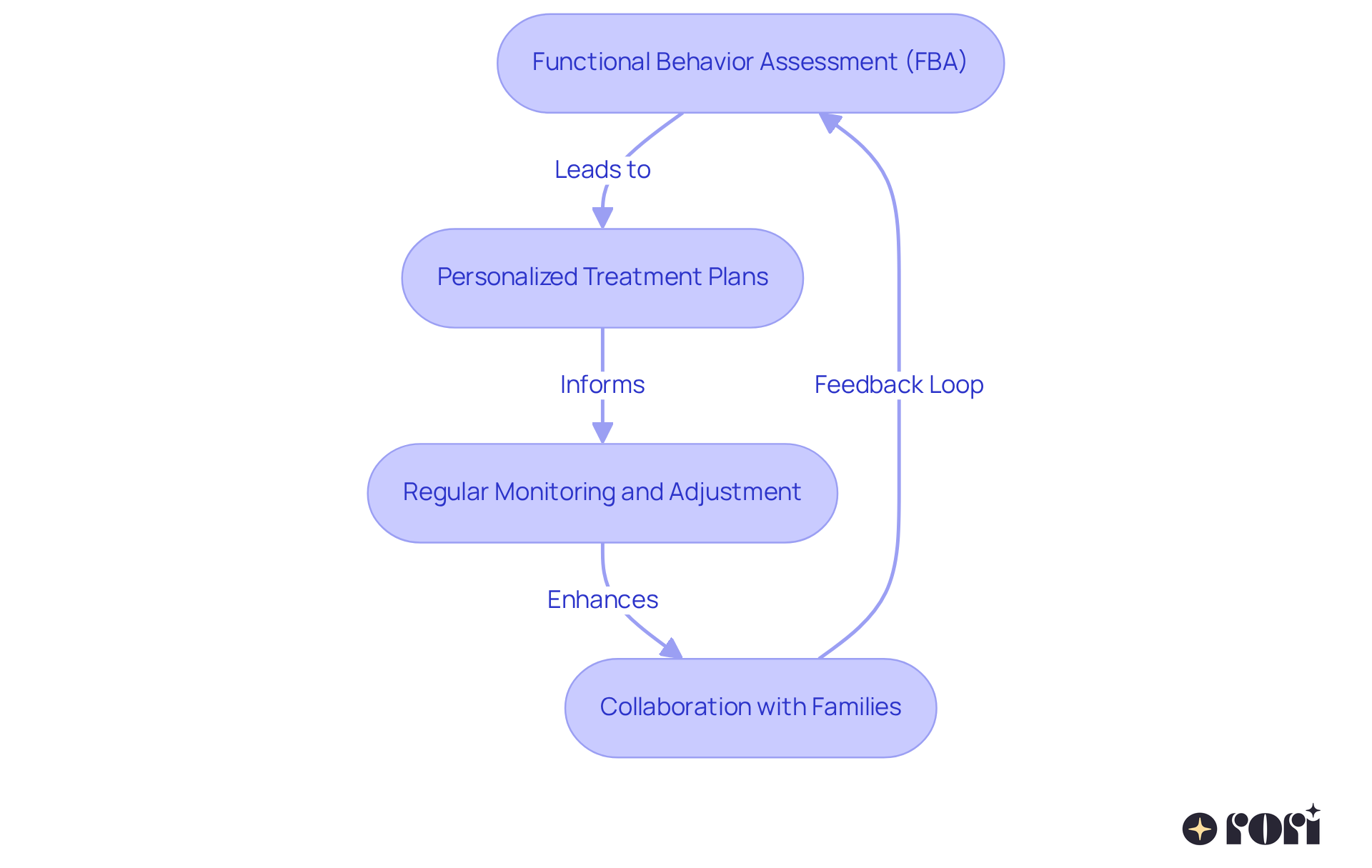
Navigating the world of ABA therapy can feel overwhelming for parents, especially when it comes to finding the right strategies for their child. Tailoring strategies to meet the individual needs of children with autism is essential for effective ABA therapy at Rori Care. Here are some key practices for customization:
- Functional Behavior Assessment (FBA): Start by understanding your child’s unique behaviors and the situations that trigger them. This evaluation is crucial for creating tailored interventions, as it helps clarify the roles of actions and guides treatment approaches. We use a special approach to analyze behaviors, helping us create the best plans for your child.
- Personalized Treatment Plans: Develop treatment plans that reflect your child’s unique strengths, interests, and challenges. When treatment plans are personalized, kids tend to do better and feel happier about their progress. By aligning interventions with your child’s profile, we can boost their motivation and engagement in therapy. Our team works closely with families to create plans that fit your child’s needs and help you support them.
- Regular Monitoring and Adjustment: Keep an eye on progress and be ready to adjust strategies as needed. Flexibility is key to responding to your child’s evolving needs. We keep track of your child’s progress and share updates with you regularly, so you always know how they’re doing. This ensures that treatment remains relevant and effective, fostering engagement as they see their treatment evolve.
- Collaboration with Families: Involve families in the planning process. Your insights provide valuable context and help ensure that strategies are practical and applicable in everyday life. When families are involved, therapy works better, and kids thrive. Collaborative relationships between therapists and families enhance treatment efficacy, as clients who feel supported are more likely to engage fully in the therapeutic process.
By tailoring strategies to individual needs, Rori Care therapists can provide optimal support that enhances the effectiveness of ABA therapy using structure to improve behavior in ABA therapy and promotes meaningful progress. When parents actively participate in their child’s therapy, they not only enhance the effectiveness of the treatment but also foster a deeper connection with their child.
Conclusion
Have you ever felt overwhelmed trying to create a routine that works for your child in ABA therapy? Establishing a structured environment is key to helping our kids thrive. By setting clear structures, predictable routines, and tailored strategies, we can create a sense of security that really boosts their behavior. This not only helps manage expectations but also encourages our children to engage more fully in their therapy sessions!
Let’s talk about some key strategies. Using visual aids to define expectations, keeping a consistent layout in therapy spaces, and even utilizing technology like visual supports and specialized apps can make a world of difference. These tools help reduce anxiety and confusion, making transitions smoother and allowing our kids to internalize routines better. Plus, when we involve parents in replicating these structures at home, it strengthens learning and supports behavioral consistency across different environments.
We can’t stress enough how crucial structure is in ABA therapy! By embracing these practices, we’re not just creating a supportive space for children with autism; we’re nurturing their growth and happiness. Remember, every child is unique, and tailoring strategies to meet their individual needs makes therapy even more effective. By working together to establish structure, we can help our children not just cope, but truly flourish in their therapy journey.
Frequently Asked Questions
Why is creating a structured environment important for kids with autism?
A structured environment fosters stability and helps kids with autism feel secure, which can significantly improve their behavior during therapy.
What are some ways to define expectations for behavior in therapy sessions?
Clearly outline expected behaviors using simple language and visual aids to reinforce these expectations.
How can the layout of the therapy space affect kids with autism?
Keeping the therapy space arranged the same way each time helps children feel more at ease and reduces anxiety due to familiarity with the environment.
What is the purpose of routine checklists in therapy sessions?
Routine checklists outline the steps of each session, allowing kids to anticipate what’s next and making transitions smoother.
How can positive reinforcement be used in establishing structure?
Positive reinforcement encourages kids to stick to the established structure by rewarding desired behaviors, which can motivate them to engage more fully in the therapy process.
List of Sources
- Implement Predictable Routines for Consistent Progress
- The Power of Predictable Routines for Children with Autism (https://littlechampsaba.com/blog/the-importance-of-routine-for-autism)
- Autism Quotes (https://kidsclubaba.com/autism-quotes)
- 10 inspiring quotes from people with autism | Autism Speaks (https://autismspeaks.org/life-spectrum/autism-quotes)
- Why Predictable Routines Are So Important For Autistic Preschoolers (https://autismlittlelearners.com/autistic-child)
- Utilize Visual Supports and Technology for Effective Structure
- CHECK Visual Schedules to Support Individuals on the Autism Spectrum – Zhigao Liang, 2025 (https://journals.sagepub.com/doi/10.1177/10534512241300157)
- Visual Supports in ABA Therapy: What They Are (https://appliedbehavioranalysisedu.org/what-is-meant-by-visual-supports-in-the-context-of-aba-therapy)
- The Effectiveness of Visual Supports for Students with Autism Spectrum Disorder – (https://naset.com/publications/autism-spectrum-disorders-series/the-effectiveness-of-visual-supports-for-students-with-autism-spectrum-disorder)
- The use of visual schedules to increase academic-related on-task behaviors of individuals with autism: a literature review (https://tandfonline.com/doi/full/10.1080/20473869.2024.2402124)
- The Role of Visual Cues in ABA Therapy Language Development (https://crossrivertherapy.com/articles/the-role-of-visual-cues-in-aba-therapy-language-development)
- Tailor Strategies to Individual Needs for Optimal Support
- Applied Behavior Analysis (ABA) Statistics: Data, Effectiveness, and Evidence-Based Practices (https://nexoaba.com/applied-behavior-analysis-statistics)
- The Importance of Individualized Treatment Plans in ABA Therapy (https://magnetaba.com/blog/the-importance-of-individualized-treatment-plans-in-aba-therapy)
- A comparative effectiveness trial of functional behavioral assessment methods – PMC (https://pmc.ncbi.nlm.nih.gov/articles/PMC10843530)
- Custom Treatment Plans for Better Therapy Outcomes (https://growthroughlifecounseling.com/post/why-custom-treatment-plans-are-key-to-your-therapy-success)
- The Importance of Individualized Treatment Plans in Therapy Services | Carry on Therapy (https://carryontherapy.com/blog/the-importance-of-individualized-treatment-plans-in-therapy-services)