

Introduction
Practical abilities are the backbone of a child’s daily life, helping them navigate their environment, build relationships, and foster independence. Understanding functional skills—like self-care and communication—can truly impact a child’s development, especially for those facing challenges such as autism. So, how can parents effectively assess and enhance these essential skills to help their children thrive?
Let’s explore this together! This article dives into the vital steps for defining and nurturing functional skills, offering insights that can transform a child’s journey toward greater autonomy and success. We’re here to help you every step of the way!
Understand Functional Skills: Definition and Importance
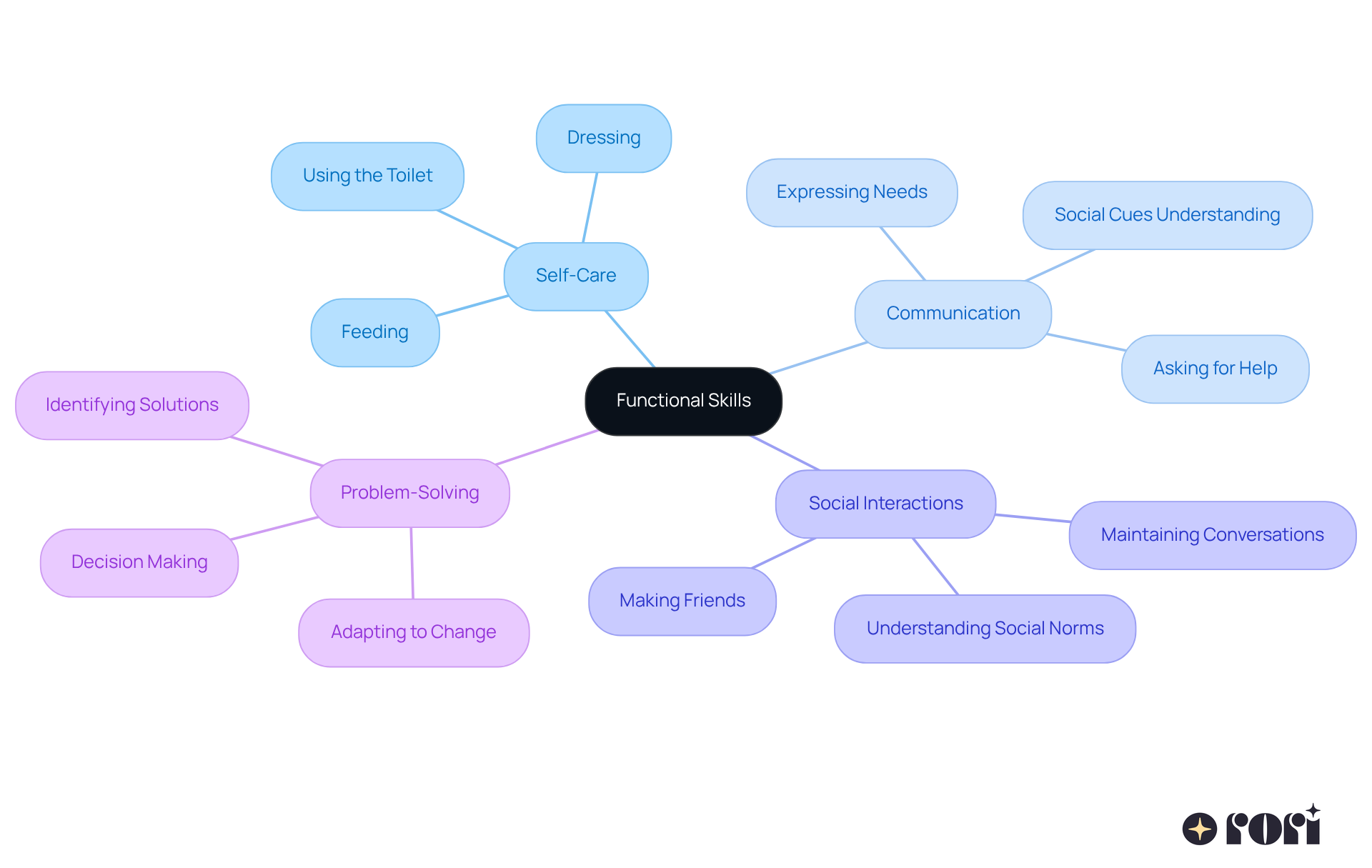
Practical abilities are the key skills that help our young ones tackle daily tasks and engage in their lives. These skills cover a variety of activities, like self-care, communication, social interactions, and problem-solving. Understanding these practical abilities is vital because they help define that directly affect a young person’s ability to navigate their world, build relationships, and gain independence. Think about it—basic skills like dressing, feeding, and using the toilet are essential for personal care, while effective communication skills are crucial for socializing with others.
Recent studies show that children with autism and other challenges, like learning difficulties, often face hurdles in picking up these skills, which can hinder their independence. For example, research indicates that autistic young people tend to have fewer skills that define functional skills and self-management compared to their non-autistic peers, especially as they transition into adulthood. But here’s the good news: targeted interventions, like behavioral therapy, can really boost these abilities, leading to greater independence and a better quality of life.
When we define functional skills, it is important to understand that they go beyond just completing tasks; they also involve grasping the intent and purpose behind actions. For instance, when a young person learns to ask for help, they’re not just mastering a communication skill—they’re also developing social awareness and the ability to advocate for themselves. This comprehensive understanding of practical abilities is so important for fostering independence and enhancing the overall quality of life for young individuals with autism and other developmental challenges.
Supporters emphasize the importance of these abilities: Temple Grandin famously said, ‘I am different, not less,’ highlighting the unique strengths of those on the spectrum. Additionally, Jillian Mercado reminds us, ‘Autism is not the adversary; ignorance is,’ which underscores the need for understanding and acceptance to help our youth on their paths to independence. By recognizing the significance of practical abilities and the role of caregiver training, parents can better support their children’s growth and prepare them for future challenges. Let’s explore this together!
Identify Key Functional Skills for Child Development
Key functional skills essential for child development can be grouped into several areas:
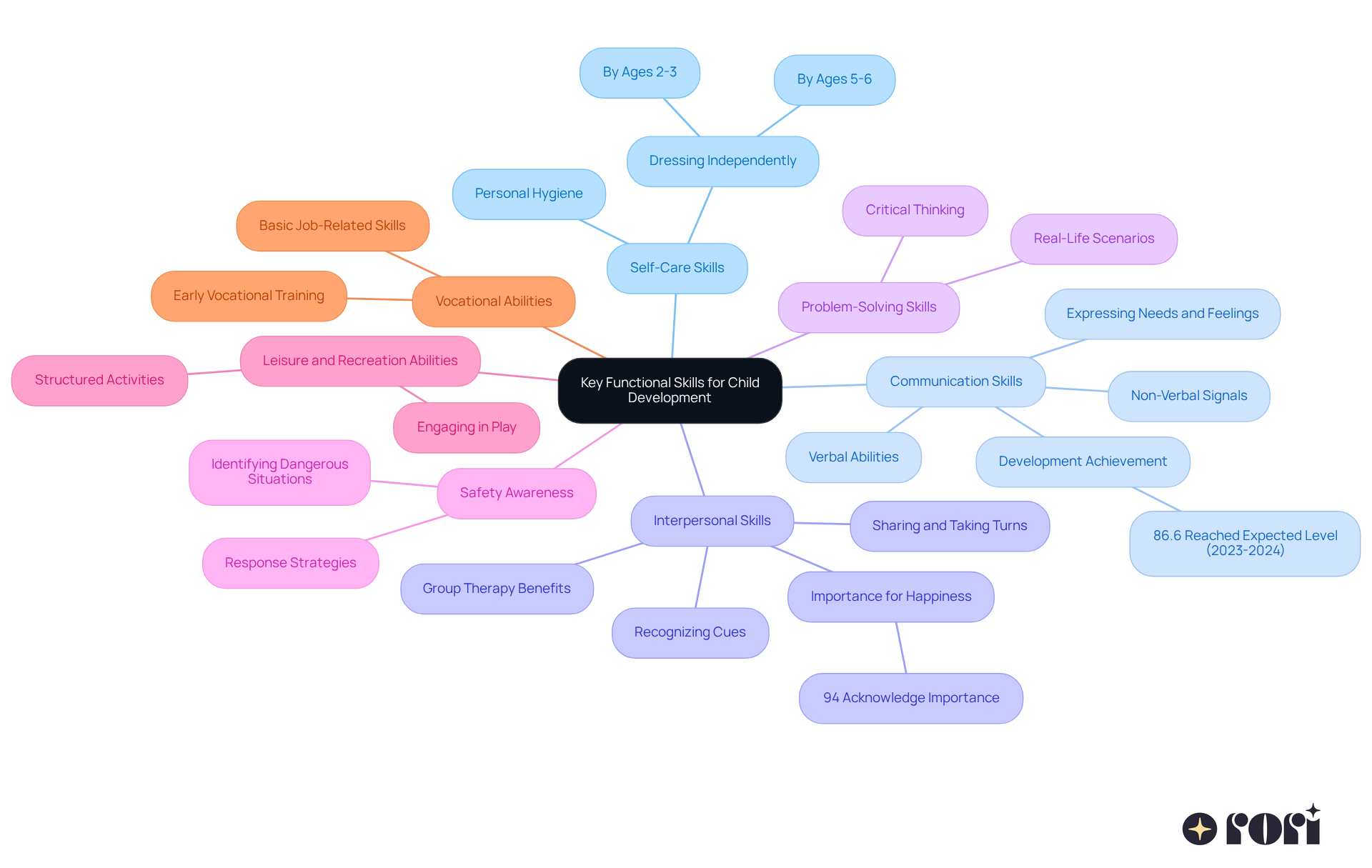
- Self-Care Skills: These include personal hygiene tasks like brushing teeth, bathing, and dressing. Mastering these skills is crucial for fostering independence and boosting self-esteem in individuals with autism. By ages 5-6, kids are expected to dress independently and manage basic hygiene routines, which really helps their confidence and autonomy.
- Communication Skills: Effective communication is key for social interactions. This covers verbal abilities, non-verbal signals, and the capacity to express needs and feelings. In 2023 to 2024, 86.6% of young individuals reached the expected level of development in communication skills, highlighting the importance of focused training. Strategies like role-playing and visual aids can really enhance communication abilities, making it easier for children to connect with peers and adults.
- Interpersonal Skills: Skills such as sharing, taking turns, and recognizing cues in interactions are essential for building connections with others. Group therapy focused on interpersonal skills, led by qualified therapists, can significantly improve interactions and communication in a group setting, promoting better competence and connections. Studies show that interpersonal and emotional skills are vital for happiness in adulthood, with 94% of individuals acknowledging their importance. Early support in developing these skills can lead to better community integration and emotional well-being. Specific methods in social skills group therapy may include structured activities, role-playing scenarios, and guided discussions to reinforce learning.
- Problem-Solving Skills: Encouraging young individuals to think critically and find solutions to everyday challenges fosters independence and resilience. Teaching problem-solving through real-life scenarios can help them navigate challenges effectively, boosting their confidence in handling various situations.
- Safety Awareness: It’s crucial to educate young individuals about personal safety, such as identifying dangerous situations and knowing how to respond. This knowledge not only protects them but also instills a sense of security and independence.
- Leisure and Recreation Abilities: Engaging in play and recreational activities helps youngsters develop social skills and emotional control. Structured play can encourage interactions with peers, fostering teamwork and cooperation.
- Vocational Abilities: For older youth, learning can prepare them for future employment opportunities. Introducing vocational training early can enhance their readiness for the workforce, instilling a sense of purpose and achievement.
By recognizing these essential skills, parents can define functional skills to create a targeted strategy for their children’s growth, ensuring they have the resources needed to thrive in daily life. Additionally, caregiver training is vital for understanding and addressing these developmental needs, while certified behavior analysts can develop tailored plans based on Applied Behavior Analysis (ABA) principles for positive behavior modification and skill development, ensuring ongoing assessment and support. Let’s explore this together!
Assess and Enhance Your Child’s Functional Skills
To assess and enhance your child’s functional skills, let’s follow these essential steps together:
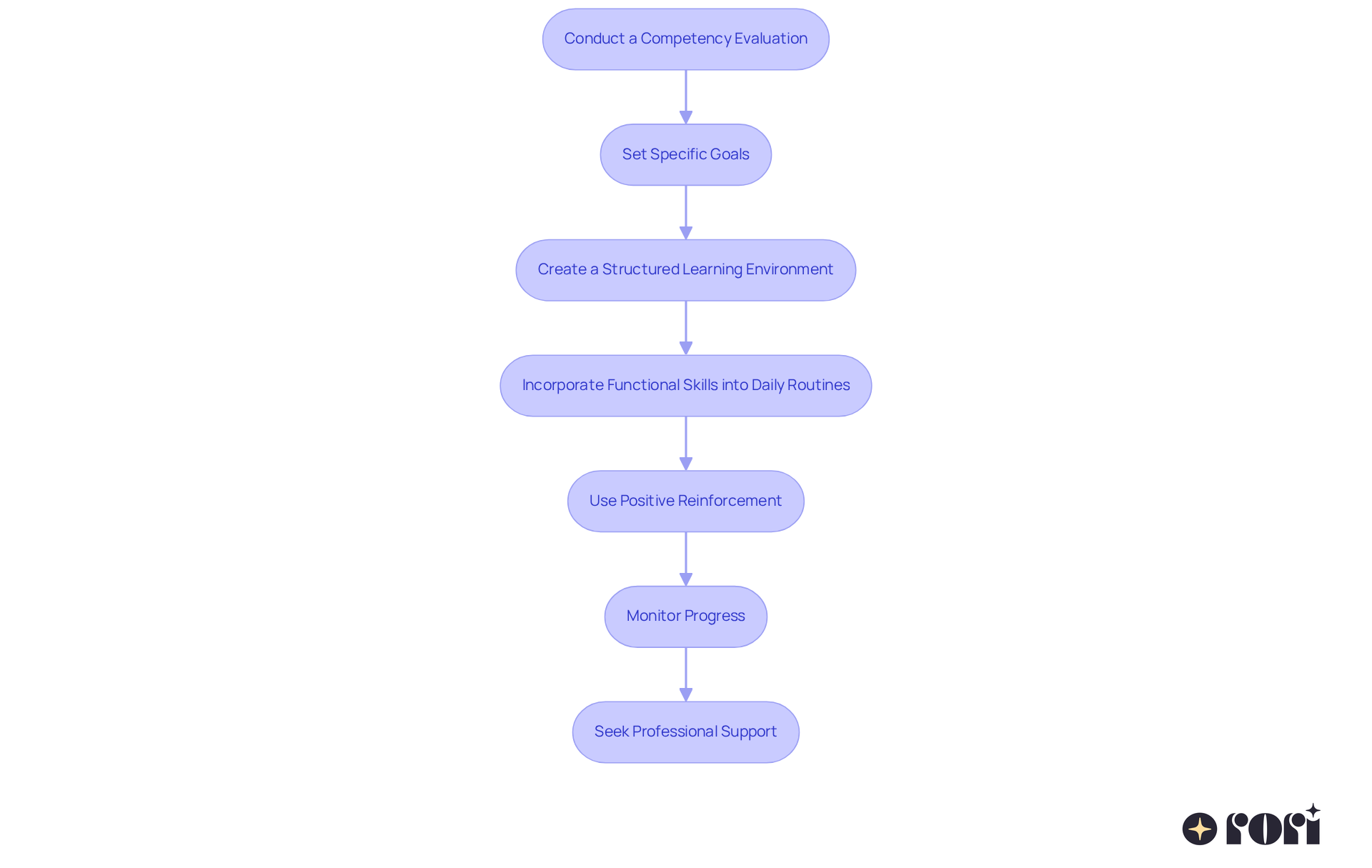
- Conduct a Competency Evaluation: Start by observing your child in various settings—home, school, and community. This helps you understand their current functional abilities. You can use checklists or assessment tools to document their skills in areas like self-care, communication, and social interactions.
- Set Specific Goals: After your evaluation, it’s time to establish clear and attainable objectives for each area. For instance, if your child struggles with dressing independently, set a goal for them to put on their shirt without assistance. Research shows that effective goal-setting can significantly boost children’s developmental abilities, making this step crucial.
- Create a Structured Learning Environment: Designate specific times and spaces for practicing practical skills. Use visual aids, prompts, and modeling to create a supportive atmosphere for learning. As Diane Ackerman wisely said, “Play is our brains’ favourite way of learning,” reminding us of the importance of a playful and engaging environment.
- Incorporate Functional Skills into Daily Routines: Weave skill practice into everyday activities. For example, involve your child in meal preparation to enhance their self-care and problem-solving skills. This approach not only but also enjoyable!
- Use Positive Reinforcement: Celebrate your child’s successes, no matter how small! Positive reinforcement can motivate them to keep practicing and improving their abilities. Acknowledging their progress fosters a growth mindset, which is essential for skill development.
- Monitor Progress: Regularly check in on your child’s progress toward their goals. Adjust your strategies as needed to keep them engaged and challenged. Research indicates that 48% of personal variations in students’ academic success can be attributed to their capabilities. At Rori Care, we emphasize that 90% of children show significant progress when suggested hours are fully executed with active caregiver participation, underscoring the effectiveness of our adaptive treatment plans.
- Seek Professional Support: If needed, don’t hesitate to consult with experts like Board Certified Behavior Analysts (BCBAs) or occupational therapists. They can provide tailored strategies and interventions to help your child define functional skills. At Rori Care, we offer free consultations with our BCBAs to assist families following an autism diagnosis, ensuring your loved one receives the best possible guidance.
By following these steps, you can effectively evaluate and enhance your child’s capabilities, paving the way for greater independence and success in daily life. Research shows that focusing on how to define functional skills can significantly improve children’s participation in adult occupations, including education and employment. Let’s explore this journey together!
Conclusion
Understanding and fostering functional skills in children is so important for their overall development and independence! These practical abilities, from self-care to problem-solving, empower young individuals to navigate their daily lives effectively. It’s not just about completing tasks; it’s also about grasping the intent behind actions, which is especially significant for children with autism and other developmental challenges.
Let’s take a moment to consider some key insights. Essential functional skills include:
- Self-care
- Communication
- Interpersonal skills
- Safety awareness
Each of these plays a vital role in how a child interacts with their environment and peers. Plus, there are practical steps we can take to assess and enhance these skills. Think about:
- Conducting competency evaluations
- Setting specific goals
- Incorporating skill practice into daily routines
And don’t forget the importance of professional support and caregiver training—this ensures that children get the guidance they need to truly thrive.
Ultimately, nurturing functional skills is more than just an educational task; it’s a pathway to independence and a fulfilling life. By recognizing and actively working on these essential abilities, caregivers can make a significant impact on their children’s future success and well-being. Embracing this journey together can create a supportive environment where children feel empowered to grow, learn, and thrive in their unique ways. Let’s explore this together and make a difference in our children’s lives!
Frequently Asked Questions
What are functional skills?
Functional skills are practical abilities that help young individuals tackle daily tasks and engage in their lives. They encompass activities such as self-care, communication, social interactions, and problem-solving.
Why are functional skills important?
Understanding functional skills is vital as they directly affect a young person’s ability to navigate their world, build relationships, and gain independence. These skills are essential for personal care and effective communication.
How do children with autism face challenges in developing functional skills?
Children with autism and other challenges, like learning difficulties, often struggle to acquire functional skills, which can hinder their independence. Research shows that autistic young people typically have fewer self-management skills compared to their non-autistic peers, especially during the transition to adulthood.
Can interventions help improve functional skills in young individuals with autism?
Yes, targeted interventions such as behavioral therapy can significantly enhance functional skills, leading to greater independence and an improved quality of life for young individuals with autism.
What is the broader understanding of functional skills beyond task completion?
Functional skills involve not only completing tasks but also understanding the intent and purpose behind actions. For example, learning to ask for help develops communication skills, social awareness, and self-advocacy.
How can caregivers support the development of functional skills in children?
Caregivers can support their children’s growth by recognizing the significance of practical abilities and receiving training to better assist their children in overcoming challenges and preparing for future independence.
What do advocates say about the strengths of individuals with autism?
Advocates emphasize the unique strengths of individuals on the autism spectrum. Temple Grandin noted, ‘I am different, not less,’ highlighting their value, while Jillian Mercado stated, ‘Autism is not the adversary; ignorance is,’ promoting the need for understanding and acceptance.