

Introduction
Early intervention for autism is such an important part of supporting children with autism spectrum disorder (ASD). It really offers a lifeline for families who are eager to help their child thrive. In this guide, we’ll explore some effective strategies for implementing early intervention right at home. You’ll see how personalized approaches can lead to meaningful improvements in communication, social skills, and overall behavior.
But let’s be honest—navigating the world of therapies and techniques can feel overwhelming. With so many options out there, how can families make the best choices for their child’s unique needs? 🤔 Let’s dive into this together and find some clarity!
Define Early Intervention for Autism
Getting is so important! It includes a variety of services designed for autism early intervention at home to assist young children diagnosed with autism spectrum disorder (ASD) as soon as possible—ideally before they turn three. This proactive approach to autism early intervention at home can significantly impact key areas such as communication, social skills, and behavior. Research shows that autism early intervention at home can lead to , including cognitive skills and adaptive behaviors. For instance, a meta-analysis found that , with moderate advantages.
Successful autism early intervention at home relies on tailored to each child’s unique needs. Engaging families actively is crucial for successful autism early intervention at home, along with using evidence-based methods. Each behavioral plan is crafted to fit the individual’s strengths and challenges, ensuring they receive the . Setting measurable goals helps track progress transparently, while use the latest research to implement effective strategies. It’s also vital to continuously assess and adjust these plans as the child’s needs change.
Programs like the Early Start Denver Model have shown , highlighting the incredible potential of early support. By utilizing autism early intervention at home to address developmental challenges early on, families can empower their children to reach their full potential, laying a strong foundation for lifelong success. Pediatricians often stress that the sooner the autism early intervention at home occurs, the better the outcomes, reinforcing how critical .
And let’s not forget about ! It plays a key role in equipping families with the knowledge and skills they need to support autism early intervention at home consistently. This not only leads to better behavioral outcomes but also enhances family dynamics. Plus, it helps caregivers understand and support children with related conditions like ADHD and learning disabilities.
So, let’s explore this together! We’re here to !

Implement Early Intervention Strategies at Home
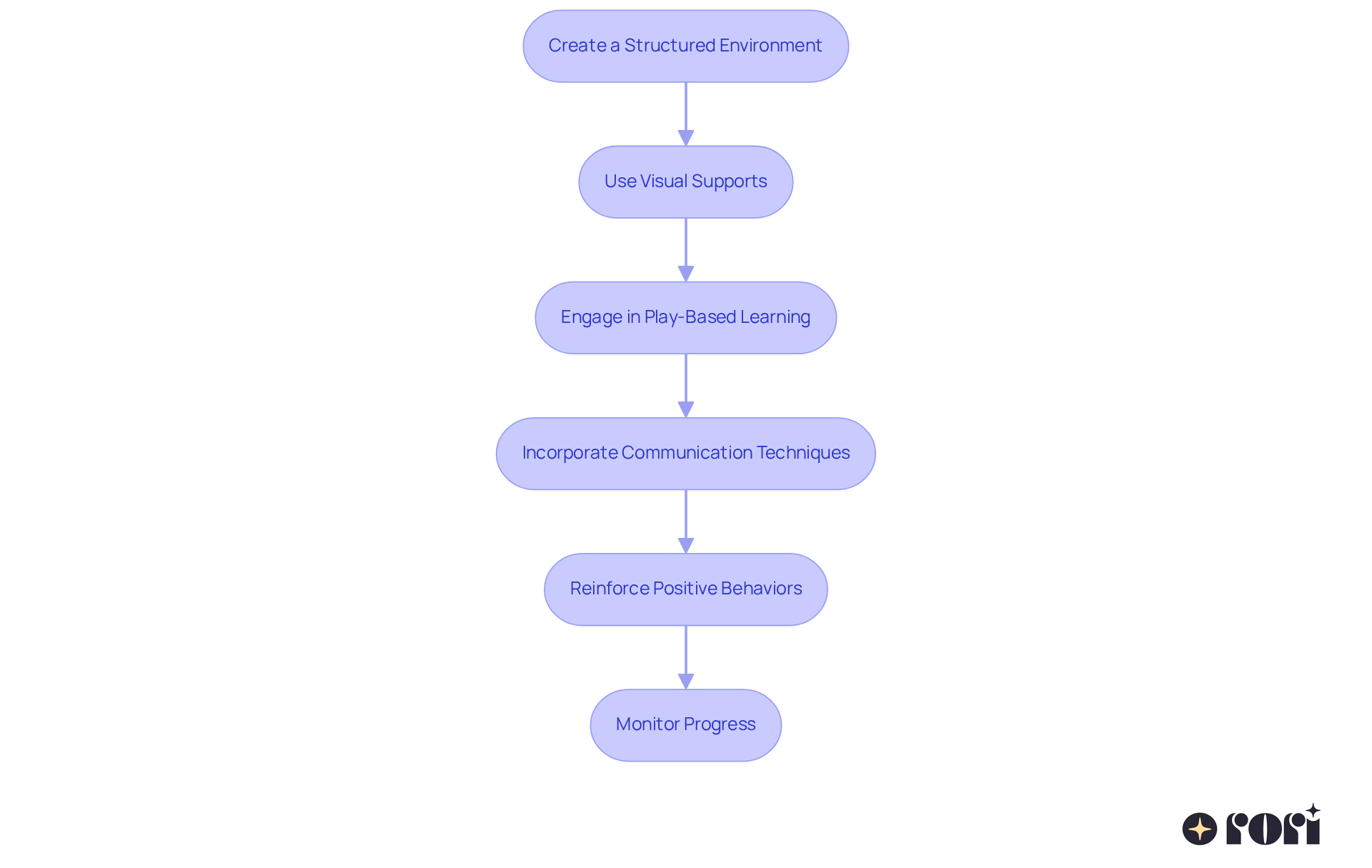
To effectively implement at home, parents can follow these essential steps:
- : Establish a consistent daily routine that includes designated times for learning and play. This predictability nurtures a sense of security and helps ease anxiety for little ones.
- Use : Incorporate , charts, and picture cards to enhance understanding and communication. These help kids follow routines and express their needs more clearly.
- Engage in : Use play as a learning tool! Activities like role-playing, building with blocks, or sensory play can effectively promote social skills and cognitive development.
- : Encourage communication by modeling language, using simple phrases, and providing choices. Techniques like sign language or picture exchange systems can also be super helpful in facilitating communication.
- : Implement to encourage desired behaviors. Using praise, rewards, or tokens can motivate young ones to engage in appropriate actions and responses.
- : Regularly track your child’s progress by noting improvements and challenges. Adjust strategies as needed to ensure they remain effective and aligned with your child’s developmental needs.
Let’s explore the topic of autism early intervention at home together! Remember, with autism early intervention at home, you’re not alone on this journey. We’re here to help you every step of the way!
Explore Types of Therapies for Early Intervention
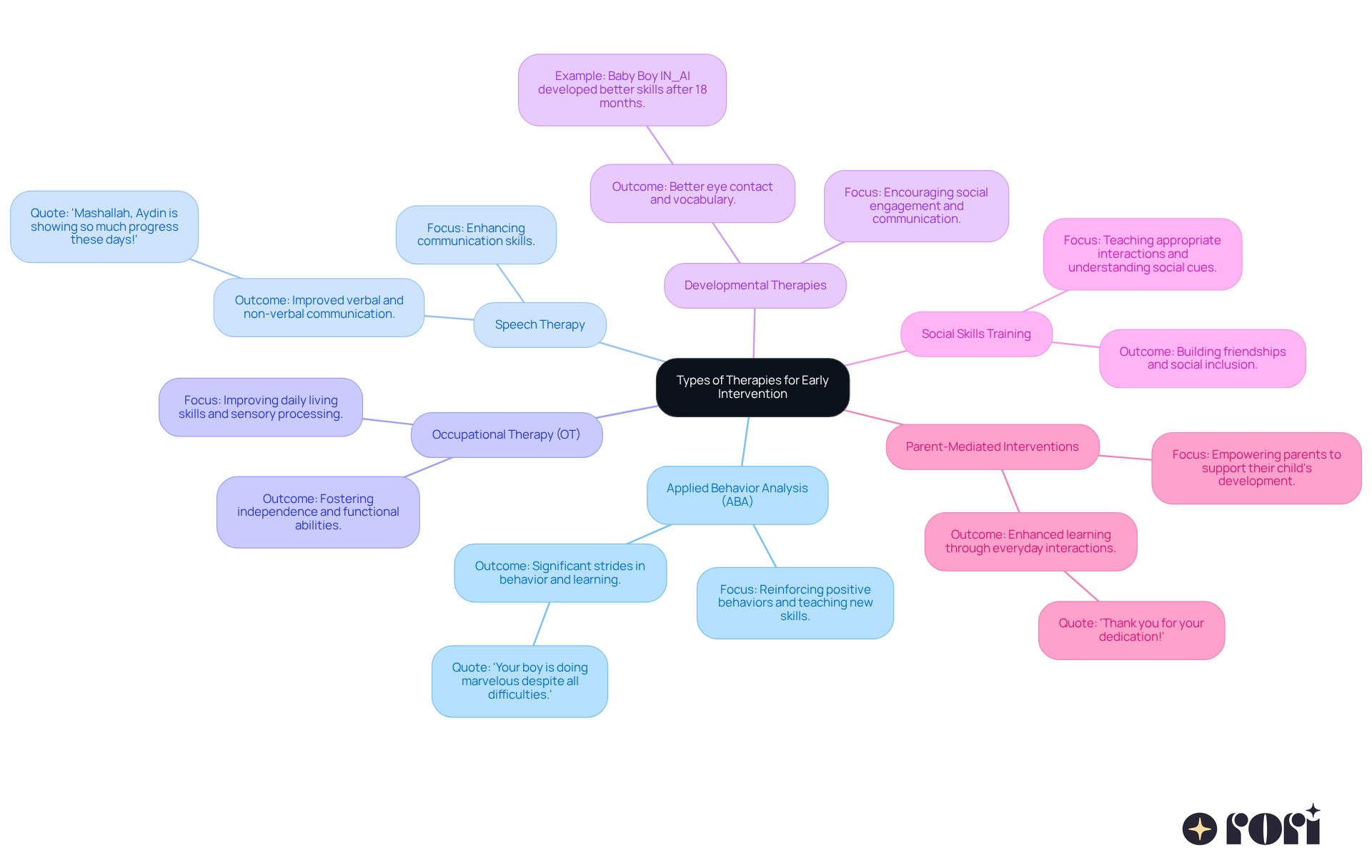
Timely support for autism comes in various therapeutic methods, each designed to help young people grow in unique ways. Let’s take a look at some of the most effective therapies:
- : This evidence-based approach focuses on reinforcing positive behaviors and teaching new skills through structured interventions. Many view ABA as one of the most effective therapies for youth with autism, helping them make . At Rori Care, we create individualized plans that cater to each youth’s unique needs, strengths, challenges, and goals. We set clear, measurable objectives for behavior change and skill development, giving everyone a transparent way to . As one NSFA consultant shared, “Your boy is doing marvelous despite all difficulties. Remedies are proving to be powerful and looks like his Autism can be defeated!”
- : This therapy is all about enhancing communication skills. It helps young individuals develop both verbal and non-verbal communication abilities, which is crucial for expressing their needs and socializing. A mother recently said, “Mashallah, Aydin is showing so much progress these days!”
- : OT focuses on improving daily living skills and sensory processing. By honing fine motor skills and adapting to their environment, occupational therapy plays a key role in fostering independence and functional abilities.
- : Approaches like blend developmental and behavioral methods to encourage social engagement and communication. Just look at Baby Boy IN_AI, who developed better eye contact and vocabulary after 18 months of treatment—what a fantastic example of how effective these therapies can be!
- : This therapy teaches youngsters how to interact appropriately with others, emphasizing understanding social cues and building friendships, which are essential for social inclusion.
- : These empower parents to utilize autism early intervention at home, enhancing their child’s learning and development through everyday interactions. At Rori Care, we emphasize caregiver education, equipping parents with the knowledge and skills to support their child’s behavioral goals effectively. We consistently observe the young person’s progress and responsiveness to treatment, making adjustments as needed to improve outcomes. One parent expressed gratitude, saying, “Thank you for your dedication! It’s you as a researcher and your calm yet strict personality what drew us toward following your treatments.”
By exploring these therapies, parents can find the best strategies for their child’s unique needs, paving the way for effective autism early intervention at home and ensuring long-term success. The NSFA highlights the importance of parental involvement in the treatment process, reminding us that while autism may not be completely curable, significant improvements are possible with dedication.
Let’s explore this together! We’re here to help you every step of the way!
Collaborate with Professionals for Effective Support
To really make work wonders, teaming up with professionals is key! Here’s how you can get started:
- Identify : Think about bringing together a diverse team—pediatricians, speech therapists, occupational therapists, and . Each of these specialists has unique skills that can truly help your child thrive.
- Set Clear Goals: Work with your team to create for your child’s progress. Having clear objectives helps everyone stay focused and track how things are going.
- : Keep those lines of communication wide open! Regular updates and chats with all the professionals involved in your child’s care ensure everyone is on the same page, working together toward shared goals.
- Engage in Team Meetings: Don’t miss out on meetings with your child’s therapy team. These gatherings are a great chance to discuss progress, challenges, and any tweaks needed in the intervention plan. Your perspective as a parent is super valuable in shaping effective strategies!
- To effectively implement recommendations for at home, bring the strategies and tips from the professionals into your daily life. Consistency between home and therapy is crucial for reinforcing what your child learns through autism early intervention at home, which helps them retain those skills.
- Seek : If you need more resources or support, just ask! Professionals can offer helpful tools, training, and guidance to make navigating your child’s developmental journey a bit easier.
By fostering a , you’re setting your child up for success, ensuring that the is tailored to their . This teamwork not only boosts the effectiveness of early intervention but also creates a sense of shared ownership in your child’s journey. Let’s explore this together!

Conclusion
Early intervention for autism is such an important step that can really shape a child’s development, especially when it happens at home. By taking proactive measures, families can create a nurturing environment that encourages communication, social skills, and overall behavior improvements. This personalized approach not only meets each child’s unique needs but also empowers families to actively participate in their child’s growth.
In this article, we’ve shared some essential strategies for effective autism early intervention at home:
- Think about establishing structured routines.
- Use visual supports.
- Engage in play-based learning.
It’s also crucial to collaborate with professionals to build a comprehensive support system that aligns with your child’s goals. By tapping into evidence-based therapies like Applied Behavior Analysis and speech therapy, parents can really help their child reach their full potential and see significant developmental gains.
Ultimately, the journey of autism early intervention at home is filled with hope and possibility. By embracing these strategies and working together with professionals, families can confidently navigate the complexities of autism. The earlier you start, the more profound the impact on your child’s future can be. This highlights just how vital timely and effective support is in shaping successful outcomes. Engaging in this journey not only transforms the lives of children with autism but also enriches family dynamics, creating a supportive environment where every child can thrive. Let’s explore this together!
Frequently Asked Questions
What is early intervention for autism?
Early intervention for autism refers to a variety of services designed to assist young children diagnosed with autism spectrum disorder (ASD) as soon as possible, ideally before they turn three. It aims to improve key areas such as communication, social skills, and behavior.
Why is early intervention important for children with autism?
Early intervention is crucial because research shows it can lead to significant improvements in long-term outcomes, including cognitive skills and adaptive behaviors. It can positively impact daily living skills and motor abilities.
How is early intervention tailored to individual children?
Successful early intervention relies on personalized treatment strategies that are tailored to each child’s unique needs. Behavioral plans are crafted to fit the individual’s strengths and challenges, ensuring they receive the most suitable care.
What role do families play in early intervention for autism?
Engaging families actively is essential for successful early intervention. Caregiver education equips families with the knowledge and skills needed to support their child consistently, leading to better behavioral outcomes and enhanced family dynamics.
What are some effective programs for early intervention?
Programs like the Early Start Denver Model have shown impressive gains in IQ and language skills, highlighting the potential benefits of early support for children with autism.
How do qualified professionals contribute to early intervention?
Qualified behavior analysts use the latest research to implement effective strategies in early intervention. They set measurable goals to track progress and continuously assess and adjust plans as the child’s needs change.
What do pediatricians say about the timing of early intervention?
Pediatricians emphasize that the sooner early intervention occurs, the better the outcomes will be, reinforcing the importance of timely support in the autism journey.