

Introduction
Navigating sleep challenges with children on the autism spectrum can feel overwhelming for many parents. Did you know that over 80% of kids with autism face significant sleep issues? This can really affect their behavior and learning.
In this article, we’ll share some essential tips to help improve your child’s sleep quality. From creating a calming bedtime routine to setting up a sleep-friendly environment, we’ve got you covered! But what if the usual methods just aren’t cutting it? How can you adapt your approach to find what truly works for your unique child?
Let’s explore this together! We’re here to help you every step of the way!
Understand Sleep Challenges in Autism
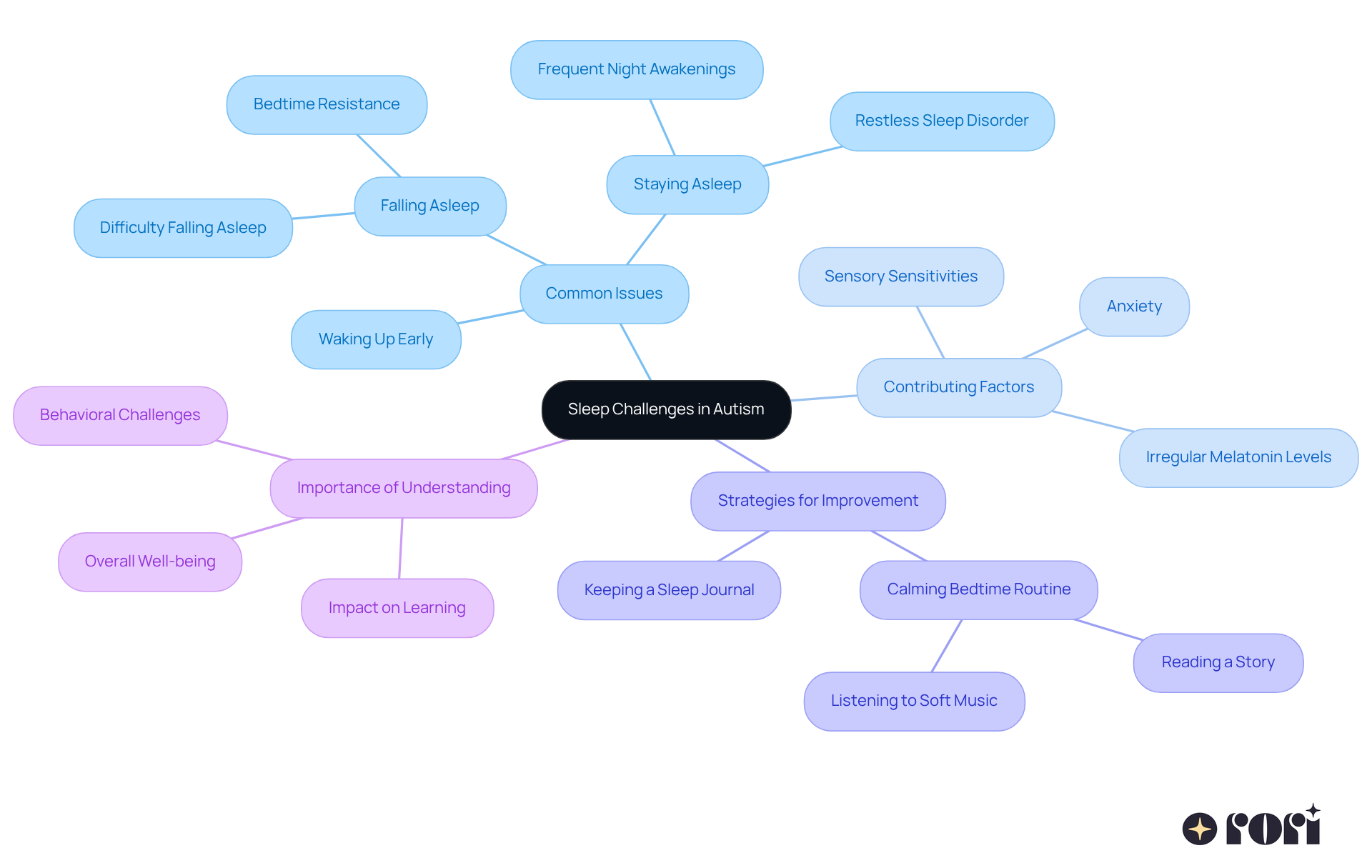
Sleep difficulties are pretty common for kids with autism. Many struggle with falling asleep, staying asleep, or waking up too early. These challenges often come from a mix of factors like sensory sensitivities, anxiety, and irregular melatonin levels. Did you know that over 80% of kids with autism spectrum disorder (ASD) face significant sleep issues? This can make behavioral challenges worse and disrupt their learning. For example, kids with ASD often take much longer to fall asleep than their neurotypical peers, with nearly half of children aged 1-3 years experiencing trouble in this area.
Sensory sensitivities can make sleep even trickier. Many autistic kids find it hard to relax due to environmental stimuli that disrupt their ability to drift off. That’s why establishing a calming bedtime routine is so important! Aim for something predictable that lasts about 20 to 30 minutes, filled with relaxing activities like:
- Reading a story
- Listening to soft music
Keeping a sleep journal can also be super helpful. It allows parents to track sleep patterns and identify specific triggers that might be affecting their child’s ability to relax. This information can be a game-changer when discussing sleep issues with healthcare providers or therapists, leading to a more personalized approach to treatment.
Understanding these challenges is key for parents who need dealing with sleep challenges in autism to improve their child’s sleep quality. By addressing the underlying factors and trying out effective strategies, families can create a healthier sleep environment that offers guidance for parents dealing with sleep challenges in autism and supports their child’s overall well-being. Let’s explore this together!
Create a Sleep-Inducing Environment
Creating a sleep-friendly environment for your little one can serve as guidance for parents dealing with sleep challenges in autism and make a world of difference! Here are some simple adjustments you might consider:
- Lighting: Think about using blackout curtains to keep out that pesky outside light. In the evenings, soft, warm lighting can really set a cozy mood.
- Noise: Disruptive sounds can be a real challenge. A white noise machine or some gentle music can help create a calming atmosphere that encourages relaxation.
- Bedding: Comfort is key! Make sure the bedding suits your child’s sensory preferences. Some kids find that offer a comforting sense of safety.
- Temperature: Keeping the room at a pleasant temperature is essential. Aim for around 68-72°F (20-22°C) to help promote better rest.
Let’s explore these ideas together as guidance for parents dealing with sleep challenges in autism, to see how they can help your child get the restful sleep they deserve!

Establish a Consistent Bedtime Routine
Creating a regular nightly routine can serve as guidance for parents dealing with sleep challenges in autism, helping your little one transition to sleep more smoothly. Let’s explore some simple steps to establish an effective routine together:
- Establish a Consistent Sleep Time: Pick a bedtime that allows for plenty of rest and stick to it, even on weekends. Consistency is key!
- Wind Down Activities: Try engaging in like reading a story, enjoying a warm bath, or practicing some gentle stretches. These can really help signal that it’s time to relax.
- Visual Schedule: Consider using a visual schedule to outline the bedtime steps. This can help your little one know what to expect, making the process smoother.
- Limit Screen Time: It’s best to avoid screens at least an hour before bed. The blue light from devices can mess with melatonin production, making it harder for them to drift off.
By incorporating these steps, you’re not just helping your child sleep better; you’re also offering guidance for parents dealing with sleep challenges in autism by creating a comforting routine that they can look forward to each night. We’re here to help you every step of the way!

Incorporate Relaxation Techniques
Offering guidance for parents dealing with sleep challenges in autism, such as helping your child unwind before bed, can significantly improve their sleep quality. Here are some friendly techniques to try:
- Deep Breathing: Teach your little one to take slow, deep breaths. This simple practice can really calm their mind and body. Research shows that mindfulness techniques, like deep breathing, can serve as guidance for parents dealing with sleep challenges in autism, leading to better sleep and less anxiety in kids. Plus, kids who practice deep breathing often have fewer emotional outbursts and sleep better overall.
- Progressive Muscle Relaxation: Walk your child through some fun exercises where they tense and then relax different muscle groups. This not only helps but also sets the stage for a more restful night.
- Mindfulness or Meditation: Introduce some easy mindfulness exercises or meditation. These practices can boost concentration and help your child relax, making it easier for them to drift off to sleep. Dr. Scott Palasik emphasizes that mindfulness offers guidance for parents dealing with sleep challenges in autism, as it can be especially beneficial for kids with unique neurological needs, helping them develop important life skills like emotional regulation and focus.
- Calming Music: Play some soft, soothing music or nature sounds to create a peaceful vibe. These gentle sounds can lower stress levels and signal to your child that it’s time to wind down. Plus, incorporating their favorite calming tunes can make this routine even more enjoyable!
By incorporating these techniques into your nightly routine, you can create a more peaceful atmosphere that offers guidance for parents dealing with sleep challenges in autism, thereby enhancing your child’s sleep quality and emotional well-being. Let’s explore this together!

Monitor and Adjust Sleep Strategies
To make your sleep strategies truly effective, let’s dive into some helpful steps:
- Keep a Sleep Diary: Jotting down your child’s sleep patterns-like bedtimes, wake times, and any disturbances-can really shine a light on important trends and triggers. Research shows that sleep journals offer valuable guidance for parents dealing with sleep challenges in autism, which is vital for understanding sleep well-being, especially for kids with autism. They provide concrete insights that can guide your interventions. Plus, this practice helps you grasp sleep patterns better, allowing you to make informed choices that can positively impact your child’s progress.
- Evaluate Strategy Effectiveness: Once you’ve tried out new sleep strategies, take a moment to assess their impact over a few weeks. Are these changes leading to better sleep quality for your child? Keeping an eye on things can really boost your understanding of sleep patterns and help you spot what works. When caregivers actively participate in this process, it often leads to more effective and lasting improvements in behavior.
- Stay Flexible: If a particular method isn’t working out, don’t hesitate to explore new options. Every child is unique, and what works wonders for one might not suit another. Flexibility is key to finding the right fit. Remember, cultural and environmental factors can also play a role in sleep outcomes, so keep these in mind as you tweak your strategies. The knowledge and skills you gain through can really boost your confidence in making these adjustments.
- Seek Professional Help: If sleep challenges persist despite your best efforts, reaching out to a sleep specialist or your healthcare provider can provide valuable insights and support. Experts emphasize that providing guidance for parents dealing with sleep challenges in autism is crucial for implementing tailored interventions to effectively address specific sleep-related issues. As specialists point out, “Parental pre-sleep emotional support was linked to better sleep quality among younger children,” highlighting how crucial your involvement is in nurturing healthy sleep habits.
Let’s explore this together! We’re here to help you every step of the way!

Conclusion
Understanding and addressing sleep challenges in children with autism is so important for their overall well-being. By recognizing the unique factors that contribute to these difficulties, parents can implement effective strategies that promote better sleep. From creating a calming sleep environment to establishing a consistent bedtime routine, these approaches not only enhance sleep quality but also support emotional stability and behavioral improvements.
Throughout this journey, we’ve shared key insights, like the importance of:
- Monitoring sleep patterns
- Incorporating relaxation techniques
- Being flexible with strategies
Keeping a sleep diary, utilizing calming activities, and seeking professional help when needed are all vital components that can lead to successful outcomes. These steps empower parents to take an active role in their child’s sleep journey, ensuring that each child receives the tailored support they need.
Ultimately, improving sleep for children with autism is a collaborative effort that requires patience, understanding, and a willingness to adapt. By embracing these strategies and remaining committed to nurturing a healthy sleep environment, parents can significantly enhance their child’s quality of life. The journey may be challenging, but the rewards of restful nights and happier days are well worth the effort. Let’s explore this together!
Frequently Asked Questions
What sleep challenges do children with autism commonly face?
Children with autism often struggle with falling asleep, staying asleep, or waking up too early. These difficulties can stem from factors such as sensory sensitivities, anxiety, and irregular melatonin levels.
How prevalent are sleep issues among children with autism spectrum disorder (ASD)?
Over 80% of children with autism spectrum disorder face significant sleep issues, which can exacerbate behavioral challenges and disrupt their learning.
What are some factors that contribute to sleep difficulties in autistic children?
Factors contributing to sleep difficulties include sensory sensitivities that make it hard to relax, anxiety, and irregular melatonin levels.
What strategies can help improve sleep for children with autism?
Establishing a calming bedtime routine lasting 20 to 30 minutes with relaxing activities, such as reading a story or listening to soft music, can help improve sleep.
How can keeping a sleep journal benefit parents of children with autism?
A sleep journal allows parents to track sleep patterns and identify specific triggers affecting their child’s ability to relax, which can be valuable when discussing sleep issues with healthcare providers or therapists.
What adjustments can be made to create a sleep-inducing environment for children with autism?
Adjustments include using blackout curtains for light control, employing a white noise machine or gentle music to mask disruptive sounds, ensuring bedding meets sensory preferences, and maintaining a comfortable room temperature of 68-72°F (20-22°C).
Why is it important to understand sleep challenges in autism?
Understanding these challenges is crucial for parents seeking guidance to improve their child’s sleep quality and overall well-being by addressing underlying factors and implementing effective strategies.