

Introduction
Have you ever wondered how to help your child with autism take what they learn in therapy and use it in real life? Understanding how children with autism can effectively transfer their skills is crucial for their development. Let’s explore some friendly tips that show how important it is for your child to use what they learn in therapy in real life!
As families journey through autism therapy, many wonder: how can we help our kids use their therapy skills in everyday situations? Exploring this question reveals a pathway to fostering independence and social success for children with autism.
Understand the Importance of Skill Transfer in Autism Therapy
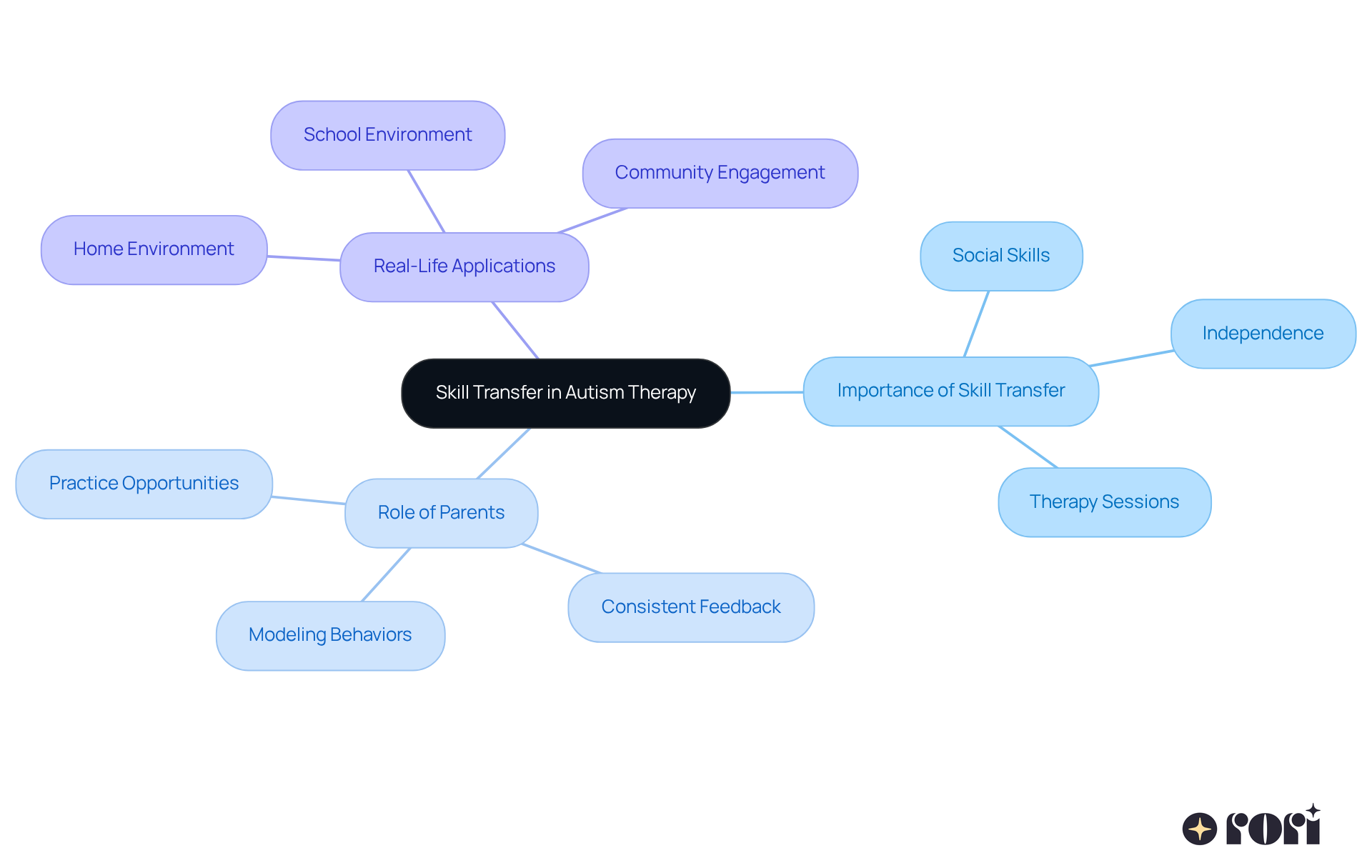
Have you ever wondered how your child can take what they learn in therapy and use it in everyday life? Skill transfer is all about that! It’s essential in autism treatment because it is focused on supporting skill transfer across various environments for children with autism, ensuring that the skills gained during sessions are not just kept but also applied in daily situations. Children who are able to utilize their skills at home, school, and in the community are benefiting from supporting skill transfer across various environments for children with autism, which helps them do better socially and gain more independence. For instance, if your child learns to say hello to friends during therapy, they should be able to use that skill during playdates or in school.
Research shows that up to 90% of kids receiving ABA therapy make significant progress in their target behaviors. That’s a big deal! But here’s the catch: engaging parents in this process is crucial. When caregivers get involved, it plays a crucial role in supporting skill transfer across various environments for children with autism, helping them practice what they’ve learned in real life! By empowering parents with ABA principles and strategies – like modeling behaviors, giving consistent feedback, and creating chances for practice – they become better equipped to support their children at home.
This not only helps kids navigate the world more effectively but also sets them up for long-term success and independence. So, let’s explore this together! When caregivers step in, it’s not just about learning; it’s about thriving in the real world.
Implement Practical Strategies for Skill Transfer in Daily Routines
Have you ever felt overwhelmed trying to help your child learn new skills in a way that feels natural? To effectively promote skill transfer, caregivers can incorporate some friendly strategies into daily routines:
- Routine Integration: Embed abilities into daily activities. For instance, practice turn-taking during meals or sharing toys during playtime. This kind of learning aids in supporting skill transfer across various environments for children with autism, helping kids use their skills in familiar settings and making it easier for them to apply what they’ve learned. For example, Rori Care offers programs that are designed for supporting skill transfer across various environments for children with autism, ADHD, and Social Communication Disorders to build their social skills and confidence.
- Consistent Reinforcement: Use positive reinforcement right after your little one successfully applies a learned ability. A simple “Great job!” or a small reward can encourage them to repeat those desired behaviors, solidifying their learning.
- Role-Playing: Engage in role-playing scenarios that mimic real-life situations. This fun method allows kids to practice their skills in a safe space, boosting their confidence before they use them in public. Group therapy focusing on social skills, led by qualified therapists, can further enhance these interactions, ultimately supporting skill transfer across various environments for children with autism and fostering better communication and relationships.
- Visual Supports: Utilize visual aids, like charts or picture schedules, to remind youngsters of the abilities they need to apply in specific situations. These tools can really help them recall and use learned behaviors effectively.
- Peer Interaction: Encourage playdates or group activities where children can practice social skills with their peers. This not only reinforces what they’ve learned but also helps them build those important social connections. Plus, empowering caregivers with ABA principles and strategies through education is essential for effective behavioral support.
By embracing these strategies, you’re not just teaching skills; you’re building a foundation for your child’s confidence and social success. Let’s explore this together!

Leverage Technology to Enhance Skill Transfer Effectiveness
Navigating autism therapy can feel overwhelming for parents, especially when trying to find the right tools to support their child. Thankfully, technology can significantly enhance supporting skill transfer across various environments for children with autism through various innovative approaches. Let’s explore some effective strategies together:
- Mobile Applications: How about using apps specifically designed for personal development? These apps target areas like social skills and daily living tasks. They often include interactive features that captivate young users, making learning enjoyable while strengthening vital abilities.
- Video Modeling: Have you heard of video modeling? It’s where kids can watch their peers show off the behaviors we want them to learn! This visual approach helps them understand how to use their new skills in real-life situations, thereby supporting skill transfer across various environments for children with autism and making transitions smoother.
- Virtual Reality (VR): Imagine using VR to help your child practice social skills in a fun, safe space! This immersive technology allows them to simulate social interactions or daily tasks, which can reduce anxiety and boost confidence when facing real-world situations.
- Data Tracking Tools: Keeping track of progress is crucial. At Rori Care, we use cutting-edge AI to automate data collection during sessions. This not only ensures secure storage but also improves the effectiveness of ABA treatment, freeing up to 50% more time for direct child care. This way, therapists can focus more on applying knowledge.
- Telehealth Services: Telehealth is a great way to have counseling sessions right from the comfort of your home! This flexibility encourages consistent practice of skills in familiar environments, which is essential for supporting skill transfer across various environments for children with autism, ultimately increasing the chances of successful application in daily life.
By embracing these innovative strategies, you can empower your child to thrive in everyday situations, and that’s a journey worth taking together!

Foster Collaboration Among Caregivers, Educators, and Therapists
Navigating autism therapy can feel like a daunting task for many families, especially when it comes to ensuring everyone is on the same page. At Rori Care, we’re here to support you every step of the way with our compassionate Applied Behavior Analysis treatment. Let’s explore some strategies to foster effective teamwork:
- Regular Communication: Let’s talk about regular communication! Keeping in touch with caregivers, educators, and therapists is so important. Regular check-ins can help everyone stay aligned on your child’s progress and the strategies being used.
- Shared Goals: How about creating shared goals? When everyone agrees on what to aim for, it aids in supporting skill transfer across various environments for children with autism by ensuring your child receives consistent messages and support, no matter where they are!
- Training Sessions: Joint training sessions can be a game-changer! When caregivers and educators learn together from therapists, it boosts understanding and is essential for supporting skill transfer across various environments for children with autism, helping everyone implement strategies effectively at home and school. Our compassionate clinical leadership, including expert BCBAs and RBTs, is committed to empowering caregivers with ABA principles to support behavioral goals for youth.
- Feedback Mechanisms: Let’s set up feedback loops! When caregivers and educators share their observations about your child’s behavior, it gives therapists valuable insights to adjust treatment plans and support your child better.
- Participation in Counseling: Encouraging caregivers to join counseling sessions can be so beneficial! It allows them to learn techniques firsthand and apply them consistently at home, which is essential for supporting skill transfer across various environments for children with autism. Early intervention is super important! Research shows that starting therapy within the first year can lead to fewer signs of autism, so timely collaboration is key. At Rori Care, we offer free consultations to help families navigate this journey together.

Conclusion
Supporting skill transfer in autism therapy can feel like a daunting task for many parents, but it’s essential for helping children thrive in everyday life. By focusing on strategies that promote this transferability, caregivers can empower their children to navigate social situations and daily tasks with greater confidence and independence. This friendly approach to autism treatment highlights how important it is to integrate learned skills into various environments, making therapy even more effective.
Throughout this article, we’ve shared some key practices to help facilitate skill transfer. These include:
- Weaving skills into daily routines
- Using technology like mobile apps and virtual reality
- Encouraging teamwork among caregivers, educators, and therapists
Each of these strategies plays a vital role in creating a space where children can practice and reinforce their skills, making it easier for them to apply what they learn in therapy to real-life situations.
The truth is, supporting skill transfer is crucial for your child’s success. It lays the groundwork for long-term achievements, allowing children with autism to flourish socially and gain independence. By actively engaging in this process-whether through practical strategies, technology, or collaborative efforts-you can make a meaningful difference in your child’s life. Embracing these practices not only supports individual growth but also contributes to a more inclusive community where everyone can flourish.
Frequently Asked Questions
What is skill transfer in the context of autism therapy?
Skill transfer refers to the ability of children with autism to apply the skills they learn in therapy to everyday situations, ensuring that these skills are not only retained but also utilized in various environments such as home, school, and the community.
Why is skill transfer important for children with autism?
Skill transfer is important because it helps children use their learned skills in real-life situations, which enhances their social interactions and promotes greater independence.
How can skill transfer be demonstrated in a child’s life?
An example of skill transfer is when a child learns to say hello to friends during therapy and is then able to use that skill during playdates or at school.
What percentage of kids receiving ABA therapy show significant progress?
Research indicates that up to 90% of kids receiving ABA therapy make significant progress in their target behaviors.
How do parents contribute to skill transfer in autism therapy?
Engaging parents in the therapy process is crucial as it helps support skill transfer. Parents can empower their children by using ABA principles and strategies, such as modeling behaviors, providing consistent feedback, and creating opportunities for practice.
What are the benefits of parents being involved in their child’s therapy?
When parents are involved, they help their children practice learned skills in real-life situations, which not only aids in navigating the world more effectively but also contributes to the child’s long-term success and independence.
List of Sources
- Understand the Importance of Skill Transfer in Autism Therapy
- Improving the Generalization of Skills in Learners with Autism (https://autismspectrumnews.org/improving-the-generalization-of-skills-in-learners-with-autism)
- The effectiveness of social training in individuals with autism spectrum disorder (ASD): a systematic review and transfer analysis – Scientific Reports (https://nature.com/articles/s41598-024-83953-9)
- 59 Inspirational Quotes About Autism – Hidden Talents ABA (https://hiddentalentsaba.com/autism-quotes)
- 10 inspiring quotes from people with autism | Autism Speaks (https://autismspeaks.org/life-spectrum/autism-quotes)
- The Connection Between ABA Therapy and Long-Term Skill Retention – Up & Up ABA (https://upandupaba.com/faqs-resources/the-connection-between-aba-therapy-and-long-term-skill-retention)
- Implement Practical Strategies for Skill Transfer in Daily Routines
- 80 Inspiring Quotes on Autism Awareness and Support – Empower ABA (https://empoweraba.com/80-inspiring-quotes-on-autism-awareness-and-support)
- Autism Therapy: Key Statistics (https://ambitionsaba.com/resources/autism-therapy-statistics)
- The effectiveness of social training in individuals with autism spectrum disorder (ASD): a systematic review and transfer analysis – Scientific Reports (https://nature.com/articles/s41598-024-83953-9)
- Early Intervention Autism: New Research Shows 87% Success Rate at 18 Months (https://globalrph.com/2025/07/early-intervention-autism-new-research-shows-87-success-rate-at-18-months)
- The Numbers Don’t Lie: Revealing Autism Therapy Statistics | Above and Beyond Therapy (https://abtaba.com/blog/autism-therapy-statistics)
- Leverage Technology to Enhance Skill Transfer Effectiveness
- goldstarrehab.com (https://goldstarrehab.com/parent-resources/autism-therapy-statistics)
- Autism Quotes – Helping Your Child Climb Higher With ABA Therapy (https://climbingstar.com/blog/autism-quotes)
- The Numbers Don’t Lie: Revealing Autism Therapy Statistics | Above and Beyond Therapy (https://abtaba.com/blog/autism-therapy-statistics)
- Effectiveness of Using Mobile Technology to Improve Cognitive and Social Skills Among Individuals With Autism Spectrum Disorder: Systematic Literature Review – PMC (https://pmc.ncbi.nlm.nih.gov/articles/PMC8512196)
- Inspiring Autism Quotes That Celebrate Uniqueness – Hello ABA Therapy (https://helloaba.com/inspirational-autism-quotes)
- Foster Collaboration Among Caregivers, Educators, and Therapists
- CaringBridge (https://caringbridge.org/resources/inspirational-quotes-on-caregiving)
- Facts About Autism: Comprehensive Overview for 2025 (https://abacustherapies.com/facts-about-autism-comprehensive-overview-for-2024)
- Autism Therapy: Key Statistics (https://ambitionsaba.com/resources/autism-therapy-statistics)
- The Numbers Don’t Lie: Revealing Autism Therapy Statistics | Above and Beyond Therapy (https://abtaba.com/blog/autism-therapy-statistics)
- 27 Inspirational Quotes for Caregivers (https://ultimatecareny.com/resources/27-quotes-for-caregivers)